
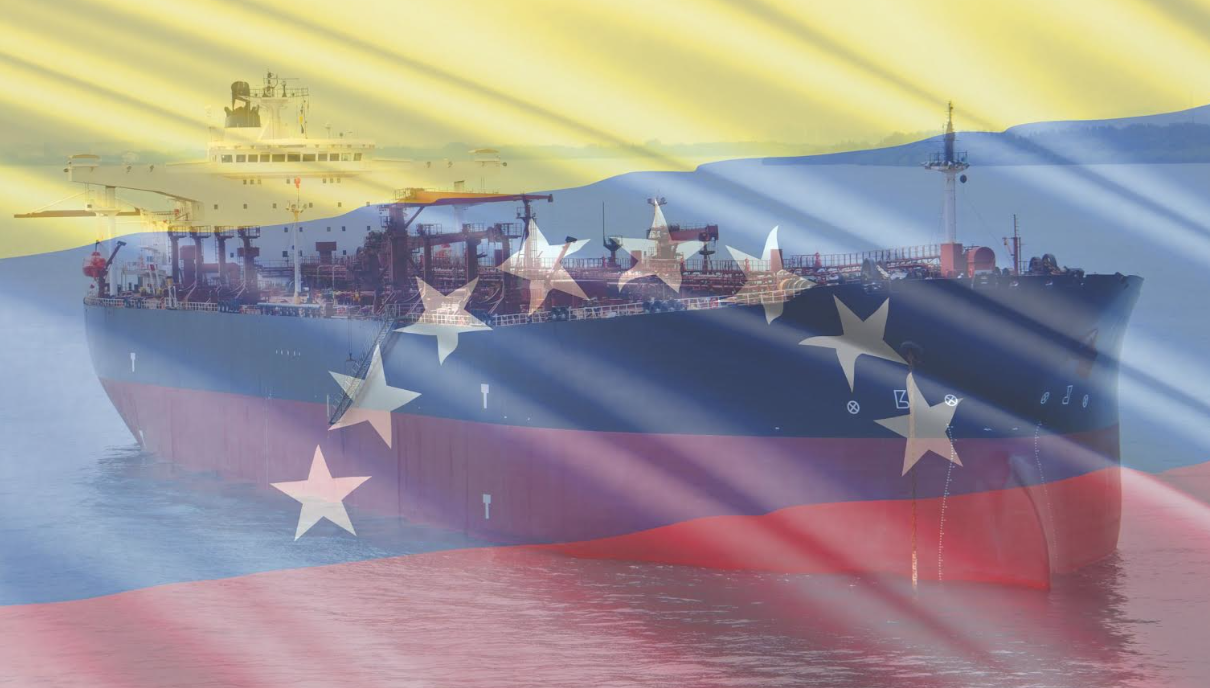
CARACAS, Venezuela (AP) — The US has seized an oil tanker linked to Venezuela after tracking it across the Atlantic. President Donald Trump said Tuesday that Venezuela would be providing 30 million to 50 million barrels of oil to the U.S., and he pledged to use proceeds from the sale of this oil “to benefit the people” of both countries.
The White House is organizing a meeting Friday with U.S. oil company executives to discuss Venezuela, which the Trump administration has been pressuring to open its vast-but-struggling oil industry more widely to American investment and know-how. Representatives of Exxon, Chevron and ConocoPhillips are expected to attend the White House meeting, according to a person familiar with the matter who requested anonymity to discuss the plans.
The dramatic U.S. raid that captured Nicolás Maduro has been framed as a decisive blow against corruption, drug trafficking, and authoritarianism. But the facts emerging in the days since tell a far more complicated story — one that raises uncomfortable questions about American motives, regional stability, and the future of U.S. foreign policy in the Western Hemisphere.
If this were truly a mission driven by humanitarian concern or a desire to protect Americans from narcotics, it is striking how quickly the conversation shifted to petroleum and investment opportunities. The timing alone suggests that oil was not an afterthought — it was a central consideration.
The Trump administration has issued threats not only to Venezuela’s acting leadership but also to Colombia and Cuba. It has revived talk of acquiring Greenland. These statements, taken together, paint a picture of a government increasingly comfortable with the language of coercion and territorial ambition.
Americans themselves appear uneasy. Polling shows the public is split on the raid, with many still forming opinions. Nearly half oppose the idea of the United States taking control of Venezuela or choosing its next government. An overwhelming majority believe Venezuelans should decide their own political future. That instinct — a respect for sovereignty and self-determination — is one the United States would do well to heed.
None of this is to deny that Maduro faced serious allegations or that Venezuela has suffered deeply under his rule. But the manner of his removal, the immediate pivot to oil negotiations, and the administration’s increasingly expansionist posture raise legitimate concerns about what truly motivated this operation — and what might come next.
The Western Hemisphere has a long memory of U.S. interventions justified in the name of democracy but driven by strategic or economic interests. If the United States wants to avoid repeating that history, it must be transparent about its goals, restrained in its ambitions, and respectful of the sovereignty of its neighbors.
Venezuela is part of a broader, more aggressive vision of American power — one that extends from the oil fields of Venezuela to the mineral-rich ice of Greenland.
Trump’s fixation on acquiring Greenland is not new, but the timing and intensity of his renewed push are telling. Fresh off a military operation in South America, he told reporters that Greenland is “so strategic” and claimed the island is “covered with Russian and Chinese ships.” The White House then confirmed it was considering “a range of options” to bring the self-governing Danish territory under U.S. control — including the use of the military.
European leaders were alarmed. Denmark warned that such a move would effectively end NATO. Greenlanders themselves overwhelmingly oppose U.S. control. Yet the administration pressed forward.
Why? Because Greenland is not just a frozen island. It is a geopolitical jackpot.
The territory sits between the U.S. and Russia, straddling emerging Arctic shipping routes that could dramatically shorten global trade paths as ice melts. It lies atop vast reserves of oil, gas, and some of the world’s most valuable rare earth minerals — the same minerals China has used to pressure the United States. Analysts note that Greenland may be one of the most strategically important pieces of real estate for the next half-century.
In other words: this is not about democracy. It is about leverage.
When you place Greenland and Venezuela side by side, the pattern becomes impossible to miss — a foreign policy driven by the acquisition of land, resources, and strategic advantage, one that demands scrutiny, accountability, and a sober understanding of the costs of intervention.
Hugo Balta is the publisher of the Latino News Network executive editor of The Fulcrum.