Skip to content
January 22 is a day forever etched in Vanessa Nevarez’s mind. It is the day she crossed the border into the United States in 2004—and the day she chose to leave for Mexico 21 years later.
Nevarez had always told herself she would never return to Mexico, except for a vacation. Yet, on January 22, she left with only the clothes on her back.
A trans Latina, Nevarez immigrated from Querétaro, Mexico, to a small town in Iowa at 11 years old. The journey was grueling, taking 15 days to reach Iowa.
At 3 years old, Vanessa’s mother had left her and her two siblings in the care of their grandmother in Mexico to work in America. When her grandmother fell ill and could no longer care for them, Nevarez’s mother paid for them to be brought to the U.S.

Nevarez attempted to cross the border six times with her uncle and two siblings. Each time they were caught, border control agents encouraged them to keep trying. She and her uncle were separated from her siblings once they entered the country.
Becoming Vanessa Divine
Before transitioning, Vanessa described herself as a “girly kid.” One day, her friend Stephanie looked at her and said, “You are gay.” She denied it, knowing that wasn’t true. She refused to let anyone dictate her identity.
At 15, Vanessa began growing out her hair and wearing makeup. The first time her mother saw her with makeup on, she told Vanessa, “I’m just gonna make a recommendation for you.” She gave her advice on how to apply it, suggesting she shouldn’t wear it every day because she was still young—the kind of advice many mothers offer their daughters.
But not everyone was as accepting. Vanessa faced bullying for being feminine, leading her to drop out of high school at 15 without a GED.
After dropping out of high school, she began her transition. She told her friend Stephanie, “I’m not gay, I’m transgender.” She began living as Vanessa, later adopting the name Vanessa Divine.
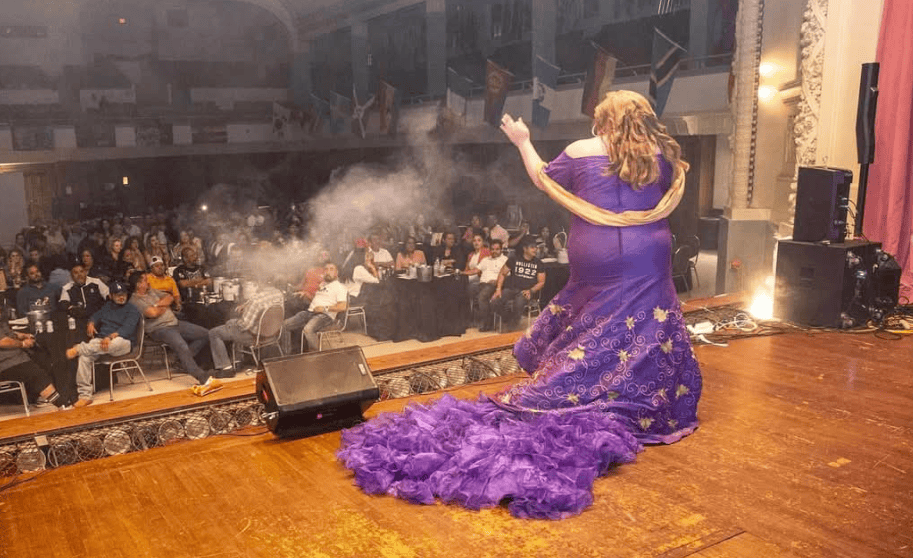
She began doing hair and makeup for a Jenni Rivera impersonator. Her friend Stephanie encouraged her to become an impersonator herself. A fan of Rivera, Vanessa chose her stage name from the artist’s perfume, Divina.
Performing gave Vanessa a newfound confidence. The bullying she had endured left her depressed, but becoming Vanessa Divine allowed her to embody the diva she always wanted to be.
“Through my drag career, I would wear a catsuit or something very provocative, and in Vanessa’s life, I was never like that,” Vanessa said.
Vanessa considered herself more of a show girl than drag queen. As she became more involved in the community, she noticed a lack of Latin representation. She reached out to the owners of Epoca Cantina in Omaha, Nebraska, to create a Drag Brunch and helped establish Latin Divas, which was later run by Christina Brownlee.
“There wasn’t enough Latin representation, so I started creating my own shows,” she said.
The 34-year-old woman continued to create representation in the Midwest performing in Minnesota, Iowa, South Dakota, and Nebraska. She worked as a show producer, coordinating with various venues, and participated in the Winnebago tribe’s first-ever drag show. Vanessa also served as the show director for Orange City Pride in Iowa until it disbanded in 2024.
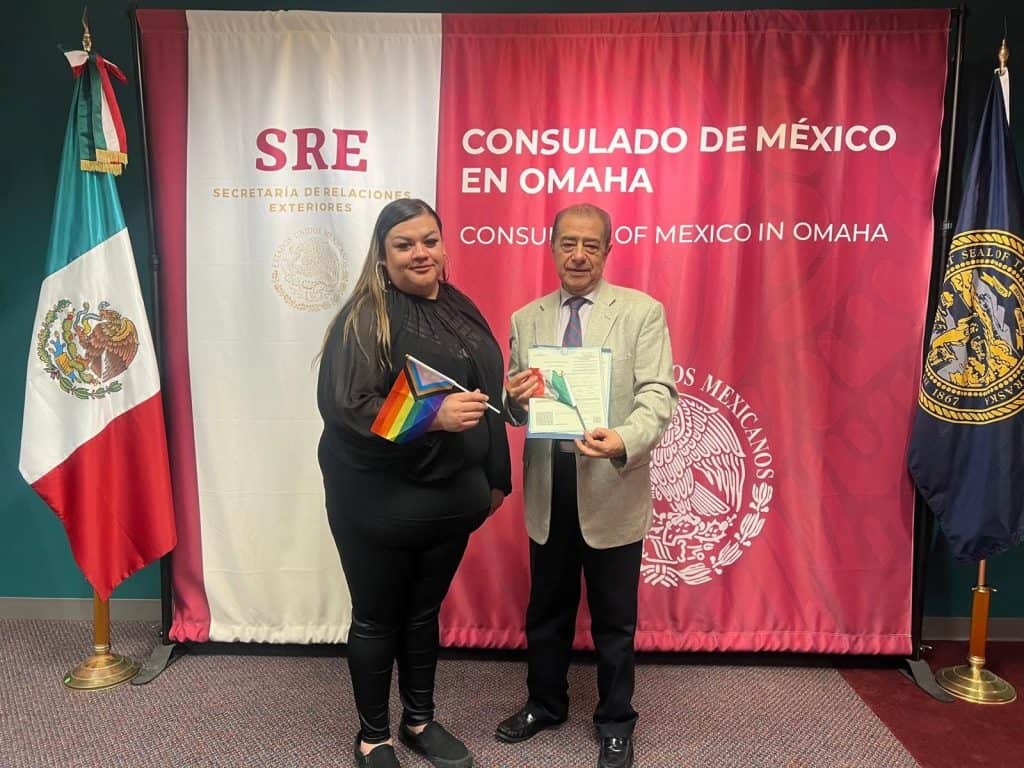
Vanessa was one of the first trans women to legally change her name at the Omaha Mexican Consulate, encouraging others to do the same. Despite these contributions, she still struggled as an immigrant in the U.S.
January 22
Vanessa was granted Deferred Action for Childhood Arrivals (DACA) status in 2016, allowing her to obtain a work permit and earn a fair wage. Previously making $6.75 an hour, her pay doubled. Despite not having a GED, she worked as a tax associate, translator, and administrative assistant.
However, DACA required her to pay thousands of dollars every two years to maintain her permit. In 2024, she realized her permit was set to expire soon and applied for renewal five months in advance—well ahead of the recommended three-month window. Yet, according to the American Immigration Council, 54 percent of all work permits are taking longer than the recommended period to process.
While waiting, employers informed her she could not work, despite having an approval letter. She was unable to work for two months, and the threat of losing her job—a position she had dreamed of as a child—plunged her into depression.
After consulting a legal professional, Vanessa learned she would have to wait 20 years to become a citizen. Seeing the rise in anti-immigrant rhetoric and the treatment of immigrants as criminals, she began to fear for her future. All of these factors led her to consider returning to Mexico.
She was eventually able to return to work, but she grew tired of depending on others to decide her right to labor. When she learned her formerly estranged father was ill, she decided it was time to be by his side. On January 21, after saying goodbye to her family, she made her choice.
“This is not the American dream,” Vanessa told her mother “I want to go back to Mexico, maybe this is it for the American dream.”
The image of her mother crying at the door remains vivid in her memory. Her nieces and nephew refused to see her one last time, upset by her departure. She traveled to Minneapolis to say goodbye to her brother and ask for his help in returning to Mexico. Driving there, she feared being detained due to her revoked license. Within 24 hours of her decision, she left the U.S. with nothing but the clothes on her back.
One year later
Starting from scratch, Vanessa initially wore the same clothes for two weeks, washing them every night and hoping they would dry by morning. She struggled to find plus-size clothing in Mexico and lost all her U.S.-based belongings, including her vehicle. She advises those who might face sudden deportation to be better prepared.
Vanessa calls her family daily, but the distance is palpable. In the past, they were only 30 minutes away; now, a border separates them.
Having started her life over five times, she knew she could be resilient. She began building a new life in Mexico, where she now works remotely for a Canadian company and lives with her father. While she no longer performs as Vanessa Divine, she hopes to return to the stage one day.
Vanessa describes herself as the type of person who never looks back after turning a page. She says she does not want to live in America again, though she might visit for a vacation.
Featured Stories
Featured Stories
Noticias Newswire
Cosmetique Aesthetics Relocates to New State-of-the-Art Facility in Culver City and Launches Enhanced Digital Experience

Rita Moreno Headlines Hispanic Heritage Month Conversation at Lehman College Presented by HITN MEDIA

Great American Media Invests in Wholesome, Family Streaming Entertainment for Latinos with Launch of Pure Flix Familia