 Skip to content
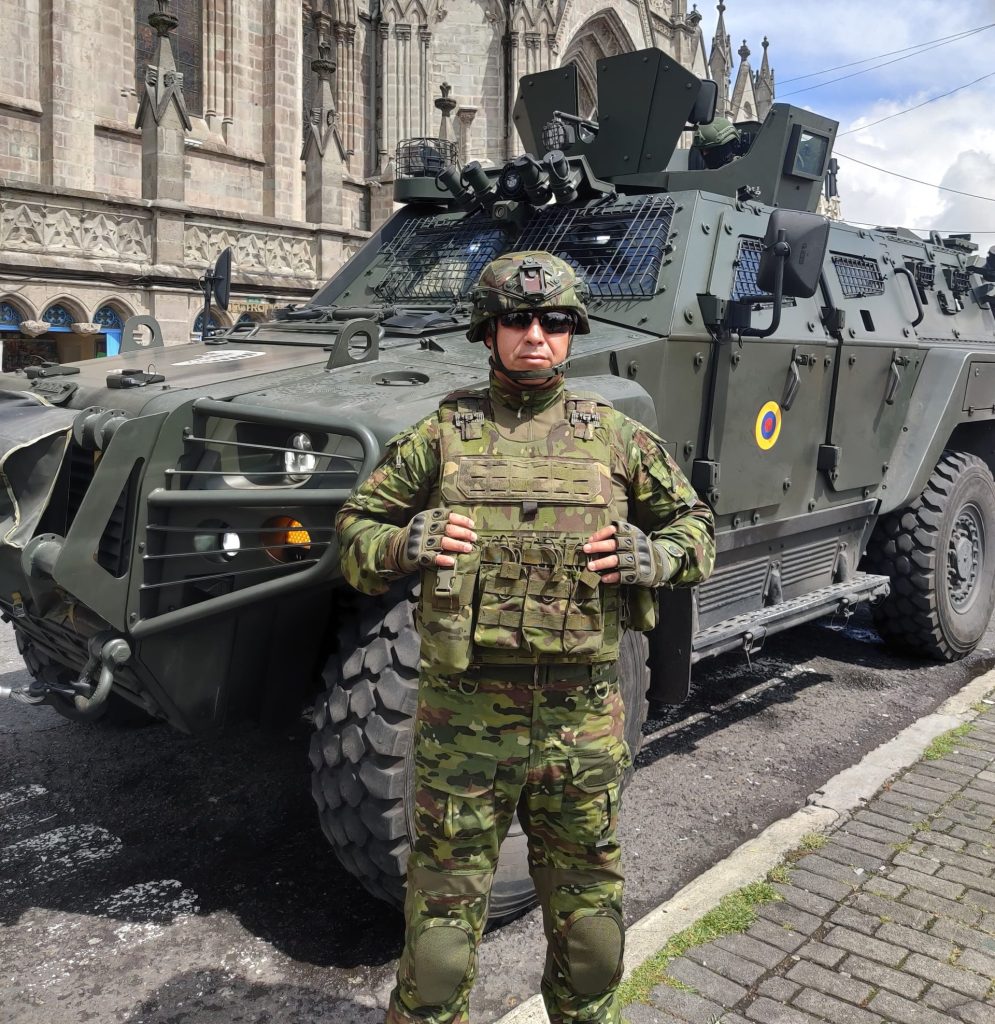
In November, Ecuadorians voted against allowing U.S. military bases in their country. Just over three months later, U.S. armed forces launched operations there, collaborating with the Ecuadorian military in a campaign designed to crack down on narcotics transit and associated crime within the country.
The joint effort has included regional curfews, arrests of gang members, and targeted bombing. It has also been criticized as military overreach, with a group of U.S. lawmakers backed by human rights groups raising concerns over the conduct of the U.S. military in Ecuador during the last several months. The U.S. military presence is also controversial for Ecuadorians, said Ernesto Anzieta, the Metropolitan Director for Citizen Security in Quito.
“The problem is that you are putting [the] military in contact with populations which in some cases are innocent people, in other cases are people that are non-combatants… but are related to criminal gangs, and in other cases they are enemies,” he said in an interview.
Ecuador is not a major producer of cocaine, but 70% of the world’s supply is smuggled through the country and exported to Europe and North America from its coast. Formerly one of Latin America’s most peaceful countries, narcotics and associated gang activity have made Ecuador one of its most violent.

“Ecuador for a long time was an island of peace,” said Anzieta. The country, he said, is not institutionally prepared for what is going on.
Organized crime is multifaceted, encompassing a broad network of corruption in the justice system and the incarceration system, with gangs adapting to traffic whatever goods are most profitable. Right now, narcotics gangs are also involved in Ecuador’s illegal gold mining industry. Cartel violence must be viewed as the systemic issue it is, Anzieta said.
Eddie Contreras, who served as a member of the Ecuadorian military for more than 25 years, supports the U.S. joint military operation. At the same time, he said, corruption must also be addressed within the incarceration system, the justice system, the political structure, and the military itself.
Military operations are sending gang members to prisons, Contreras said, but violence levels remain high, and criminals still operate and recruit from the jails. “The prisons are universities of perfection for crime,” he said in Spanish.
Lorena Villavicencio, a security and defense specialist who worked in Ecuador’s National Assembly and the Ministry of National Defense, proposed bolstering protection and compensation for prison workers, conducting a serious investigation into criminal connections in the transportation and private security sectors, and addressing the lack of social services in poor communities.
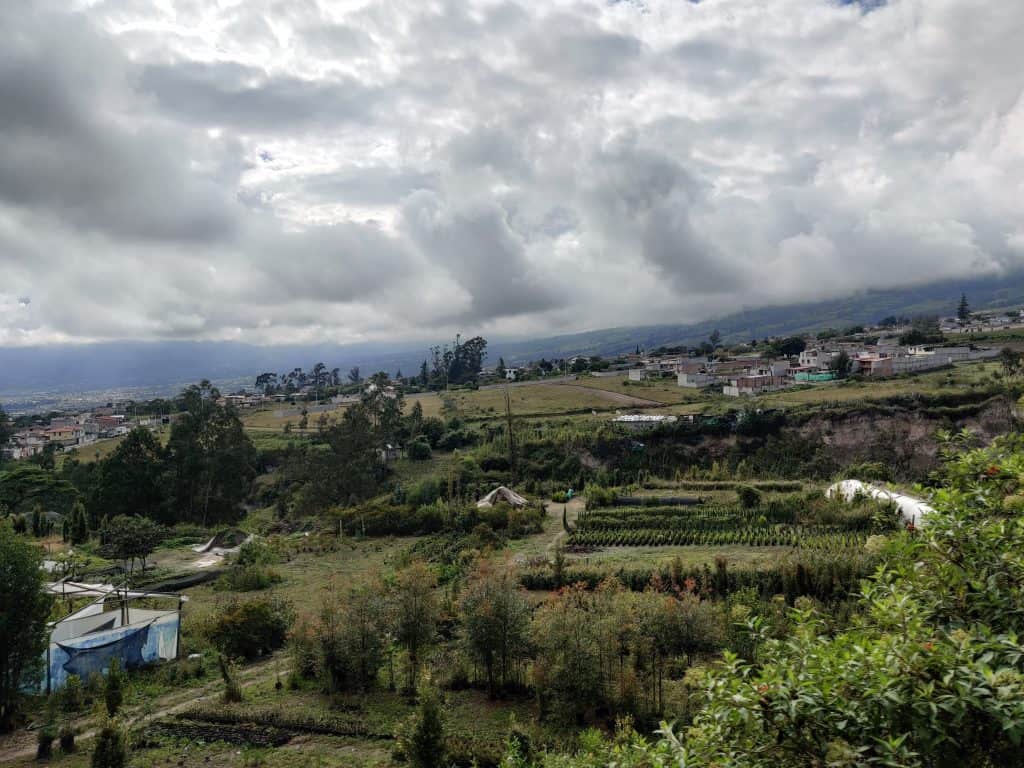
Drug trafficking gangs have developed territorial control largely in western provinces, which often withstands strong-arm military operations, according to Villavicencio. “When we have these big operations, it helps, but after a couple of weeks or months, statistics show that we get back to the same levels of violence.”
In some cases, after the military operation is finished, she said, gangs will move back into the area and question local people about what they told the military. Gangs function through extortion and threats, and military pressure can exacerbate this.
Gangs also control territory in large part because of the services they provide to their population. In the city of Duran, for instance, “you have these criminal groups who are basically in charge of providing the water… for the population,” said Villavicencio. “If you have a part of society who doesn’t have the state to provide basic needs … electricity, education, health…the organized crime will use that.”
The German social development organizations Gesellschaft für Internationale Zusammenarbeit (GIZ) and Konrad Adenauer Stiftung have been doing good work in Ecuador, Villavicencio said, also pointing to the initiatives of the European Union in collaborations such as “El PAcCTO” and campaigns to raise awareness about child and teenage gang recruitment. These social development programs must be part of efforts to combat organized crime in the country, she believes.
During his presidency, Donald Trump has prioritized exerting influence in the Western Hemisphere, bombing more than 59 boats the U.S. says were carrying narcotics in the Caribbean and Pacific. The U.S. also captured Venezuelan president Nicolas Maduro and imposed extensive sanctions on Cuba, while President Trump has founded the Shield of the Americas, a coalition of some Latin American countries whose objectives include stopping “criminal and narco-terrorist gangs and cartels” throughout the Americas.
An American military presence in Ecuador may be helpful in the short term, but in the long term, Ecuador will need to ensure its own efficacy as a state, said Villavicencio. “[I]f the state [is] not able to manage their own challenges… if you don’t have strong institutions internally… any type of … cooperation would not be effective enough to be sustainable in the long run.”
Sophia Lumsdaine is a student of history, political science, journalism, and Spanish at George Fox University. She recently spent four months abroad in Quito, Ecuador.
