 Skip to content
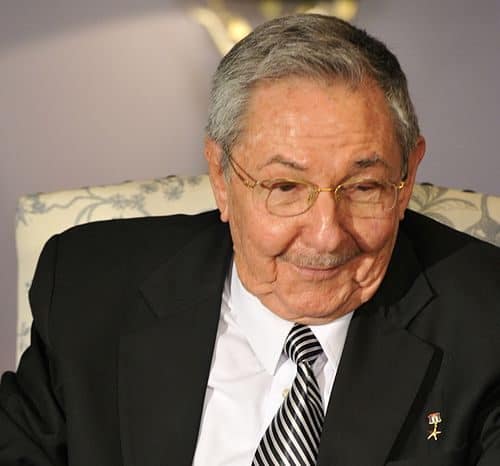
Thirty years after he allegedly ordered an attack on U.S. civilian planes, the Justice Department on Wednesday indicted Raul Castro, 94, a former president of Cuba.
The former Cuban President faces criminal charges for ordering a fatal attack on two civilian planes in 1996. The announcement came in conjunction with an event honoring the four American aid workers who were on board the Brothers to the Rescue plane, a non-profit organization that helped people flee from Cuba to the U.S.
“They were unarmed civilians and were flying humanitarian missions for the rescue and protection of people fleeing oppression across the Florida Straits,” Acting Attorney General Todd Blanche said in a press briefing in Miami.
The indictment coincided with the May 20 anniversary of Cuba’s independence and declaration of sovereignty after centuries of Spanish rule and U.S. occupation. It was announced at a time of escalating tensions between the U.S. and Cuba.

The brother and closest confidant of Fidel Castro, Raul Castro, served as Minister of the Cuban Revolutionary Armed Forces when he allegedly ordered the attack on the planes. He and co-defendants are now charged with conspiracy to kill U.S. nationals, aircraft destruction, and individual counts of murder.
According to the indictment, Cuban fighter jets fired air missiles at the civilian aircraft without warning over international waters, destroying the planes and killing all aboard.
The announcement was made at the Freedom Tower in Miami, or as Senator Ashley Moody, R-FL, called it, “the Ellis Island for Cuban refugees.”
Miguel Díaz-Canel Bermúdez, Cuba’s current president, characterized the indictment as a political maneuver, devoid of any legal foundation, sharing on the social media platform ‘X’ that the announcement by the U.S., “only reveals the arrogance and frustration that the representatives of the empire feel toward the unyielding resolve of the Cuban Revolution and the unity and moral strength of its leadership.”
The Trump administration deems Cuba a threat to national security. President Trump issued an executive order in January authorizing trade restrictions against any country that exports oil or petroleum products to Cuba, depleting the nation of energy resources and driving it into an energy crisis.
After the capture of Venezuela’s now former President Nicolás Maduro, one of Cuba’s closest allies, Trump has been unclear on whether Washington would intervene in Cuba or whether the U.S. would carry out a Maduro-style seizure of Castro. Nor has the White House shared any plans for military intervention in Cuba.
Blanche said he hoped and expected Castro to eventually appear in a U.S. court, but did not specify how.
“We indict men outside of this country all the time… The reason why we indict somebody is because we want them here to face justice in front of a jury… we expect that he will show up here by his own will or by another way,” Blanche said
President Trump told reporters at the White House on Tuesday that “Cuba is a failed nation. Cuba needs help, and we’ll do that.”
The communist nation just 90 miles off the coast of Florida has acquired 300 military drones, according to an Axios report. The report revealed that Cuba discussed plans to use them to attack U.S. military vessels and naval bases.
Díaz-Canel shared on ‘X’ that Cuba has no aggressive plans or intentions against any country, including the U.S. However, he said that Cuba is threatened by the world’s greatest power and will retaliate in the case of any escalation.
“The threat itself already constitutes an international crime. If it were to materialize, it would trigger a bloodbath with incalculable consequences, plus the destructive impact on regional peace and stability.”
Georgia Epiphaniou is a foreign affairs reporter with Medill News Service.
