 Skip to content

Growing up in the 1970s and 1980s in Paterson, New Jersey, just outside New York City, salsa pulsed through every corner of my life. At house parties, I watched my parents “cut the rug” with effortless joy, our living room transformed into a vibrant dance floor. The timbales, trombones, and voices of salsa legends weren’t just music; they were the heartbeat of our community—a constant reminder of where we came from and who we were becoming in America.
Walking into the Smithsonian’s National Museum of American History to experience ¡Puro Ritmo! The Musical Journey of Salsa felt like stepping back into those nights. The bilingual exhibition, housed in the Molina Family Latino Gallery, traces salsa’s Afro-Cuban roots and its transformation into a global cultural force. Through nearly 300 objects—including instruments, costumes, photographs, and recordings—the exhibit tells the story of how salsa became both a celebration of heritage and a uniquely American tale of migration and adaptation.
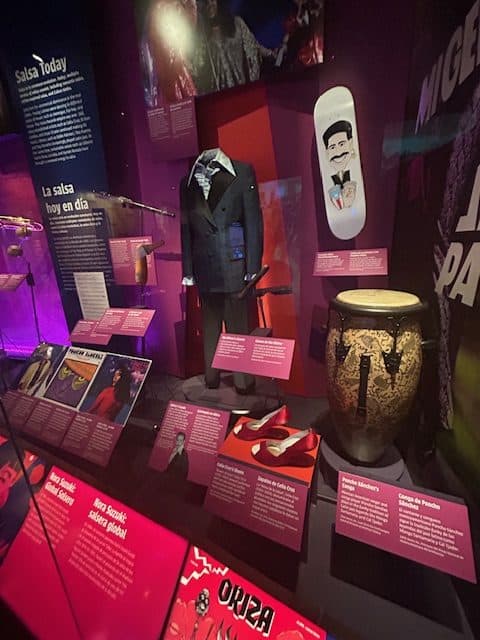
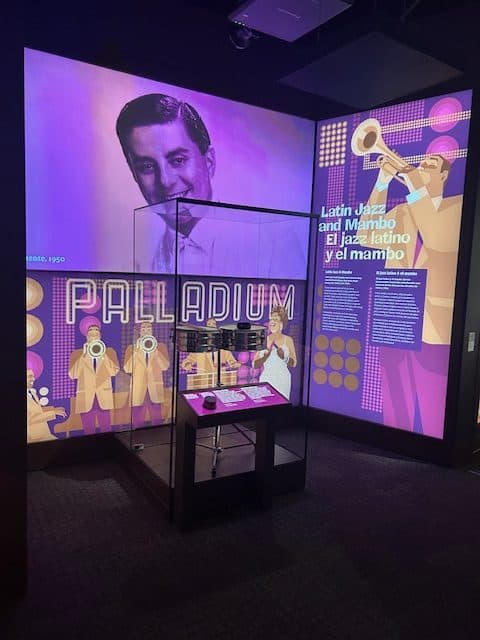
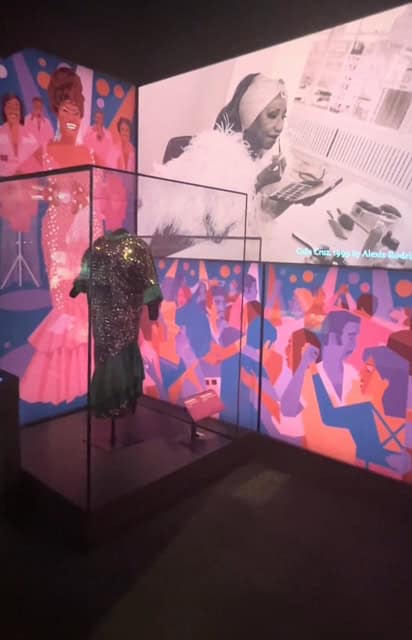
The names that echoed through our home were the same ones celebrated in the exhibit. Tito Puente, the “King of Timbales,” infused mainstream American music with Afro-Cuban rhythms; his percussion mastery made him a fixture at the parties my parents loved. Celia Cruz, the “Queen of Salsa,” provided the genre’s most iconic voice, her cry of “¡Azúcar!” serving as a rallying call that injected pride and joy into every dance step.
The raw emotion of Héctor Lavoe resonated deeply with working-class families like mine, his voice capturing the duality of joy and struggle. Willie Colón, with his trombone-driven sound and socially conscious lyrics, spoke to the realities of migration and identity that shaped our neighborhood. Then there was Rubén Blades, whose storytelling and social critique turned salsa into “salsa consciente”—music with a message that mirrored the conversations happening in our community kitchens and on our stoops.

By the time I was a teenager, salsa was evolving again. Marc Anthony bridged the genre with pop, introducing these rhythms to new audiences while keeping its romantic core alive. La India brought a powerful female perspective, her voice carrying themes of empowerment and resilience that inspired a new generation. These artists ensured salsa remained relevant, vibrant, and deeply connected to the lives of Latinos across the United States.
For me, salsa was never merely background music. It was the sound of my parents’ joy, the rhythm of resilience, and the soundtrack of growing up Latino in America. ¡Puro Ritmo! captures that spirit, demonstrating how salsa continues to embody creativity and community for generations past and present.
The exhibit reminded me that salsa is more than history—it is memory. It is migration, identity, and pride. For those of us who grew up with it, salsa is the rhythm that still moves us, decades later.
Hugo Balta is the executive editor of The Fulcrum and the publisher of the Latino News Network, and twice president of the National Association of Hispanic Journalists.
