 Skip to content
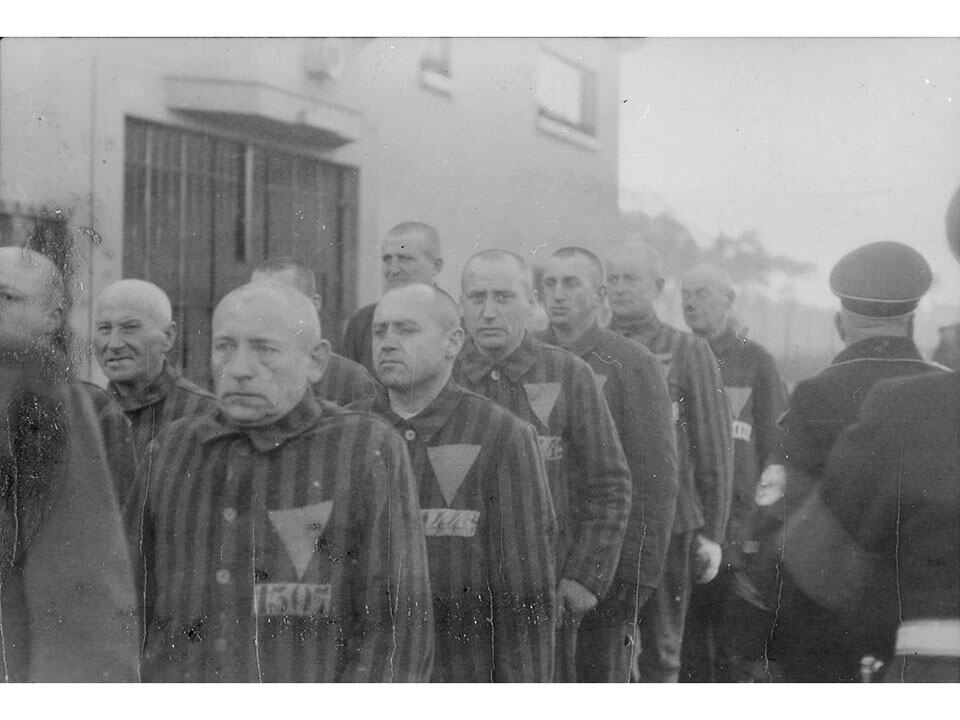
Nearly 90 years later, a symbol once used for oppression has been reclaimed for liberation. The pink triangle, originally stitched onto the uniforms of LGBTQ prisoners in Nazi concentration camps, has evolved into an empowering emblem of resistance and visibility.
Jake Newsome, an award-winning historian and the founder of the Pink Triangle Legacies Project, was driven by a desire to bridge the gap between Holocaust studies and LGBTQ history. “I had studied this history, but never really learned much about what happened to people like me during the Holocaust,” Newsome explained.
Though he was familiar with the pink triangle, Newsome was initially unaware of its origins as a concentration camp badge. This realization sparked his research into the symbol’s transformation over the subsequent decades.
Newsome’s research revealed that the Nazis’ persecution of different groups was not a monolith; their motivations varied by target. While groups like Jewish people, people with disabilities, and the Roma and Sinti populations were viewed as “fundamentally flawed” and targeted for genocide, the approach toward the LGBTQ community was distinct.

“When it came to folks that we would today recognize as members of the LGBTQ community, the Nazis, and really most people at the time, didn’t believe that people were born queer or trans. They believed that it was a lifestyle choice,” Newsome said. “The Nazi’s focus was on essentially curing or reeducating these people.”
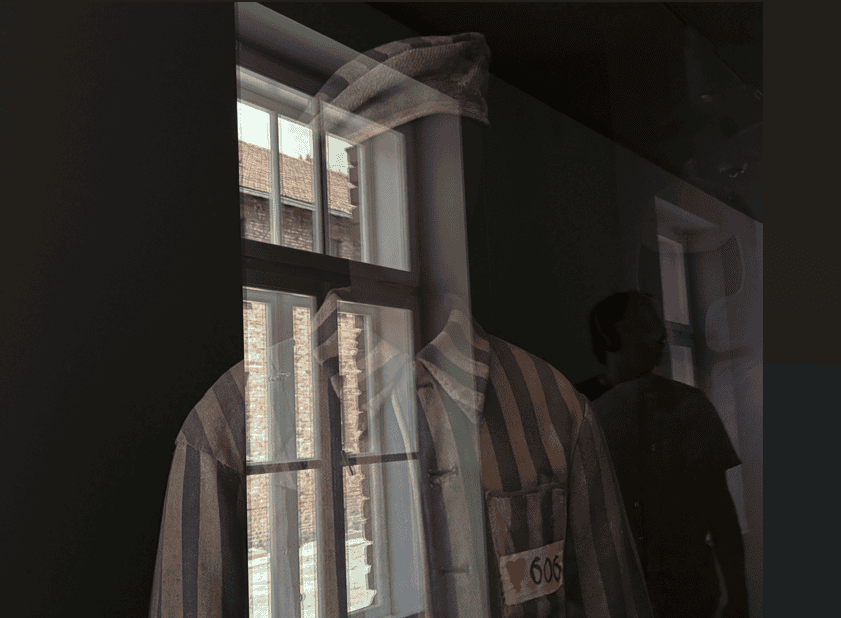
(Credit: Alessa Alluin)
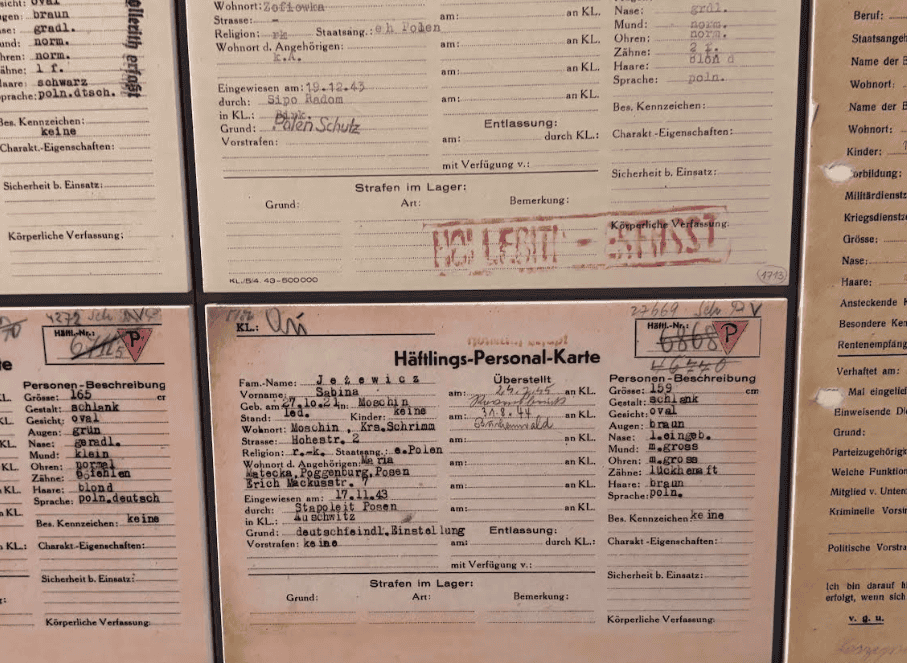
The regime believed that if individuals could be forced into heterosexuality, they could be reintegrated into the so-called “master race.” According to Newsome, “On paper the goal was not the murder of all queer people,” according to Newsome. “It was essentially very violent conversion therapy.”
This “reeducation” often began with imprisonment. For those whom the Nazis deemed beyond the deterrent of prison, the destination was the concentration camps. Approximately 100,000 LGBTQ individuals were arrested under the regime, with an estimated 7,000 to 10,000 eventually sent to camps.
The Nazis perceived gay men as particularly dangerous because of their potential to occupy positions of power in the military, politics, and the economy. Newsome notes that the regime feared gay men could “infiltrate” society in a way lesbians—who were largely excluded from power structures—could not.
While Paragraph 175 was used primarily to criminalize gay men, lesbians were still heavily marginalized and subjected to intense social scrutiny. The Nazi state focused its resources on hunting and identifying gay men, illustrating what Newsome describes as an intersection of homophobia and misogyny that expanded as the regime conquered other nations.
Despite the danger, queer life existed as an “open secret” until the Nazi rise to power made concealment a matter of survival. Many individuals attempted to hide their identities, often entering into “lavender marriages” to protect themselves from state violence.
“The history is really scary,” Newsome said. “One of the things that I have found in my research is that out of all of the LGBTQ folks who were arrested during the Nazi regime, about a third of them were turned in by their fellow citizens.”
Neighbors, co-workers, and even family members became informants. “They couldn’t necessarily find out who was queer or trans without ordinary people doing the spying and turning them in,” Newsome said. “The complicity of ordinary people was absolutely fundamental in the Nazis being able to identify who was gay or trans and then being able to go after them.”
Then, in the early 1970s during Stonewall in the United States and queer liberation movements emerging in West Germany, activists asserted that they shouldn’t have to hide their sexuality and gender identity in a democracy. At the time, they were arguing over what the gay logo should be because it was a matter of the utmost importance. “They’ll see this logo, they’ll see that we’re gay and we’ll force people to confront that there are, queer and trans people everywhere,” Newsome said.
West German activists adopted the pink triangle, popularized by the 1972 publication of The Men with the Pink Triangle, an account of a gay concentration camp survivor. The symbol served as a stark reminder that homophobia did not end with the fall of the Third Reich.
The symbol eventually traveled to the United States. In August 1974, the Gay Activist Alliance in New York became the first documented group to use the pink triangle in the U.S., cementing its role as a permanent fixture in the LGBTQ movement.
As LGBTQ activism expanded in the United States, Latino queer and trans leaders played a pivotal role in shaping the movement. Figures like Sylvia Rivera — a Puerto Rican and Venezuelan trans activist — helped lead early liberation groups such as the Gay Liberation Front and Street Transvestite Action Revolutionaries. By the 1980s and 1990s, emerging organizations like Gay and Lesbian Latinos Unidos in Los Angeles and Latino Gay Men of New York were producing bilingual flyers, organizing Pride events, and building spaces where Latino identity and queer identity could coexist without contradiction. Their work ensured that the broader LGBTQ movement reflected the diversity of the communities it served.
Today, the Pink Triangle Legacies Project works to ensure this history serves as a tool for progress. “We are committed to uncovering and telling the stories of our queer and trans ancestors, we know that the best way to pay tribute to that is to continue fighting against queer phobia and phobia today,” the organization stated. They achieve this through teacher training and educational resources designed to integrate these narratives into school curricula.
On June 28, the project will launch its first traveling exhibit at the Holocaust Center for Humanity in Seattle. The exhibit aims to equip the public with the historical context needed to understand the current surge of anti-LGBTQ rhetoric and legislation in the United States.
“We want to be able to show we have had a lot of folks reach out to us over the past year and a half and say ‘Oh my gosh, it seems like there’s a lot of stuff in history that’s repeating,’” Newsome said. He wants people to be educated and to recognize the patterns, “because there are very clear and dangerous patterns in the way that politicians today are talking about and attacking queer and trans people that mirror the way that the Nazis targeted LGBTQ folks 100 years ago.”
“Remembering has to have consequences, and so we also create resources that help people not only again identify those lessons,” Newsome urged. “Being educated isn’t enough.”
Alessa Alluin is a San Diego native currently in her third year at NYU. She is a writer and copy editor for her school newspaper, Washington Square News, where covers arts, culture, and news. Alessa is also the editorial director for Bite Club, an online food publication at NYU, as well as a tutor helping kids with reading, math, and Spanish translation for immigrant children. When she’s not busy with school, work, or any of her other obligations, she enjoys watching movies like she has with her mother growing up or spending time with friends exploring the city.
Alessa was a fellow with Fuente Latina, an organization that sponsors journalists and students to visit Poland and learn about the Holocaust and Jewish history in the region.
