 Skip to content
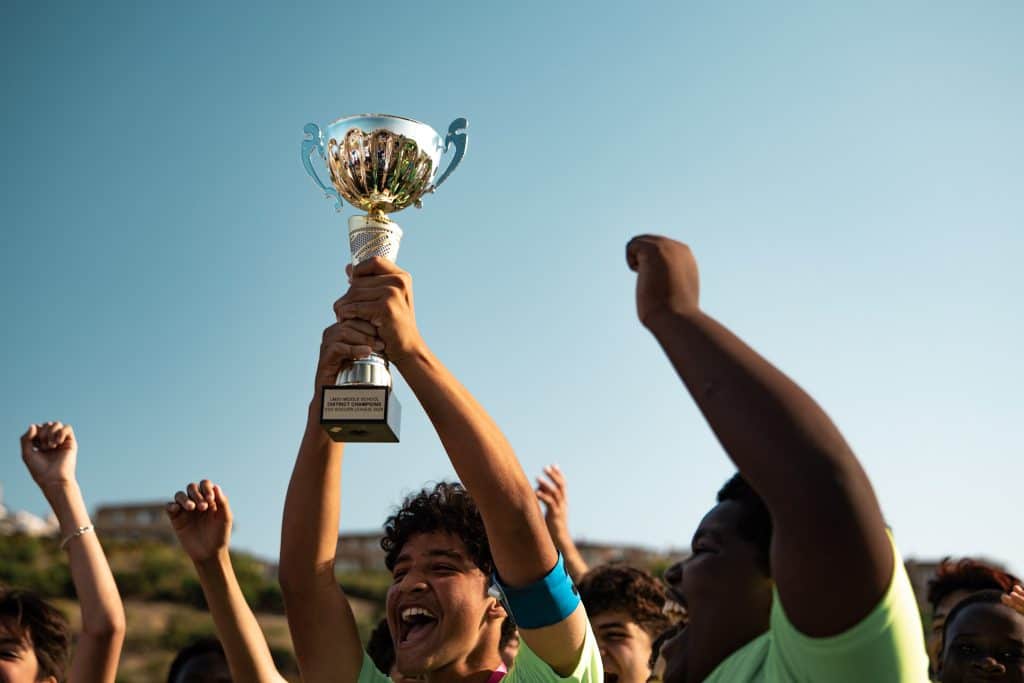
In neighborhoods across San Diego and Sacramento, a quiet shift is happening after school. On public school fields, hundreds of kids are training, competing, and finding structure through KG Soccer, a program designed to bring organized sports to communities that often get left out.
For many Latino families, access to organized sports in the United States still comes with a price. Club teams, travel, and equipment can cost thousands of dollars a year, making competitive soccer out of reach for many in the community.
KG Soccer flips that model. Instead of asking families to come to the game, it brings the game to them.
“Growing up, not everyone has the same opportunities,” says Sergio “Keko” Gontán, former La Liga and Serie A player and now co-director of the program. “Talent is everywhere, but access is not. This is about giving kids a real chance to be part of something”, explains Keko in an interview with Latino News Network.

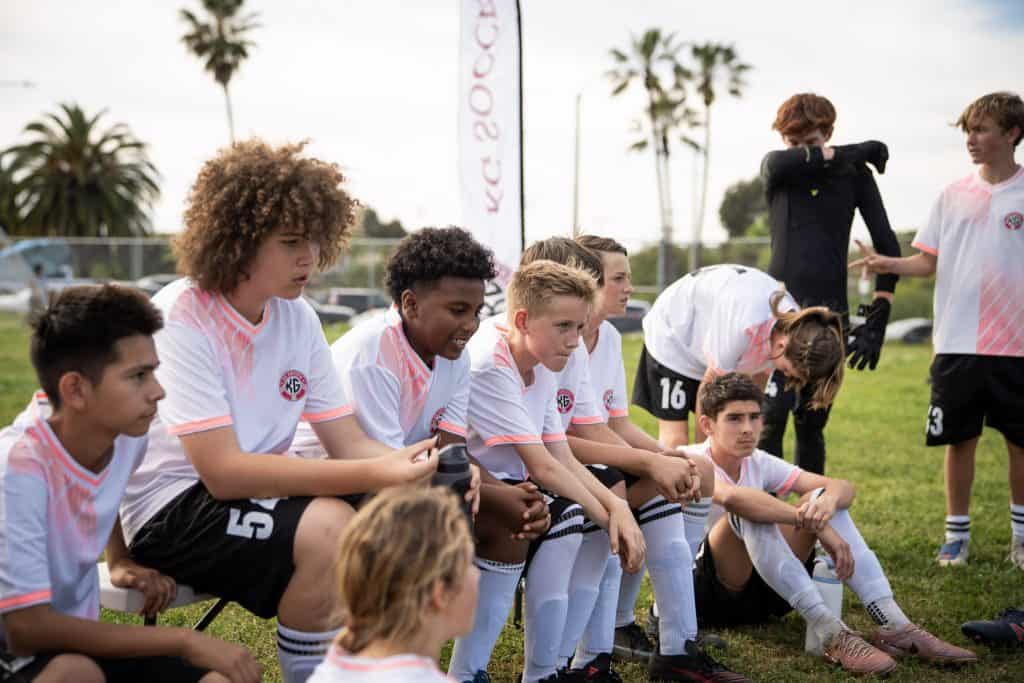
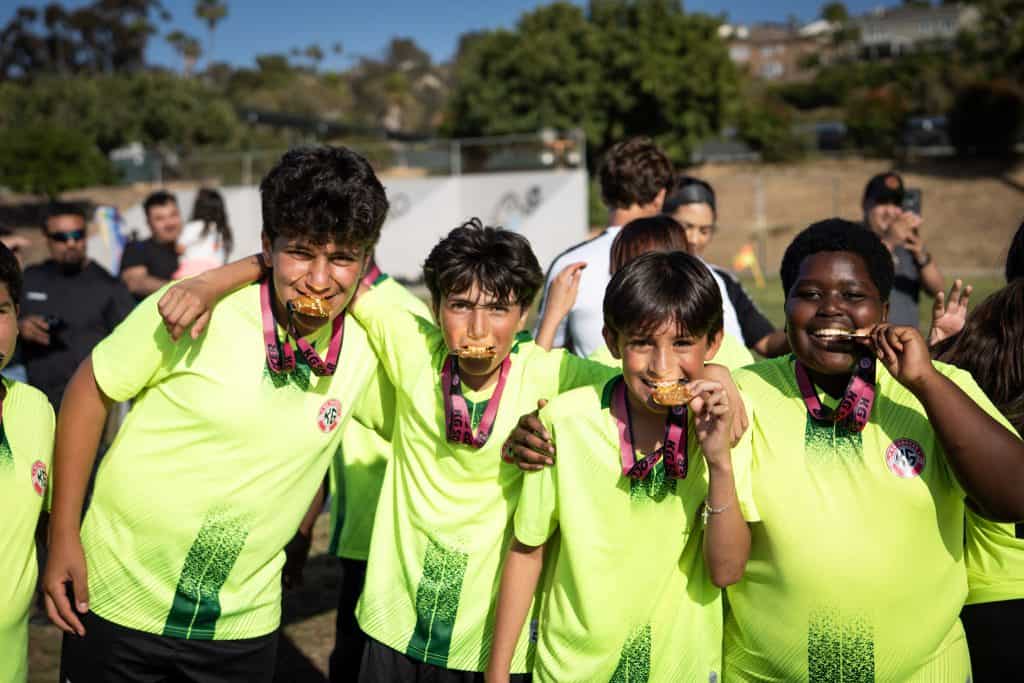
KG Soccer young athletes
The program is embedded in public schools and runs in 10-week seasons, with 2 sessions per week. It serves elementary and middle school students and prepares them for inter-school competitions, where teams represent their campuses in organized matches.
But what makes it different is who gets to play.
There are no tryouts. No prior experience is required. Registration is simple and often filled on a first-come, first-served basis. For many kids, that alone changes everything.
“You don’t need a background in soccer to join,” says Alex Segura, a former player in Spain and co-director. “Some of these kids are touching a ball for the first time. That’s the point. We’re opening the door”, tells LNN.
Segura points to a deeper structural issue in youth sports across the United States.
“One of the biggest problems here is access,” he says. “In Europe, if you’re talented, you play. You don’t pay thousands of dollars. In some cases, clubs even support you or pay you at certain stages. Here it’s the opposite. Families carry the cost. What we’re trying to do is close that gap, at least at the starting point.”
The program is also fully inclusive. Boys and girls train and compete together, regardless of experience, sharing the same space and the same expectations.
“It’s one group, one team environment,” Segura says. “We don’t separate. We want them to grow together, respect each other, and learn from each other.”
In communities where Latino students make up a large share of the population, that access carries weight. Many families work long hours or lack the resources to enroll their children in club programs outside school.
By keeping everything on campus and free of cost, the program removes those barriers.
Students stay after class or train before the school day begins. Coaches are already there. Equipment is provided. What might otherwise be inaccessible becomes part of their routine, helping improve attendance and strengthen their connection to school.
For some families, it also brings peace of mind. Their children are in a safe, structured environment during after-school hours.
Educators say the effects go beyond the field.
Jennifer Montez, director of Extended Student Services in the La Mesa Spring Valley School District in San Diego, says the impact goes far beyond soccer skills.
“The most significant impact we see is the development of a robust ‘emotional toolkit.’ While the students are learning footwork and tactics, they are also engaging in vital Social Emotional Learning (SEL). On the pitch, they learn how to navigate the highs of a win and the frustrations of a loss with grace.”
Montez says the district prioritizes access for vulnerable students, including those in foster care, students experiencing homelessness, and families facing financial hardship.
“We see a deep sense of dedication and resilience taking root; students are showing up for their teammates, pushing through physical and mental challenges, and learning that their hard work has a direct impact on the group’s success.”
From the district’s perspective, Montez says programs like KG Soccer help create opportunities that many families otherwise could not access.
“In many communities, ‘pay to play’ models act as a barrier to elite training; by providing high level coaching through ELO P, we ensure that our students enter high school with the same skills, discipline, and competitive experience as those who grew up in expensive private clubs.”
“By turning our schools into community hubs that prioritize equity and excellence, we are telling every student, regardless of their financial background, that they deserve access to the highest quality experiences.”
The structure is intentional. This is not casual play. Players commit to a season. They train consistently. They learn how to listen, work as a team, and handle winning and losing.
That structure builds toward one of the program’s most defining moments. The district-wide tournaments.
On those days, multiple schools come together in a single complex. Teams represent their school. They face kids from neighboring communities, often classmates, friends, or rivals. Games run back-to-back across several fields, with referees, schedules, and a level of organization many of these students have never experienced before.
“It’s a massive day,” Segura says. “You have schools competing against each other, kids playing against others from their own neighborhoods. The energy changes completely.”
The atmosphere builds with every match. Teammates cheer from the sidelines. Families gather. Players begin to understand what it means to represent something bigger than themselves.
“For them, it feels like a final,” Segura says. “Like a World Cup final. You see it in how they play, how they celebrate. It matters to them.”
One student, Manny, could barely sleep the night before his tournament. His mother said he was counting the hours to play with his classmates. He already plays on a travel team, but this felt different. This was about his school.
One of the coaches, Felix, jokes about it. “It’s like a national team call-up,” he says. And in many ways, that’s exactly how it feels for the kids.
That sense of occasion is part of the design.
“We want them to feel that it’s real,” Gontán says. “Because when it feels real, they take it seriously. They push themselves. They grow.”
That growth shows in small but important ways. Confidence. Discipline. Communication. Students who might not have seen themselves as athletes begin to take pride in their role.
Coaches also see changes in how kids relate to each other. Mixed groups of boys and girls, beginners and more experienced players, create an environment where everyone has to adapt and support one another.
“There’s a lot of learning beyond the game,” Segura says. “Respect, teamwork, accountability. Those are things they carry into the classroom and into their lives.”
For some, it is also the beginning of something bigger.
“They start asking what’s next,” Segura says. “How can I keep playing? How can I improve? That curiosity is what you want to spark.”
The program is already reaching hundreds of students across California, with plans to expand into new regions. Conversations are underway with major school districts in San Francisco and Los Angeles, where similar needs exist and where access to organized sports remains uneven for many Latino families.
The goal is to grow without losing what makes the model work. Keep it accessible. Keep it consistent. Keep it rooted in the community.
In a system where youth sports often depend on income, initiatives like this are creating a different entry point.
For many of these kids, this is more than soccer.
It is a first step into opportunity.
Photos by Riley Vieri.
Disclosure: Alex Segura is the Managing Editor of Latino News Network West overseeing California Latino News and Washington Latino News.
