 Skip to content
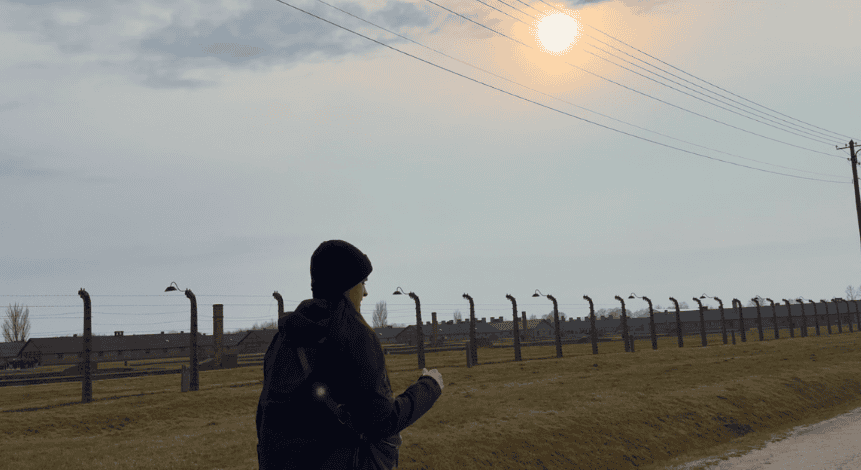
Agata Miodowska, a Polish woman of Jewish origin, sometimes walks through the Auschwitz-Birkenau concentration camps up to three times a day — the place where two of her grandmother’s brothers were exterminated during the Holocaust.
Miodowska is one of the few Auschwitz-Birkenau guides who speaks three languages: Spanish, English, and her native Polish. However, she finds it impossible to tell her story in her mother tongue.
“I suppose it’s easier to talk about this topic not in my native language. When I wanted to visit Auschwitz with my mother — in Polish, of course — I couldn’t. It was very difficult. It’s a different experience. I don’t want to work in Polish,” Miodowska said, her voice breaking.

Eighty‑one years ago, more than a million Jews from all over Europe were loaded onto cattle cars, convinced they were being relocated to a place where houses, jobs, and farmland awaited them. They carried suitcases and personal belongings that were more than simple possessions — they were evidence of their hope to live.
“The Germans always deceived the Jews… they could see the barracks where the prisoners lived, they could see the prisoners working next to the camp, they didn’t suspect that this camp had a second function — the function of extermination,” said Agata Miodowska, granddaughter of an Auschwitz-Birkenau survivor and a guide at the site.
After days of travel in inhumane conditions, those who survived the journey to Auschwitz-Birkenau were met with violence. Their suitcases — filled with clothes, money, blankets, and personal items — were taken from them, and they were subjected to a selection process that determined their immediate fate: the gas chambers or forced labor until death.
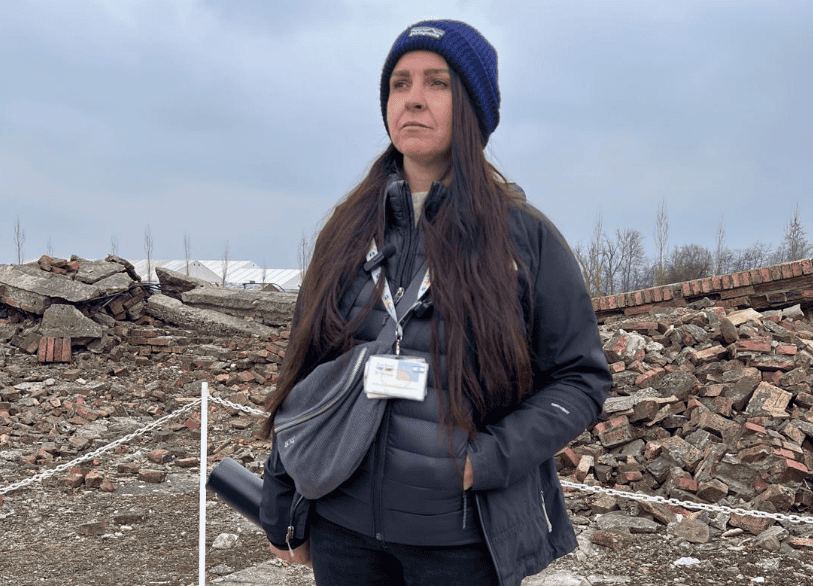
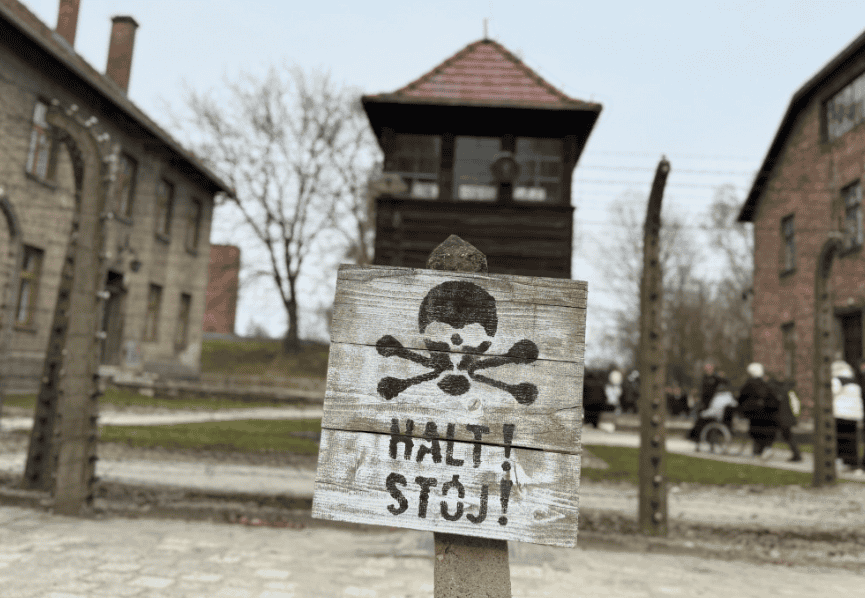
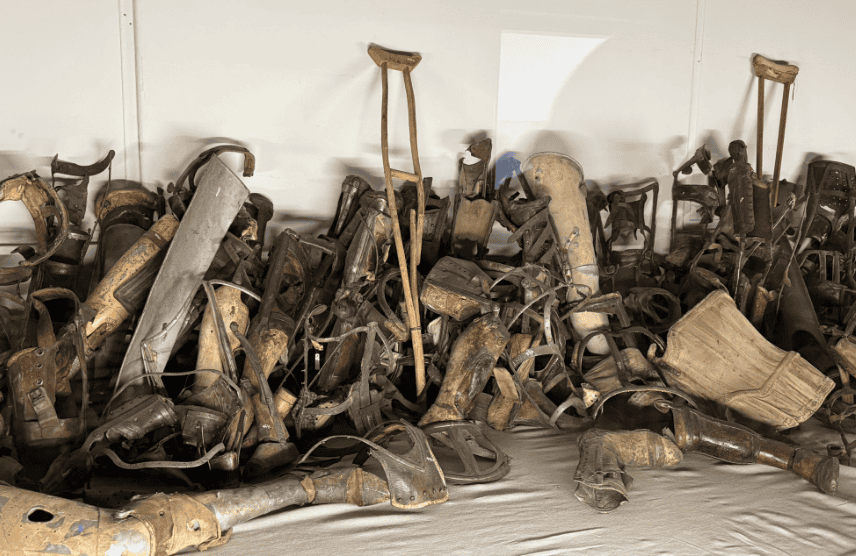
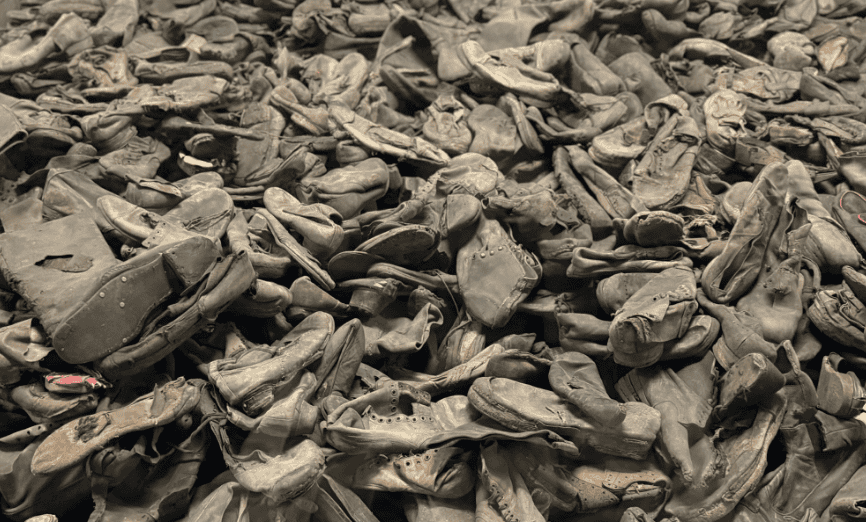
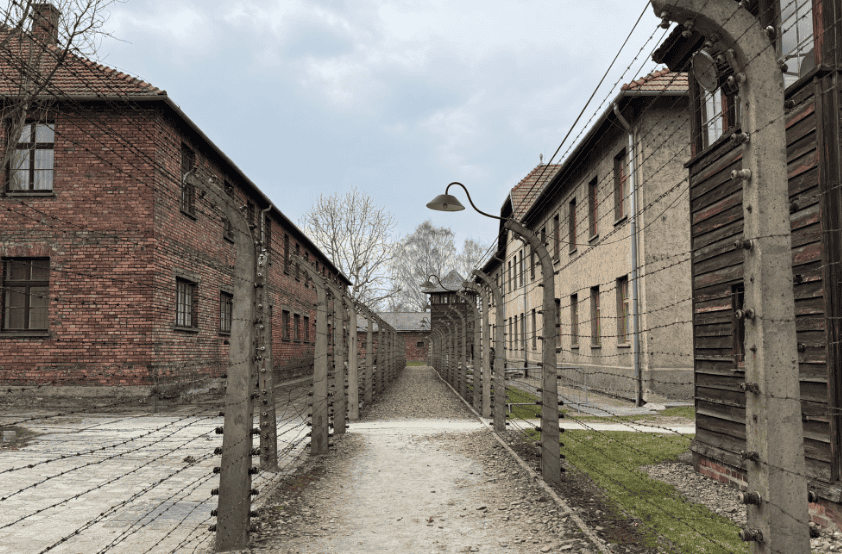
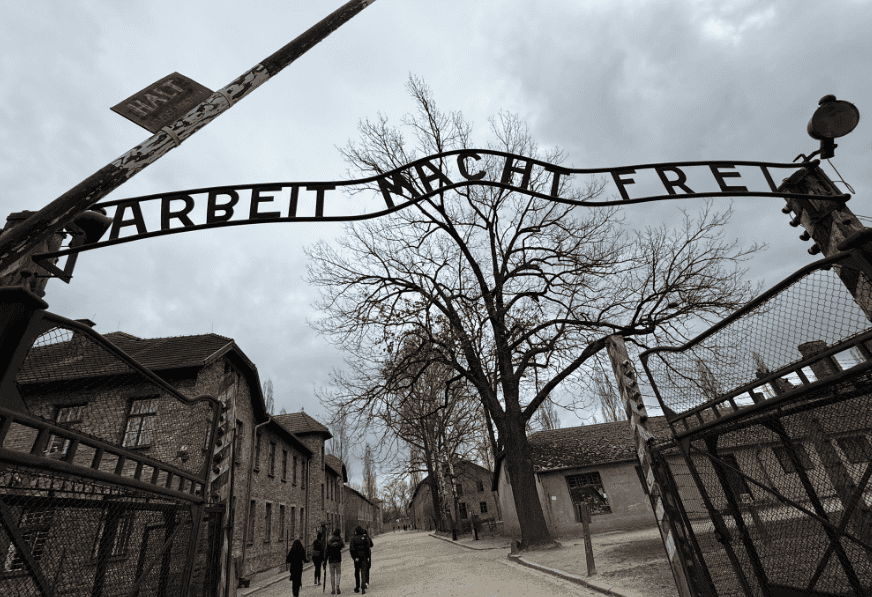
Scenes from Auschwitz-Birkenau concentration camps
Auschwitz-Birkenau still receives visitors under the same message, “Arbeit macht frei” — “Work will set you free” — displayed on a large metal sign at the entrance. Of course, it is ironic and sarcastic, because no one, no matter how hard they worked, could ever be free.
In March, near Kraków, Auschwitz-Birkenau still has low temperatures and strong winds, though manageable with jackets and layers of clothing. However, Miodowska also recommends visiting in January, when temperatures drop below zero, because it brings visitors closer to the reality prisoners faced.
According to Miodowska, the winter of 1940 was one of the coldest, with record temperatures of –30°C. This was the cause of many deaths, as prisoners — from children to the elderly — were forced to wear only striped pajamas and wooden clogs, having been stripped of their shoes, clothing, and personal belongings upon arrival.
Walking through Auschwitz-Birkenau is a cold and painful confrontation with one of humanity’s darkest moments. Walking between double electric fences with barbed wire about three meters high, bundled up and knowing you will return home at the end of the day, forces you to imagine the daily life of those who had no such certainty.
The experience is overwhelming; at times it becomes necessary to take emotional distance, because crying for those who lived that reality becomes inevitable.
“Prisoners woke up every day at 4 a.m.… when they undressed, they had only 15 seconds to bathe — 15 seconds twice a day, in the morning and in the afternoon — and then they were given food. But what does ‘food’ mean in Auschwitz? It’s another world — it’s a little bit of coffee for breakfast,” Miodowska explained.
Prisoners then worked at least 11 hours a day. “They entered the camp not to live. They entered to work until their death,” Miodowska said.
Walking through Auschwitz-Birkenau with a descendant of survivors opens one’s eyes and connects the history of antisemitism with today’s reality. In the United States, antisemitic incidents increased by approximately 360% in the months following Hamas’s attack on Israel on October 7, 2023, according to the Anti-Defamation League (ADL).
In Argentina, DAIA reported a historic peak in complaints not seen since 1960. In Europe, several governments have reinforced security at synagogues with police presence to prevent possible attacks, according to historian and political analyst Yoel Schvartz.
At the end of the tour, standing before the silent ruins of a gas chamber, Miodowska explained what it means for her to be Jewish in Europe. She recalled that in Paris, while talking with a friend about their Shabbat plans in the back of a taxi, the driver realized they were Jewish and threw them out of the car in the middle of the street.
“It’s messed up because you don’t know who your enemy is,” Miodowska said with frustration.
Danna Matheus is a senior Journalism student at the University of Maryland, with an interest in covering vulnerable communities worldwide and social justice. Matheus completed this piece as a media fellow with Fuente Latina.
