 Skip to content
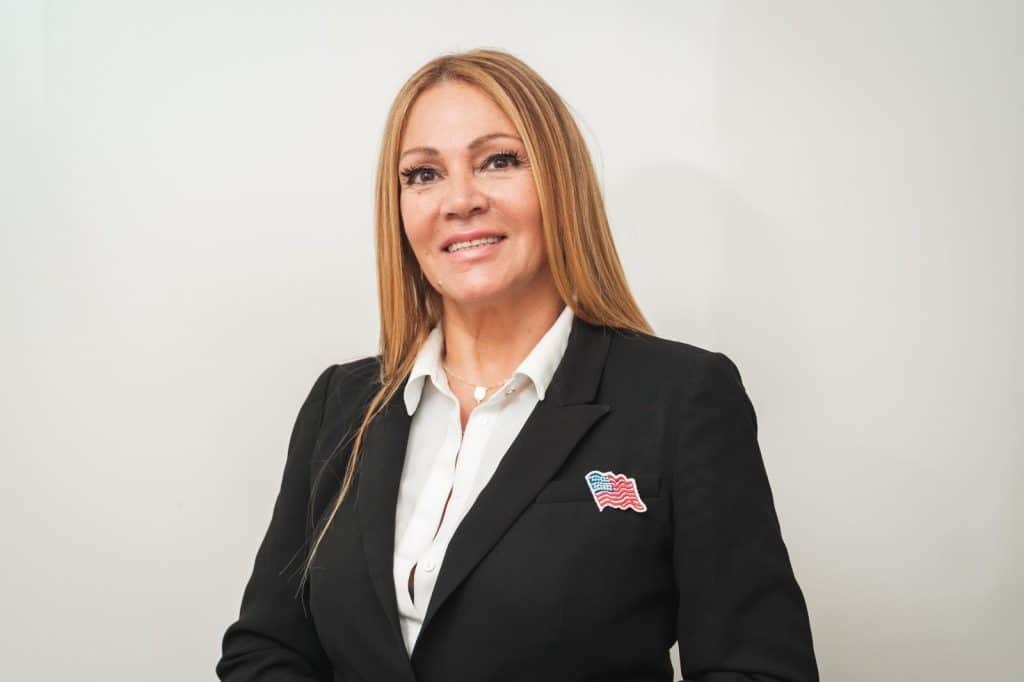
HALLANDALE BEACH – Carmen “Jackie” Jaqueline Gimenez, a Venezuelan living in Hallandale Beach, Fla., was working for the Venezuelan Ministry of Finance across the street from el Palacio de Miraflores in 2002 when she realized things would never be the same.
On April 11, came “El Golpe,” or a failed coup against President Hugo Chávez. Gimenez shares that this was the moment she realized Democracy was breaking down in Venezuela.
“Sitting by the window, I saw that those who were my Venezuelan siblings were arming themselves, taking to the streets to carry rocks, trucks filled with guns, long and short, and knives,” said Gimenez. “The Minister of Finance told us that nothing was going on, but at that point the bombs outside weren’t letting us breathe properly.”
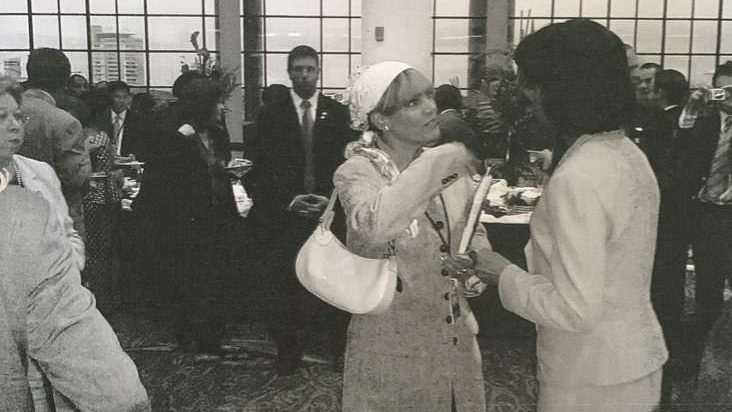
This incident would solidify Hugo Chavez’s power, setting the stage for the authoritarian regime that would rule the country for more than 20 years.

That was, until Jan. 3, when the United States captured Chavez’s incumbent, Nicholas Maduro, who faces federal narco-terrorism, cocaine-importation conspiracy, and weapons offenses charges.
Maduro’s Capture:
Gimenez, who is now a human rights activist and author of “Asylum Tales: FROM SUFFERING TO APPROVAL,” feels a sense of joy, a feeling that a little over 50% of Venezuelans in the U.S. support the president’s capture, according to a poll by The Economist, are also experiencing.
But her support for this decision is largely rooted in her strong conservative politics, which have deepened through the experiences she faced in Venezuela.
This is a common trend among many Latinos from countries with authoritarian governments, predominantly those from Cuba and Venezuela.
South Florida’s proximity to Cuba’s northernmost border allows a vibrant Cuban community to thrive, with more than 40% of Cubans living in the U.S. calling Florida home, according to a 2025 study by the Pew Research Center.
In the 2024 presidential election, 68% of Cubans living in Miami-Dade County voted for Trump. In Doral, which is home to ‘Little Venezuela,’ Trump won by more than 60% of the vote.
Gimenez’s Story:
Gimenez, who fled Venezuela in 2008, resides in Hallandale Beach, a city that is about a 30-minute drive from Doral, where about 40% of residents identify as of Venezuelan origin, according to city reports from 2025.
Gimenez arrived in the U.S. in 2008 after an arrest warrant was issued for impersonating ALBA-TCP officials. It is unclear whether this is related to the similarity in names between Bolivarian Alliance for the Peoples of Our America – Peoples’ Trade Treaty (ALBA-TCP) and ALBA-NGO. ALBA‑TCP is a regional alliance founded in 2004 by Hugo Chávez and Fidel Castro to promote political, economic, and social integration among Latin American and Caribbean nations, emphasizing socialist cooperation and regional independence from U.S. influence. Information about ALBA-NGO is scarce on the internet; however, official documents from the U.S. Copyright Public Records system indicate that the organization was created in 2004 and approved by the Copyright Office in June 2006. Another record shows the organization listed under the NGO Branch of the United Nations’ Department of Economic and Social Affairs.
Although Gimenez didn’t originally want to continue her work in politics, after facing sexual harassment at her valet job at Impark in Miami Beach, she became more closely involved in Broward County politics and her local Venezuelan community, only after attending St. Thomas College of Law to receive her Master’s of Laws in Intercultural Human Rights.
In 2012, Gimenez founded USA Refugees and Immigrants, a nonprofit organization dedicated to providing free assistance to Venezuelans seeking asylum or Temporary Protected Status in the U.S.
However, on April 7, U.S. Citizenship and Immigration Services announced the end of the TPS program for Venezuelans living in the U.S. Gimenez explains that although the end of the program proved to be a challenge for many of the families she works with, it is a proper consequence for what she calls an abuse of the system.
“Temporary Protection Status is temporary,” said Gimenez. “Many of the time we tell people through my organization that this is temporary, to look for other opportunities, to continue their citizenship process — but they think their status will remain the same forever.”
Hallandale Beach Mayoral Election:
In 2020, Gimenez sought to become mayor of Hallandale Beach, Fla., but after receiving only 19.97% of the vote in the November 3, 2020, election, she didn’t react with defeat but with hope.
“I feel like I owe this country for saving my life, so I want to expand this state, I want to build it up, to raise the quality of life for the people here,” said Gimenez. “I feel that the obstacles I have gone through thus far and what I’ve been given have given me more strength to keep going.”
Throughout the months leading up to the election, Gimenez received accusations from around the Hallandale Beach community for being a “chavista,” or a supporter of the ideals of Venezuela’s former president, Hugo Chávez.
A journalist at the WLRN, South Florida’s public radio and television service, covered the accusations Gimenez faced throughout her candidacy.
His coverage uncovered accusations across social media accusing Gimenez of being an alleged ally of the Chavez regime, and claimed that she was involved with ALBA, or the Bolivarian Alliance for the Peoples of Our America.
In Venezuela, Gimenez served as an activist and president of the Integration Model Advancing Área de Libre Comercio de las Américas (ALBA-NGO), a non-governmental organization founded in protest of the political policies pushed by Chávez and his government. She founded the organization alongside Carlos Arnaudez, a
Although the organization dissolved after its 2004 inception, many previous outlets have confused it with the Maduro-led effort, the ALBA-TCP. The organization Gimenez founded, she claims, was independent of ALBA-TCP.
However, nine months after the story’s release, Gimenez reached out to clarify the information in the story, having previously provided no initial comment. Information regarding her association as a “chavista,” relationship to former alleged classmates, and her association with ALBA-TCP was clarified.
For Gimenez, being called a Chavista felt like an attack on her work within the Venezuelan effort to build ALBA-NGO and against the Chavez regime.
“What they confuse is that they think I am a chavista since I founded ALBA. But no, they are wrong,” said Gimenez. “I created my ALBA, and they created a project very different from mine.”
Venezuelan Politics:
Experiencing democracy in the U.S. was a complete change for Gimenez. She explains that her experiences in Venezuela are incomparable to those she has faced in the U.S. She doesn’t think she would be able to speak up as openly in Venezuela as she does in the U.S.
“There are failures [in the U.S.], there is no doubt, but the comparison, without a doubt, cannot be made,” said Gimenez. “There is absolutely no comparison to be made between democracy and true freedom [to Venezuela].”
After the capture of Maduro on Jan. 3, Gimenez sees the intersection between Venezuelan and American politics as imperative for the large Venezuelan community in South Florida.
“Venezuelan-Americans are who are going to rebuild Venezuela because nobody there is ready for that yet,” said Gimenez.
Editor’s Note: Quotes from Gimenez have been translated into English for clarification purposes.
Gabriela Quintero is a High School senior at Florida Atlantic University High School and will be attending Barnard College at Columbia University in the fall to pursue her B.A. in Political Science and English. Interested in politics, migration, policy, and culture, she hopes to pursue a career in political and cultural journalism.
