 Skip to content
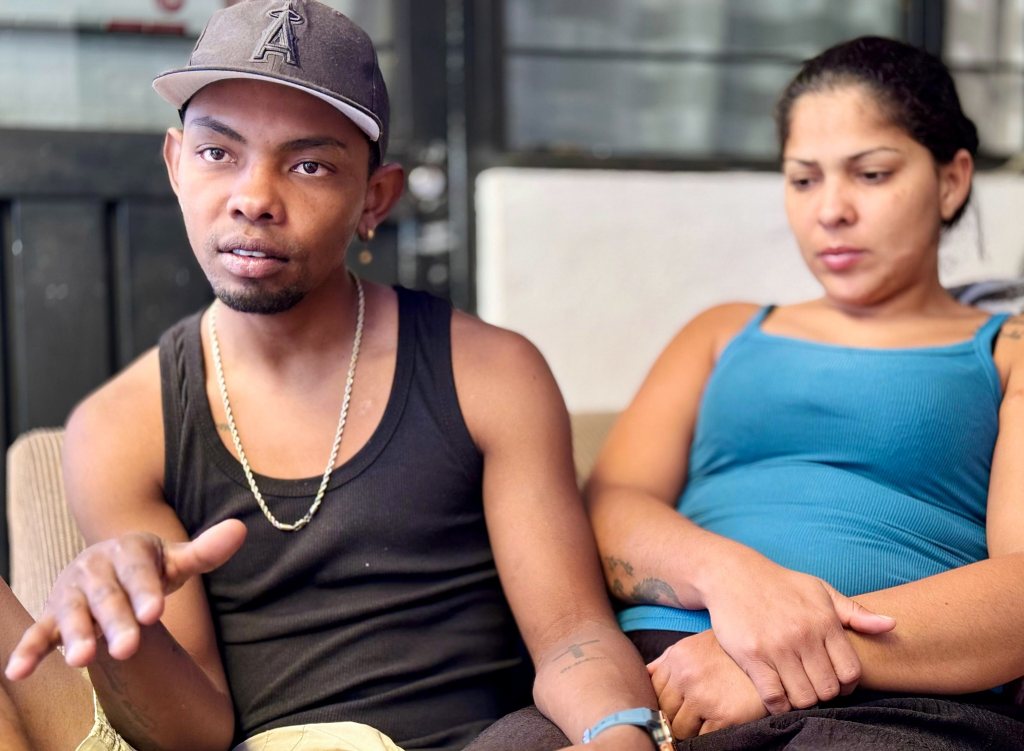
SAN JUAN TEOTIHUACÁN, México – Yesenia has been bleeding heavily for two weeks.
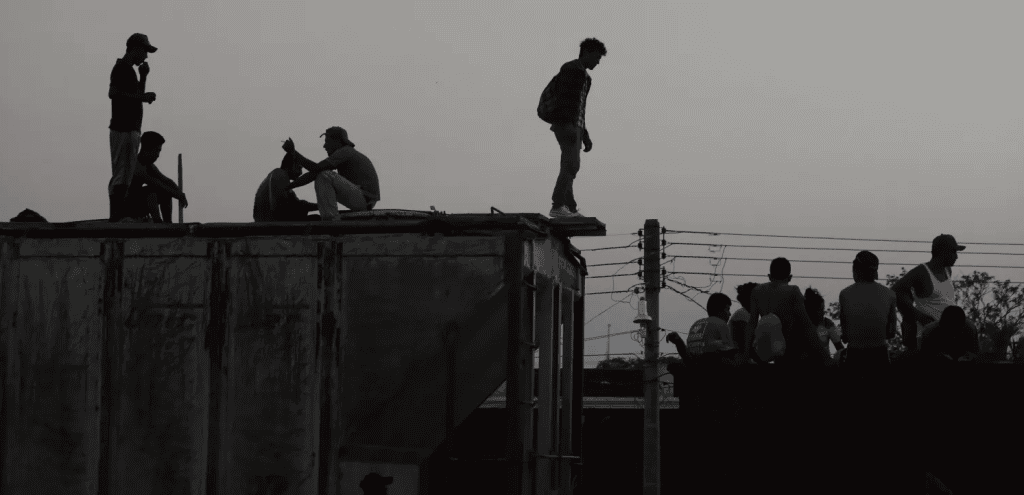
She’s standing atop a tank car, part of a long train muscling its way from Coatzacoalcos toward Mexico City. In each hand, she grips a fistful of gravel. Yexander, 10, and Milagros, 6, stay close, curled on the small platform, asleep next to their mother. The darkness is impenetrable. The dense tropical jungle seems to close in on the tracks.
Yesenia tries to ignore the blood running between her legs and the wave of cramps in her abdomen.
She clenches the rocks to protect her children from bandits known to rob, and sometimes kidnap, vulnerable people who see the dangerous railways as their only option to escape violence or poverty in their home countries. Tens of thousands of people migrating take this same route to the United States. But Yesenia and her children aren’t traveling to the U.S.

The 30-year-old mother is trying to reunite her family, after Mexican and American immigration officials cooperated in February to deport her and send her nearly 2,000 miles away from her husband and sons, 7 and 14, back home in Tucson.
Yesenia escaped her native Venezuela in 2017. Four years later, she fled South America altogether. Along the way, she says, immigration authorities in México and the U.S. detained, humiliated, threatened, beat or lied to her. Traveling through México years ago, kidnappers demanding a ransom abducted and abused her and her children. Yesenia swore that would never happen again.
On the train, mosquitoes buzz in her ears, zeroing in on the bare skin of her face and neck. Fear for her children overweighs the pain from bleeding and cramps.
Yesenia can’t imagine what the pain means — signs she was pregnant. Their first baby since she and her husband Mariano, 28, began building a life for their family of six in Southern Arizona.
Weeks would pass before a doctor in México could examine Yesenia and tell her: You miscarried.
What caused her to lose her child?
Yesenia, her voice sharp like any mother protecting her baby, says it was the stress of her detention in Tucson. Her swift, traumatic deportation from the United States. Then the exhausting, treacherous journey through México.
Everything would be different, she says, if not for a U.S. president intent on deporting migrants to any country that will take them and criminalizing people like her — a mother selling empanadas to care for her family. Her family’s story would be different if not for a Mexican president who agreed to accept non-Mexican U.S. deportees for “humanitarian reasons,” but offers little protection or help once migrants are stranded and separated from their families, Yesenia says and human rights experts confirmed.
After fleeing Venezuela nearly a decade ago, Yesenia and Mariano spent more than five years ping-ponging across Latin American countries — covering more than 5,000 miles — before finally securing a sense of safety for their family in Southern Arizona. But in February, Yesenia was deported with two of her four children — forcibly removed from Tucson to southern México, separated from her husband and two young sons.
Once again, they are in danger.
They fight to reunite their family in yet another country that doesn’t want them. On both sides of the border, they endure abuse and fear for their children’s lives. To bring their family back together, they risk their own lives on a trek that would last over 30 days — crossing more than 6,000 miles by bus and train, facing robberies at checkpoints, spending nights under a bridge, suffering in another detention center and at the hands of immigration officials.
Her family should be home, safe, in downtown Tucson — working, caring for their children and volunteering at their church, Yesenia says. After her first migration years ago through México, surviving robberies, kidnapping and abuse, she can’t stop thinking about how this country will treat her undocumented children now.
U.S. and México collaborate in deportations
On Feb. 11, an Arizona trooper pulls Yesenia over on the south side of Tucson. Less than 12 hours after that initial stop, U.S. border patrol agents deport the Venezuelan mother and her children to Nogales, Sonora. Then Mexican immigration authorities board her, Yexander and Milagros onto a bus for a nearly three-day forced relocation across the country.
On Valentine’s Day, Yesenia and her children arrive at a government office in Villahermosa — capital of the southern Mexican state of Tabasco.
She still hasn’t been able to call Mariano and let him know she and the kids are alive. She worries about her two young sons Joan and Yender back home in Tucson without their mother.
Due to U.S. and Mexico policies, deported people are routinely left stranded in dangerous areas, without any safety net.
On Feb. 26, barely two weeks after Yesenia’s deportation, a top Border Patrol official announced in Spanish on social media — tagging the U.S. Embassy in Mexico — that migrants would face forced relocation “under the strong leadership of President Trump.”
“If you cross illegally, you will be deported far from the border,” said Ricardo Moreno, Border Patrol’s deputy executive director of operations, in Spanish.
In June, U.S. Customs and Border Protection agents told La Silla Rota and Arizona Luminaria there is an agreement between both governments to transport people being deported further south into México and release them as far from the northern border as possible.
Mexican government officials have not publicly acknowledged their cooperation with the U.S. to send migrants to distant and remote regions, regardless of their home country or the safety risks.
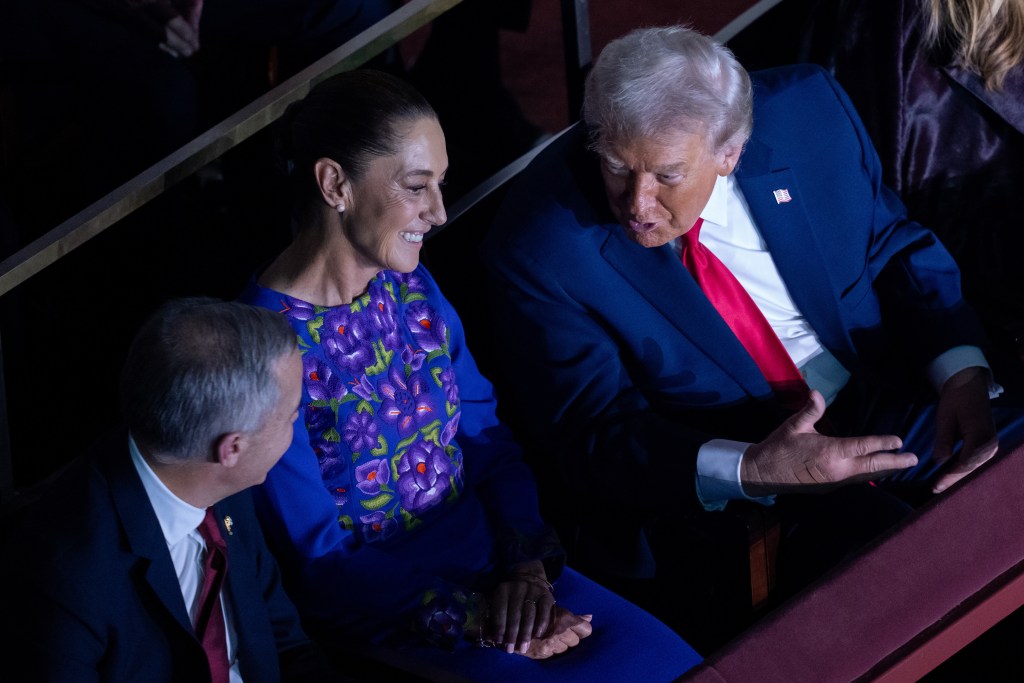
In a July 11 press conference, Mexican President Claudia Sheinbaum said that since Trump took office again, 6,525 non-Mexicans had been deported from the United States to Mexico. That is, on average, 38 people a day.
Arizona Luminaria and La Silla Rota reached out to undersecretary of Human Rights, Population and Migration Félix Arturo Medina Padilla asking him for an interview to address cases like Yesenia’s and to explain why Mexico is collaborating with the U.S. in harsher immigration policies. Medina Padilla has not responded.
Human rights experts say the forced displacement and lack of Mexican government services for migrants leaves families like Yesenia’s vulnerable to criminals who abuse and extort them. What happened to Yesenia, experts say, after her deportation — abuse by Mexican immigration authorities, lack of access to medical care and having to ride atop a dangerous freight train to flee an area known for exploiting migrants — is increasingly typical.
Women seeking protection and reunion with their families find themselves punished for migrating: criminalized, brutalized, and often left to suffer in silence, says Savi Arvey, director of refugee protection for Human Rights First.
“We have continued to see a very precarious security situation for migrants,” Arvey says of México.
Separated
Mariano hasn’t heard from Yesenia for three days.
For 72 hours, the family searches for answers. A family acquaintance runs Yesenia’s A-number — or “alien registration number,” which the U.S. Department of Homeland Security assigns to non-citizens in the United States. Nothing comes up. Not in immigration custody. Not in ICE. Not in any police record. Not in jail.
It is as if she has disappeared.
At home, the children ask questions. Her oldest boy, Joan with a cracking voice, asks what happened to his mom. Mariano tries to reassure the 14 year old: “She’s coming. Any day now.” But deep down, he knew she wasn’t.
“They had her wiped off the map,” Mariano says in Spanish, remembering.
He can’t believe it’s possible.
“It’s a violation of her rights,” he says. “Because they know she has two small children, how can they abandon them here? Who separates a mother from her kids? In what world does that make sense?”
Three days before she was detained, Mariano and Yesenia joked over coffee.
“If they deport you, I’ll send the kids after you and stay here,” he told her. They laughed.
But when the moment comes, there’s no question. “The first thing I said was: I’m leaving.”
There’s no plan. No time. Just a decision: to follow her. The same way Yesenia had once followed him.
He knows it won’t be easy. Two of their four kids are in Tucson with Mariano. One of them isn’t his biological child but he raised him. “If the police stop me … they’ll take him,” he worries.
He fears being accused of kidnapping.
The child could explain he was his stepfather, but will that be enough? Who in the U.S. government, especially under the Trump administration’s mass deportation policies, listens to a migrant child crossing the border?
Surviving from scratch
After officers order Yesenia and her little girl and boy off the bus in Villahermosa, an immigration official tells her to sign some papers. They sit in a processing room, not knowing what comes next. About an hour later an officer tells her to leave.
Yesenia says Milagros thinks they’re still in danger: “She kept saying things like, I know we’re still prisoners.”
Not knowing where to go, she wanders the city streets with her two kids. In a park she asks a man to borrow his phone. She finally speaks with Mariano and her two young sons still in Tucson. She tells them she’s in the capital city of Tabasco, México — nearly 2,000 miles south of the U.S. border.
Yesenia and Mariano quickly focus on how they can reunite, bring their family back together. Hold each other again.
She calls one of the church elders from her Tucson congregation back home. Her pastor connects her with someone in the city who has an extra room.
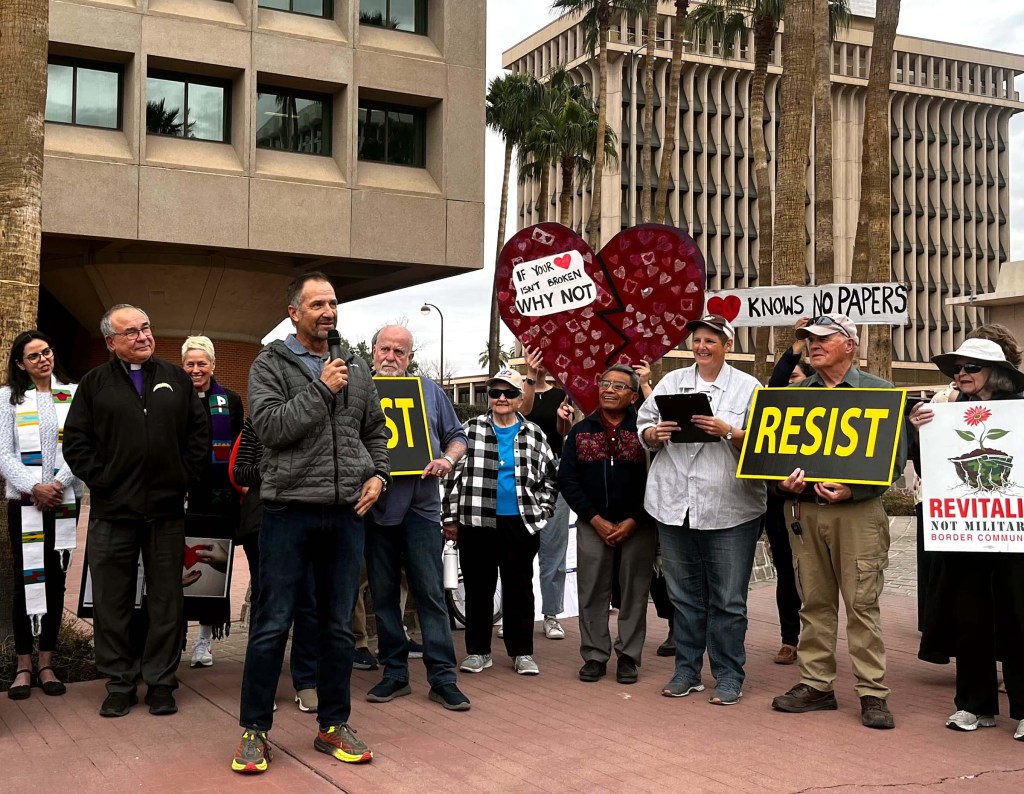
Help from her Southern Arizona community is more of a safety net than most migrants have when they are deported to southern México. While some cities and small towns along the migrant routes have shelters and advocates protecting migrants, if you can’t access those networks, you are on your own, and extremely vulnerable.
Arvey, from Human Rights First, says there are “very very limited resources for the migrant community” in Villahermosa.
The Women’s Refugee Commission highlighted in December 2024 the dangers migrants face in México. Women and mothers can bear disproportionate burdens and additional threats. The press has reported cases of migrants being stranded in México in “deplorable conditions, lacking water and sanitation, with no access to basic services or healthcare.”
“What is happening now is that the INM receives people from the U.S., puts them on buses and sends them to Villahermosa or Tapachula, two cities along the southern border of México with fewer jobs and resources for migrants,” says Gretchen Kuhner, director of the Institute for Women in Migration. The National Institute of Migration, known by its Spanish acronym INM, enforces México’s migration policy for national and foreign migrants, regardless of immigration status.
“Many of those people try to take a bus or some type of transportation northward to Mexico City and that is when they are particularly in danger of extortion, kidnapping and other violent crimes,” Kuhner says. “If they had migration status they wouldn’t be as vulnerable and it would be easier for them to seek services such as health care, housing and education.”
Yesenia’s health is deteriorating. As she walks, looking for food that first day in Villahermosa, she faints, briefly passing out on the sidewalk.
When they make it to the home her Tucson pastor secured for the family, Yesenia still can’t rest. She can finally charge her own phone, and borrows enough pesos to buy some minutes. She video-calls and texts Mariano, her sisters-in-law, friends in Tucson. She checks Facebook to answer the onslaught of worried messages.
She and the kids share a small room, one mattress on the floor. Their first full day in Villahermosa is Yexander’s 10th birthday. She has little to celebrate with, but manages a couple sweet treats for him.
The children eat cookies, sleeping and playing on the mattress. She wants to feel safe but the cramps get worse. “I thought it was just my normal period,” she says, but the bleeding gets heavier and “I was starting to have a fever.”
“I was in so much pain,” Yesenia says, wincing at the memory.
She knows now something is wrong, but doesn’t have any money and is scared to seek medical help. The husband of the woman who gave them shelter is a doctor. Yesenia explains her symptoms. Without examining her, he says: You were pregnant and miscarried.
“I told him that was impossible,” she says, explaining that she has a birth control patch on her arm.
He responds that it could be fibroids. “I believed more in the fibroids than in the pregnancy,” she says.
She focuses on what’s ahead.
Yesenia and Mariano start piecing together a plan — could they reunite their family in Mexico City?
“The idea was that I could go by bus, hopping from little town to little town,” she says.
It takes more than a week for her family and community back in Tucson to raise enough money for Yesenia to buy a bus ticket to Mexico City. The family thinks it will be a safe place to meet, and Mariano’s sister had recently resettled there. Yesenia knows she and her children will have to face dangerous immigration checkpoints to get there.
“We had to risk it,” she says.
Self-deportation
Mariano decides to take the boys and leave behind the life they were building in Southern Arizona.
He’d lost his asylum case in 2023, but says he recently spoke with attorneys who told him he probably lost his case because he didn’t have legal representation. They told him he still had a chance for another form of immigration protection. By leaving the country to reunite with his wife and family, he was giving up that chance.
A pastor from Tucson drives Mariano and the kids to the border crossing. There is no formal deportation. No documents. Just a quiet, unofficial, without-paperwork departure. He spends two nights in Nogales with Joan and Yender, trying to figure out how to get to Mexico City.
“I was discouraged,” he says. “But I had to go. For her. For the kids. For myself.”
In México, he exchanges $250 he’d pulled together and carries with him. He spends most of it on bus tickets. The rest is stolen from him along the way.
On the bus from the border to Mexico City, Mariano gets stopped again and again — five, maybe six times, he says. Officers accuse him of carrying counterfeit bills.
“The first thing they ask is: ‘Do you have money.’ They take your bills, say they’re fake. They confiscate them. Right in front of everyone,” he says.
Sometimes it is actual police. Other times, men in black vests with no ID. Work boots. Plain clothes. Civilians exploiting migrants’ fear and vulnerability.
In Los Mochis, Sinaloa, men dressed in black and carrying guns storm the bus. They pull Mariano off along with other deportees. No one says anything. No one intervenes. The armed men take what little money he has left.
Mariano arrives in Mexico City thinner, exhausted, with no money. He’s nearly 1,400 miles away from his Tucson community and still without Yesenia. He has barely slept. He has barely eaten.
“Real food? Mostly it was for them. So the kids wouldn’t go without anything,” he says.
He finally arrives, before Yesenia and their two other children. He waits a week. Trying not to fear the worst.
North again through Mexico
The first police checkpoint Yesenia and the kids hit, a Mexican immigration officer boards the bus and questions her. “He came right for me,” she says.
Yesenia tells him she’s traveling to Mexico City and she’s sick. The officer tells her he’ll let them continue, but warns more checkpoints will follow.
“He told me to sit by the window, put the kids next to me, and try not to talk,” she says.
She’s questioned again at another checkpoint as they drive northward and into the state of Veracruz. Again they let her continue, but warn: At the next checkpoint, officers are going to stop her family.
Kuhner says it is common for immigration officials in México to inform each other about migrants they spot at checkpoints heading their way. “They’re definitely colluding,” she says.
At the third checkpoint, police try to pull her off the bus. She tries to record their actions.
While remembering, she takes a sharp breath and quickly fans herself with her hand.
“When I started recording video … I told them not to touch the children, and warned them that if anything happened to me, it would be their responsibility,” she says. “I became upset and started crying because I didn’t like the way they grabbed my child.”
The family shared Yesenia’s partial recording of officers with Arizona Luminaria and La Silla Rota. The mother’s trembling voice breaks with tears as she pleads with officers.
Officer: “…acting that way.”
Yesenia: “I’m not acting a certain way, ladies. You also have to understand me.”
Officer: “No. Well, listen…”
Yesenia: “You are human beings and you are also women.”
Officer: “Yes, we’re all human beings, of course.”
Yesenia: “I have my two kids, I have been suffering for two weeks because I’m not with my kids. Aside from that, I feel sick, I’ve been bleeding. So I need to find… “
Officer: “Yes, they will take you to México.
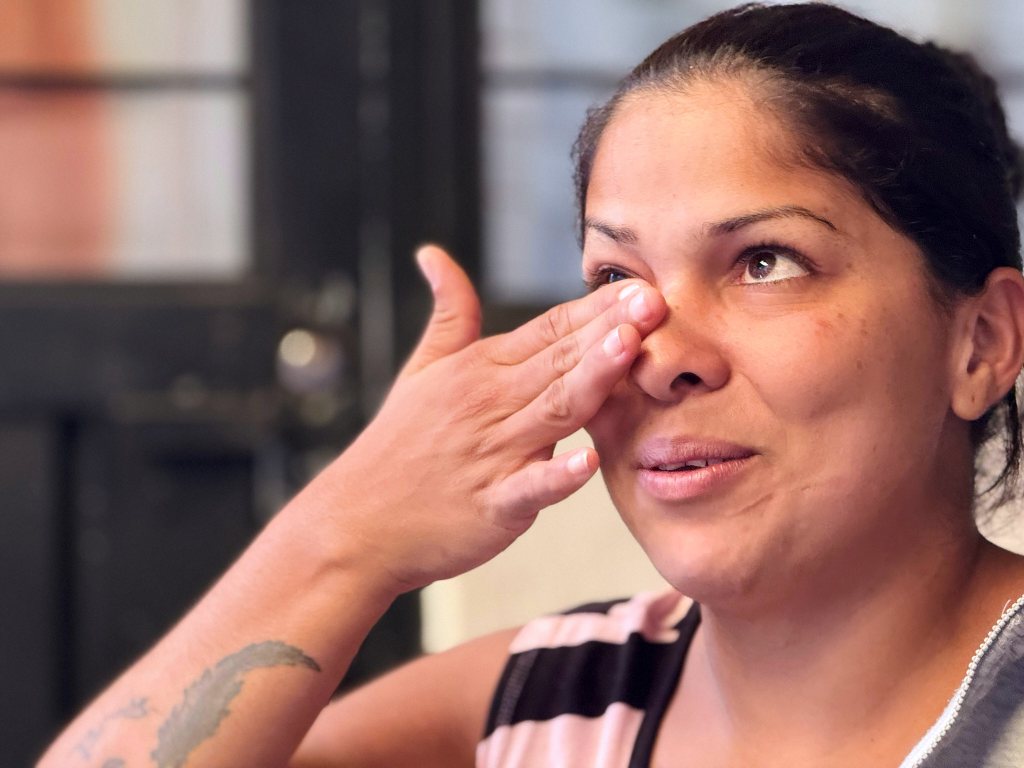
Yesenia remembers how quickly the questioning escalated. She says one of the police officers ripped the phone out of her hands and started deleting the videos. She only managed to send one audio message to her husband of what was happening.
“He grabbed my hand and twisted it like this to put handcuffs on me,” she says of an officer.
Then four officers grabbed her son to pull him off the bus, pushing him “as if he were an adult criminal. My boy, my little 10‑year‑old,’ she says. An agent yanks her son’s arm so hard, she says, he has bruises for weeks.
“My son was telling me, ‘Mom, don’t let me go, don’t let me go.’ My daughter was hanging onto me here, almost choking me. And I’m screaming.”
“I told them … I wasn’t any kind of criminal. How terrible that you all have no heart,” she says, crying in despair.
The female officer grabs her in a chokehold, she says. Milagros, her 6-year-old daughter, runs to her defense and pulls the woman’s hair.
It’s chaos, Yesenia says.
At one point during the struggle, she uses all her strength to push and kick to get free. She feels sharp cramps in her abdomen and blood between her legs.
“And a horrible clump of blood came out of me, and my entire pants were stained. That was when they sort of let me go completely and just stood there staring at me.”
After they are finally forced off the bus, agents transport the family to an immigration detention center in Acayucan, Veracruz. Now, she’s nearly 1,800 miles away from her Tucson community. And still nearly 340 miles from Mexico City, where she hopes to see her boys again — finally bring her family back together.
In detention, she says agents try to steal what little money she’s saved.
“When they searched my bag, that’s when they saw the money. She took it from me. That’s when I started yelling at her to give me back my money. There, I really got hysterical,” Yesenia says. “I was practically dying from my bleeding, and now they’re also going to take my money.”
She asks to see a doctor. She’s in pain, nearly fainting, and needs help. No one, she says, offers medical treatment.
There is no record of the family at the detention center, Kuhner says. So there is no record of the abuse they say they endured. The lack of official government documentation registering the family’s presence and treatment at the center doesn’t surprise her.
“There’s complete impunity,” Kuhner says of the Mexican government.
Kuhner argues migrant families should not be detained by Mexico’s immigration agency, but placed in the care of the National System for Integral Family Development, a government agency that supports vulnerable populations, including promoting programs and services to protect children, adolescents, older people and people with disabilities.
Despite multiple attempts to obtain comment over several weeks, Mexican authorities — specifically the Secretaría de Gobernación and the Subsecretaría de Derechos Humanos, Población y Migración — did not respond to questions about Yesenia’s case.
In Veracruz, Yesenia says an immigration officer promises to give her a type of visa that would let her travel freely through México for a certain period — a chance to avoid the stress, and the violence, of being interrogated at immigration checkpoints.
But in Acayucan, at the detention center, she says, another officer tells her no such visa exists. Yesenia begs to see a doctor. They refuse — again and again. They hand her sanitary pads.
The next morning, Yesenia and her children are released onto the streets.
She has to make a choice: head toward Mexico City again — on foot or by bus — where more checkpoints and interrogations await her family. Or turn back, toward Coatzacoalcos, where she’s heard she can catch La Bestia, the train also known as The Beast that travels north through the country to the U.S. border.
She can’t bear another encounter with Mexican immigration officers. She decides to go to Coatzacoalcos. She knows it means going back about 60 miles and traveling farther away from Mariano and her two sons with him. But she feels it’s their only chance.
From Ecatepec to Teotihuacán
Mariano arrives at the Northern Bus Terminal in Mexico City. From there, he heads to Ecatepec, a sprawling suburb on the outskirts of the capital, where his sister and her two children live.
She had returned to México about the same time the new Trump administration intensified deportations, deciding to settle there permanently. Her husband remains in the U.S., sending money — enough for rent, food, the basics.
He sends her $150, maybe $200 a week, and at the end of the month, another $200 or $300 for rent.
Mariano has no such help. “I don’t have anyone. And I’m not the kind of person who wants to bother anyone, honestly,” he says. That means he has to take whatever work he can find — mostly landscaping and construction, though Mariano says he can work in almost any field — often on shifts that extend into the night.
“Imagine that I have to be on the street sometimes, working until 10 or 11 at night,” he says of feeling worried. Ecatepec is among the most dangerous municipalities in the country, and according to surveys, 90% of its residents feel unsafe.”
Soon, the unease turns into fear. One night, scrolling through TikTok, Mariano comes across a video recorded in the same neighborhood where they are living. It shows reports of a gang known as “Los 300,” a criminal group involved in extortion and killings in the area. A week later, another video shows human remains found in a canal just behind his sister’s home.
I told my sister, “Now do you see why I don’t want to stay there?”
He’s already been through too much: detention, extortion, the loss of safety, his family threatened and abused. He cannot accept raising his children in a neighborhood where half-buried bodies appear.
So he flees, again. This time, to San Juan Teotihuacán, a quieter town about an hour northeast of Mexico City. It’s not perfect. But he feels safer. It’s a place where he can walk home at night without constantly checking over his shoulder. Soon after, his sister and her two kids join him.
Still waiting for Yesenia, Yexander and Milagros, he looks after Joan and Yender, walking the city searching for help, and tries — once more — to begin from scratch.
The Beast
Yesenia and the kids spend two nights sleeping under a bridge in Coatzacoalcos, waiting for a train. The bustling port city in the state of Veracruz is known for, among other things, being a dangerous place for migrants, who suffer kidnapping, extortion, rape and murder.
Three weeks after being deported from Arizona, Yesenia is still on the run, moving from city to city where there is no organized government support for migrants, despite México’s President Claudia Sheinbaum’s promises to care for them. She committed to helping amid Trump’s threats and attempts to deport grandparents, mothers, fathers and children — who had committed no violent crimes — to any place that would take them.
While Mexico launched a phone app to help citizens who are detained in the United States, no such help has been offered to non-Mexicans detained or vulnerable in México.
Yesenia collects a few pieces of cardboard for the kids to sleep on. She stays awake through the nights, alert, making sure they are safe.
Finally, on the second night, she hears from other people migrating that a train is coming. It’s a relief. But there’s a new challenge. The train pulls mostly oil tankers — cylinders with just a small flat platform, making it difficult to balance on.
The train leaves the port station close to midnight, heading northwest. The next stop is Tierra Blanca, Veracruz. Still 250 miles from Teotihuacán, where she knows Mariano and her two sons are waiting.
With the help of a fellow migrant woman from Colombia, Yesenia hoists her two kids onto the top of a train tanker. The children cling to her.
Multiple times the train stops in the middle of nowhere. No lights. No cities or towns. Just the stars overhead and the close, thick darkness of the surrounding brush. At one point, she says, bandits board the train to rob migrants.
Yesenia tries to protect her children, protect herself.
She and the Colombian woman tie a couple of sheets on the ladder rails leading up to the platforms — anything to buy them a few seconds if someone tries to climb up. Each of them gathers handfuls of gravel they’d scooped up from the train tracks.
“To buy time so that if they tried to climb on, it would be a bit harder for them, and we would have a chance to either throw stones at them or push them,” she says.
Dawn comes after another sleepless night, and though they’ve survived, she doesn’t have time to feel relief. Other migrants warn that if you don’t get off the train before it pulls into the station, you’ll be stuck. You have to leap while the train is still moving.
With his mom nervously encouraging, Yexander helps his little sister jump down. Yesenia then jumps on her own, stumbling on the rocks below.
From Tierra Blanca, Yesenia again calls the church back in Tucson. Through their network, they raise enough money to get her a ride to Teotihuacán.
Mariano is waiting — for her and for their babies.

Pyramids on the horizon
Remnants of the ancient pre-Hispanic culture — including giant pyramids scaling the horizon — are impossible to miss in Teotihuacán. It’s here that Mariano finally finds temporary work at a hotel. And, here — after more than a month of separation — the family reunites.
“By the time I got here, the bleeding was still going on, and I could hardly walk. When I got out of the car here, I walked like a woman about to give birth,” Yesenia says.
She’s so swollen she can’t button her pants.
When Mariano sees Yesenia he knows something is wrong. She’s pale, weak and hollow-eyed from pain and exhaustion. He’s terrified.
“He had to go out to the street with the children to ask for money — something that we had never done — in order to buy me medicine and food,” she says.”
In Teotihuacán, she finally sees a doctor — weeks after the bleeding began. The doctor confirms her fear. She was pregnant. And she has miscarried.
“I had told the doctor what I had been going through, and she said, ‘Imagine — two and a half days on a bus with pain, headaches, stress, overthinking. A pregnant woman shouldn’t be dealing with stress, or anger, or any of that, crying, all those things,’” she said.
The doctor tells Yesenia the bleeding, the fevers, and the persistent cramps are from an infection after her miscarriage. She starts antibiotics and medication to manage her pain and fever.
“Turmoil.” Stress from the deportation. “And the worry.” That’s what Yesenia says caused her miscarriage.
Even as she reunites with her two sons and Mariano, Yesenia’s thoughts circle back to the child she lost.
They hadn’t planned on another baby, she says, but “it would have been warmly welcomed — equally loved, loved like all of us.”
The days pass in a blur. Mariano focuses on scraping together enough money so she can see a doctor again and the kids can eat.
A doctor operates on her, she says softly, performing a dilation and curettage, a procedure needed for about half of patients who miscarry in the first trimester.
“They had to remove the baby,” she says, remembering.
Yesenia shoves her grief aside to focus on how her family would survive in México.
Rootlessness
The family has been fleeing since they first became a family.
Their oldest child, Joan, took his first journey — from Venezuela to Colombia — as a toddler. Their second, Yexander, 10, made that same journey in utero.
Since escaping Venezuela, the family has briefly lived in Colombia, Ecuador, Peru, Chile, then crossed through five more countries before reaching the United States.
For now, they’re trying to make a home in México, though the past few months of emotional and sometimes physical danger have made planting roots feel impossible. Both Mariano and Yesenia hesitate when asked if they plan to stay.
“Maybe,” Mariano says.
“Where do we go?” Yesenia adds, glancing at her husband.
When asked how he feels living in México, Yexander quickly steers the conversation back to how he was treated in the United States. How Border Patrol agents wrongly accused his father of being a Tren de Aragua gang member and how they made his mom and younger sister Milagros cry.
“I think they treated us really badly,” the little boy says. His voice, almost husky and loud when horsing around with his siblings, quiets to a whisper as he remembers.
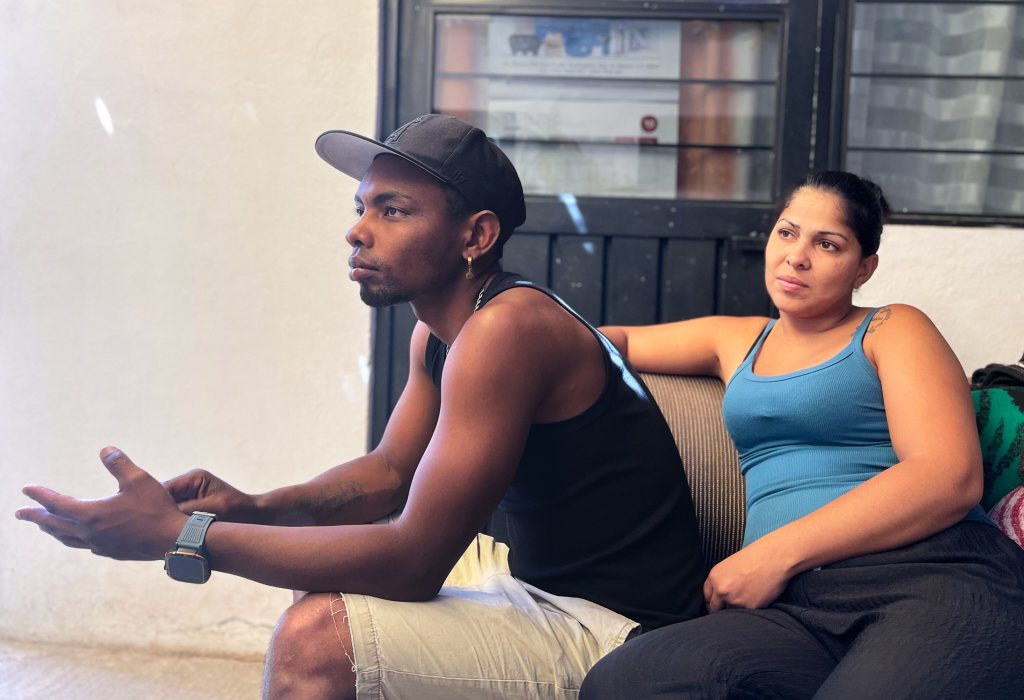
He’s sitting beside his mother on a worn pleather couch in an open-air combination laundry/living room. When Yesenia leaves him to tend to another child, Yexander hunches back, making himself small.
“I was crying for my siblings,” he says quietly, “and so worried about my little sister.”
He says he did his best to stick up for his mom and sister — against immigration officers on both sides of the border.
“I was protecting them both,” he says. “But I just wanted to get here to be with my whole family and my dad.”
Now that he’s 10 — as he’s repeatedly quick to point out — and now that the United States is a dream of the past, Yexander isn’t sure what comes next. He says he’s looking forward to starting school and helping his mom.
He doesn’t feel attached to any country. If he could pick one country based on a soccer team, he says it would be Chile, a place his parents barely mentioned when recounting their desperate migration from South America to the United States.
In the family’s small, one-room apartment — shared with Mariano’s sister and her two children — nine people live together. Everyone has responsibilities.
On the two-burner propane stove, Yesenia fries thin pork cutlets. Yexander sets the table. Joan runs to a nearby corner store for oil. The other kids and adults sweep, tidy, and pull both mattresses close to the family’s single folding table, where the three adults will sit and eat.
Milagros, surprisingly helpful for 6 years old, pours water sweetened with papaya and sugar from a tall plastic pitcher.
There are only three chairs in the apartment, so all the children perch on the edge of the two mattresses — eating with plates balanced on their legs. The portions are meager, but delicious: hot, well-salted pork, a dollop of rice with a chimichurri-like salsa, and one thin, crispy strip of fried plantain.
Yesenia doesn’t sit. She doesn’t eat. When Joan finishes first, she takes his plate to add one last spoonful of rice, scraped from the bottom of a pot.
Asked when she’ll sit down or take a bite herself, she just smiles. She rubs Milagros’ shoulder, her daughter snuggles closer, and Yesenia says gently, ‘I will.’”
A rapid deportation, a miscarriage and a family’s fight to reunite was first published on Arizona Luminaria and was republished with permission.
This story is part of Deportation Tracker, a project of the Border Center for Journalists and Bloggers, in partnership with Arizona Luminaria and La Silla Rota with the support of Global Exchange.
Editor’s Note: Arizona Luminaria and La Silla Rota repeatedly tried to reach out to Yesenia and Mariano after last communicating with them in late summer, 2025, but have not heard from them since.
