 Skip to content
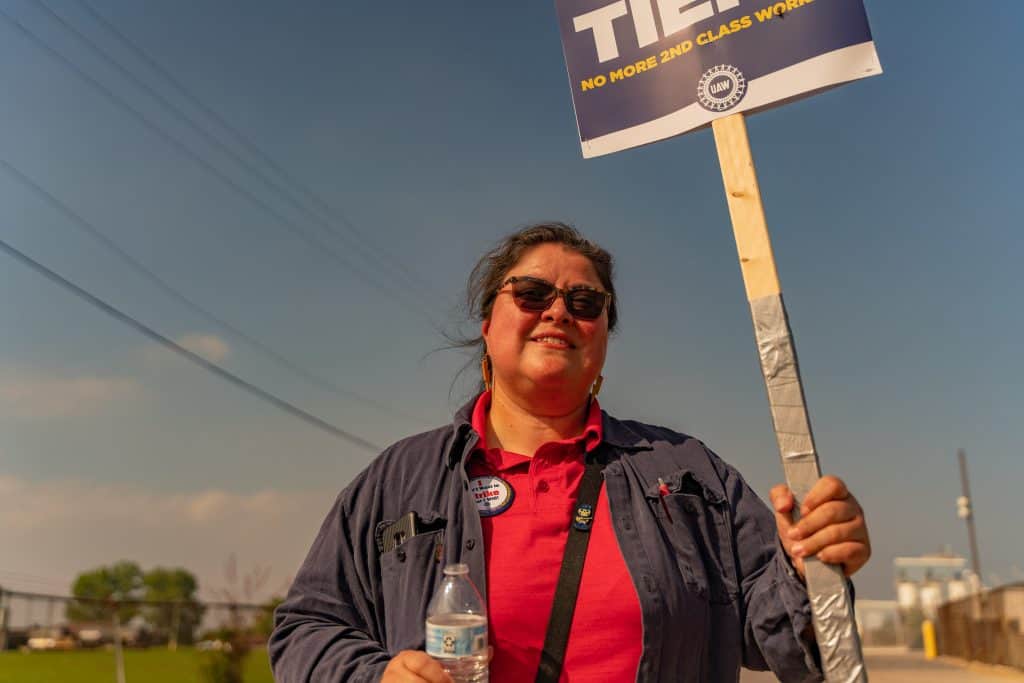
As union electricians, we wire this city. My siblings in the trades pour the concrete, hoist the steel, lay the pipe and keep the lights on. We build Chicago block by block, shift after shift. We go home to the neighborhoods we help create.
I live on the Southeast Side with my family. My great-grandparents immigrated from Mexico and taught me to work hard, be loyal and kind and show up for my neighbors. I’m proud of those roots. I want my child to inherit a home that’s safe, not a ZIP code that shortens their lives, like most Latino communities in Chicago.
That’s why I support the Hazel Johnson Cumulative Impacts Ordinance.
Union folks know this: a contract isn’t just about wages. It covers safety rules, training, PPE, healthcare and a say in how the job gets done. We don’t accept “trust us” from a boss who wants to cut corners. We negotiate standards and enforce them.

Our neighborhoods deserve the same deal.
For too long, the City of Chicago has allowed heavy industry to accumulate in communities of color like mine. Each new facility gets evaluated by city agencies reviewing the application on its own, as if it operates in a vacuum. Meanwhile, Black and brown residents from these communities breathe the combined pollution from trucks, stacks, dust and debris.
One permit for a new industrial facility might look fine on paper. Ten new heavy industrial facilities together in one area of Chicago can be a disaster to our health.
We see the results of these inhaled toxins every day: inhalers on classroom desks and asthma vans outside the schools, neighbors with cancers that don’t run in the family,the “closed windows today” warnings that come with every strong wind and kids not being able to play in their own yards out of fear of exposure to toxic metals.
This is not how you treat the people who built your city.
The Hazel M. Johnson ordinance is simple and long overdue. Before major new industrial facilities move into a neighborhood that’s already carrying a heavy load from the pollution emitted by those facilities, the city has to consider the cumulative health impacts. Not just what one facility emits, but what all the stacks, trucks and sites together will mean for the lungs and lives of the people downwind and next door.
This approach is not radical, it’s common sense. It’s the union way– look at the whole job, set the standard and hold everyone to it.
Critics will say this threatens jobs. I don’t buy it. Workers know a false choice when we hear one. We can build things the right way, in the right places, with rules that protect both paychecks and people. Strong standards create better jobs – skilled, safe, long-term work that doesn’t leave a toxic tab for the neighborhood.
This is about playing by the rules. If you want to profit here, they must meet the same expectations workers face on the job. If a project can’t clear that bar, it’s not a good project for Chicago.
Labor belongs at the front of this fight. Our movements rise and fall together. A safe job site doesn’t mean much if the block you go home to is making your kid(s) sick. Wages matter. Work conditions matter. Living conditions matter. They’re part of the same fight, dignity for working people. We shouldn’t have to choose between a job and our health and safety.
Hazel Johnson – the Mother of Environmental Justice – started that fight right here on the Southeast Side. She organized so her neighbors could breathe. She stood up to power and demanded fairness. This ordinance carries that legacy forward. It says the city must count what counts: our health.
I want fellow union members to see themselves in this. We take pride in the quality of our craft. We don’t slap together junk and call it a day. We fix what’s broken. We plan. We prevent it. We protect our own. Supporting this ordinance follows the same ethic, after the whistle blows and we head home.
Chicago has a chance to lead with a standard that’s basic and just: before piling more industry into one area, measure the full burden and protect the people who live there. Make decisions with all the facts, not just the narrow slice that looks neat on a permitting form.
I’ve been a union electrician for 26 years. I love my city. I’m proud of my ancestors’ sacrifices and the life we’ve built here. I want all of our kids to grow up in a neighborhood where “progress” doesn’t mean more inhalers and less time outside.
Pass the Hazel Johnson Cumulative Impacts Ordinance. Because the people who build Chicago deserve to breathe in it. Nothing about us, without us!
Marcelina Pedraza is a fourth-generation union electrician and member of UAW Local 551 at Ford’s Chicago Assembly Plant. She is a Southeast Side Chicago community leader focused on labor and environmental justice.
If you have an idea for an Opinion-Editorial piece, please send your ideas to Info@LatinoNewsNetwork.com for consideration.
