 Skip to content
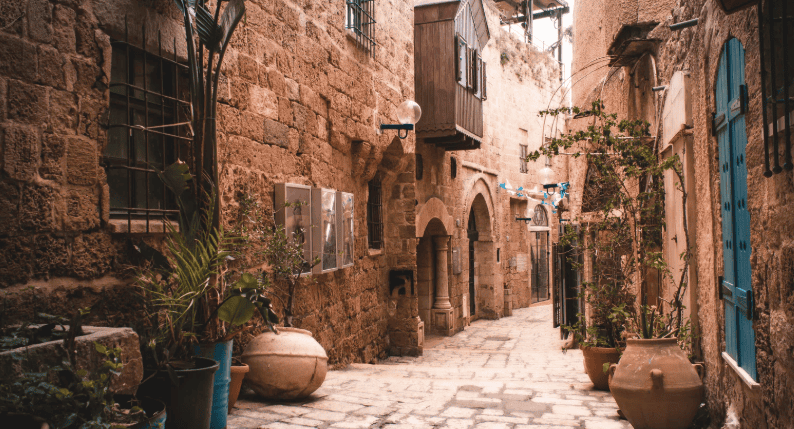
TEL AVIV, ISRAEL – There are a few places in the world where ancient history and modern life exist so visibly side by side as in Israel. Just a few years ago, the country drew millions of visitors from around the world, with long lines to access some of the world’s most sacred sites as proof.
After Hamas attacked Israel on Oct. 7, 2023, those crowds all but disappeared, especially at sites in the Old City of Jerusalem that are sacred to Christianity, Islam, and Judaism. Even two years later —just after a ceasefire was signed between Israel and Hamas and the last living hostages returned from Gaza— lines that once stretched through holy landmarks were nearly nonexistent, and cobblestone streets where Jesus once walked were empty of international tourists. At the Western Wall and the Church of the Holy Sepulcher, sites that typically draw heavy crowds and long waits, access was immediate.
In what some are interpreting as a tourism rebound, some international visitors returned to Israel last month. Israel’s Ministry of Tourism expected some 130,000 visitors during the holiday season, of whom 40,000 were Christians seeking to celebrate Christmas in holy cities such as Jerusalem, Bethlehem, and Nazareth. After a two-year absence, festive decorations, tree lightings, processions, and Christmas masses welcomed visitors and pilgrims alike, perhaps a precursor to Holy Week celebrations in April.
1.3 million tourists visited Israel in 2025 of which 400,000 came from the United States. Brazil, Mexico, Argentina, Colombia, and Chile are the largest Latin American sources of visitors. Combined, these countries usually account for 150,000–250,000 visitors annually
Why did tourism collapse?
Israel’s tourism industry was already recovering from years of disruption when the October 7 attack changed everything. After the COVID-19 pandemic brought global travel to a halt, by 2023, visitor numbers had slowly begun to rebound, signaling a return to stability for an industry central to the country’s economy.

That recovery was abruptly reversed as images of war and violence dominated international headlines. Flights were canceled, tour groups withdrew, and travelers postponed or abandoned plans altogether.
While many historic and religious sites remained open and daily life continued across much of the country, fear shaped how Israel was perceived abroad, keeping visitors away.
As a result, tourism dramatically dropped—from approximately 4.5 million visitors in 2019 to about 1.5 million in 2025. While the numbers tell one story, headlines often shape another—one that does not capture what daily life looks like for those still living and working there.
Tour Guides Feel the Absence First
The sharp decline in tourism has not only affected numbers on a chart, but the people whose livelihoods depend on guiding visitors through Israel’s historic spaces.
Mónica Rabotnicoff, a licensed tour guide who has led tours across the country for 15 years, said she felt the impact immediately. For a time, she was forced to step away from the profession she had built her life around.
“Little by little, I’m starting to see the light again,” Rabotnicoff said. “I see a slight and gradual return of tourism. What gives me hope is being able to go back to what I love.”
Rabotnicoff moved to Israel from Argentina 43 years ago and began guiding tours in 2010. Through her tours, Rabotnicoff aims to show visitors not only Israel’s history and sacred sites, but the energy and sense of life she believes the country radiates.
“It’s about showing people that not everything you see in the media is real,” she said. “There’s another reality here that doesn’t always appear in the news. You can walk around in peace. Life is normal. It’s a country like any other.”
Rabotnicoff said she believes being present and experiencing the country firsthand is the only way for visitors to understand what daily life truly looks like.
Living in the Present
While tour guides felt the absence of visitors immediately, others had to adapt in various ways. Monica Paz, a Brazilian-born jewelry designer and shop owner based in the ancient port city of Jaffa, said the decline in tourism has reshaped her work—but not her decision to stay.
Paz owns Jóias, a small jewelry shop that once benefited from steady foot traffic from visitors exploring Jaffa. As tourism slowed, she shifted much of her business online, selling her work through a website and social media to survive. “We saw a lot of tourism, and now it’s difficult for everyone,” she said. “But here I am surviving.”
She said fear, fueled by headlines, has deeply influenced how Israel is perceived abroad. “People are afraid of what they hear in the news, what they read in the newspaper,” Paz said. “And it’s not always the truth.”
Paz described a reality in cities like Tel Aviv, where people continue with everyday routines—walking to the beach, meeting for coffee, attending social events, and going out dancing. “People think there’s a bomb every five minutes,” Paz said. “It’s not like that.”
She credited Israel’s security systems for helping residents feel protected, adding that she personally feels safer in Israel than in many other parts of the world right now. “
While tourism remains slow and the economic strain continues, Paz said leaving is not an option, especially for businesses.
Businesses Struggling but Staying
For long-time business owners, the absence of tourists has been especially difficult to ignore.
Eran Yamin Hai has worked at his father’s shop, Monitin Reuven— artistian décor shop—for more than 20 years.
As tourism slowed, many shop owners were forced to close temporarily— still, Yamin Hai emphasized that the market remains a place of cooperation rather than conflict.
Jewish and Arab shop owners continue working side by side.
“We work together. We are friends,” he said. “It’s not dangerous at all.”
And for Yamin Hai and his family, keeping the shop open is about more than making a living.
“People need to come and see with their own eyes,” he said. “They’ll see it’s not dangerous. People are smiling….we want to live and work in peace, and people here know that.”
Rebuilding at the City Level
Tourism officials said much of the rebuilding effort now relies on word of mouth, hoping visitors who do travel to Israel will share their experiences and help reshape perceptions abroad.
With many historic and religious sites still open and daily life continuing, city leaders remain optimistic that visits will increase over time. Shachar Levi, a tourism councilor with Tel Aviv city council, said he is hopeful that 2026 will bring in visitors — especially with the recent ceasefire agreement.
With the common struggle to make money, the Jewish community established a support center to help people find temporary jobs and housing as the tourism sector stalled.
“This responsibility is in our blood,” he said. “We are responsible for our friends, our neighbors, our community. We don’t wait for someone else to help us. We help ourselves.”
Levi added that the sense of collective care reminded him of his Latin background, where community life centers on gathering and mutual support. “Here, it’s not about the individual,” he said. “It’s about the community.”
Tourism in Israel remains far from fully recovered, and the absence of visitors is still visible across historic streets, markets, and neighborhoods. Yet daily life has not come to a standstill, and rebuilding is happening in real time.
While fear continues to shape perceptions from afar, those living and working in Israel say understanding the reality on the ground requires more than headlines. It requires presence. The streets may be emptier than they once were, but they are not empty of life, history, or community.
‘’There is another reality that doesn’t appear in the media… you can walk around peacefully,’’ Rabotnicoff said. “…it’s a country like any other.
Marissa Muniz is a senior at Baylor University. She completed this piece as a media fellow with Fuente Latina.
