 Skip to content
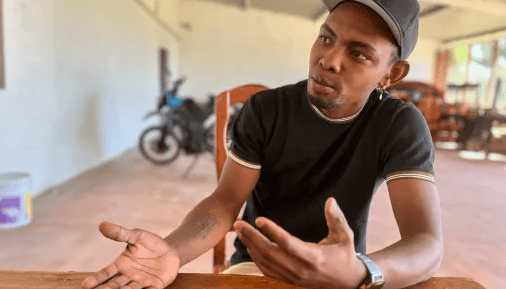
Mariano trembles. Maybe from cold, maybe from fear, maybe from rage. His cheek is pressed against the hard and dirty asphalt under a rusty car smelling of old oil. His heart is beating so hard he thinks the immigration officers might hear it if they come closer.
When Mariano sees the Border Patrol truck approaching, he does what he’s done his whole life: run. But he doesn’t run to save himself, he runs to save his children, his family.
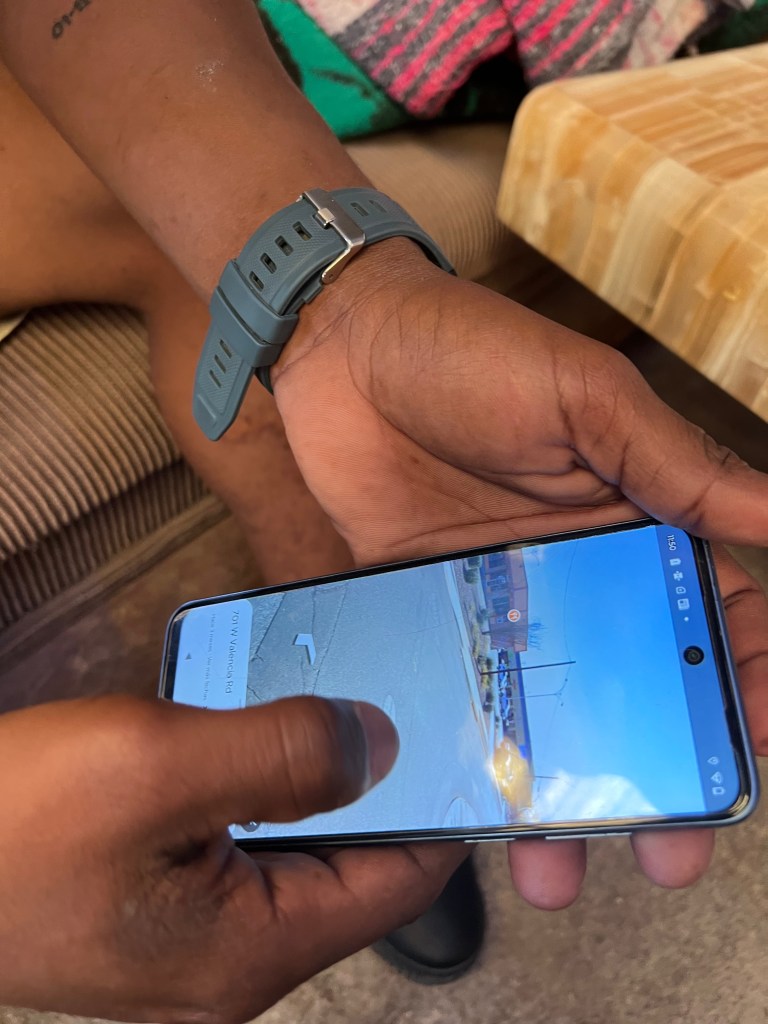
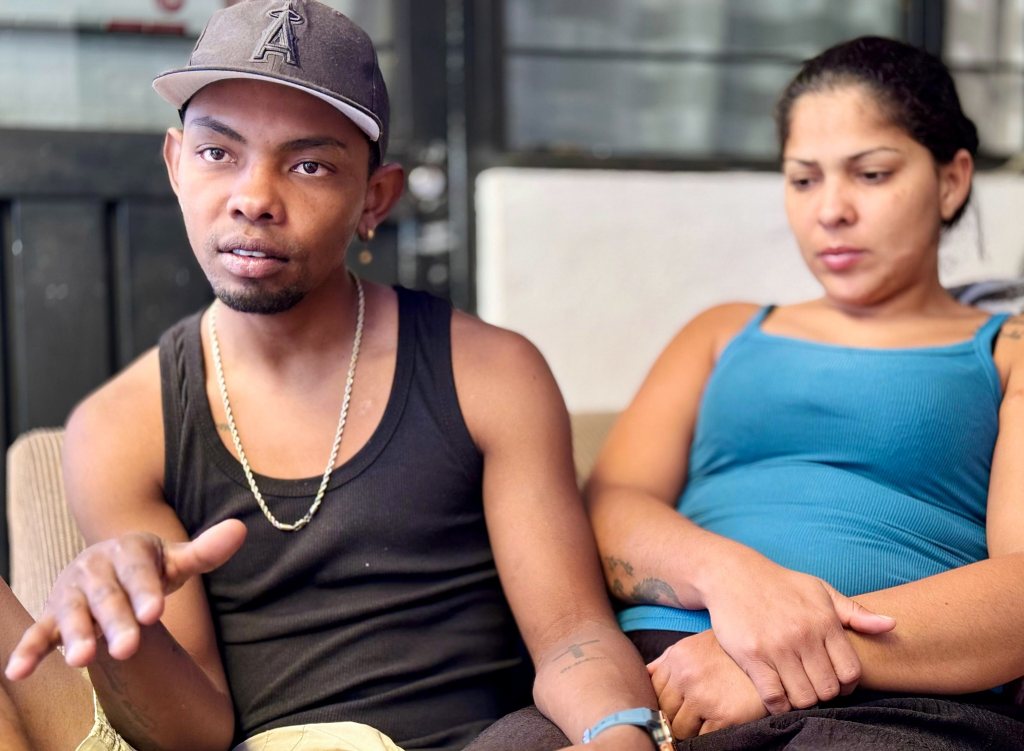
About an hour earlier — three days before Valentine’s Day in 2025 — he had been cleaning the kitchen where his wife Yesenia had made arepas and Venezuelan empanadas to sell outside supermarkets and gas stations in Tucson. It was the family’s daily routine in a place that wasn’t home but where they were fighting to survive.
Their life was disrupted by a call no migrant in the U.S. ever wants to receive. Yesenia’s voice on the other end of the line was shaken, somewhere between confusion and fear. She had been stopped by police officers for driving slowly. Minutes earlier, a woman she approached to offer arepas began insulting her outside a QuickTrip. Yesenia didn’t fully understand the words, but she understood the tone. She didn’t need to speak the language to recognize the contempt in the woman’s voice that made her pack up her things and drive home.

Mariano hung up the phone and ran out in sandals, thinking only of his family. Yesenia had two of their children with her when she was stopped. Mariano arrived, identified himself, and asked to retrieve a few belongings from their vehicle. But everything seemed to be moving too slowly. The officers were talking among themselves, stalling, as if they were waiting for something more.
Then he sees them. Reflected in the window, he spots the unmistakable green-and-white of a Border Patrol vehicle. “I’m leaving,” Mariano tells the elder, from the church the family attends, who had come to help. He takes one second, just one, to look at his children. He takes off his sandals, knowing he can run faster without them, and flees.
Mariano gets a message from Yesenia: “Run.” But he is already far away, barefoot and looking for shelter. Pulse racing, he calls his sister. Within minutes, she goes out to look for him. Meanwhile, Mariano is jumping fences, slipping between walls and brush, hiding in a Donut Wheel parking lot and in a nearby schoolyard.
“They weren’t going to catch me,” he remembers.
After what feels like an eternity, Mariano takes off his hoodie and the cap he was wearing and lets himself collapse beneath a rusty car. He sends his location to his sister and waits, powerless. Every sound feels like a threat. Border Patrol isn’t giving up, as if he’s a criminal. Just an hour earlier, he’d been cleaning his kitchen.
Mariano didn’t know it yet, but he would go days without news of his wife and children, and weeks before seeing them again. His life, as he had known it, was already over.
Yet again, for what felt like the hundredth time, he would migrate, though this time not north, but south, back toward the very south he had fled as an 18-year-old.
The first escape
Mariano always liked wearing white. The Venezuelan Navy uniform contrasted with his dark skin and he liked that contrast. He also liked having something that resembled a future. At 18, having a uniform, a schedule, and a salary big enough to live on was more than many people had. One December, with his holiday bonus, he even bought his mother all the major appliances for her home.
Everything changed in 2015, during a trip to La Orchila, the remote and militarized presidential island of Venezuela. There, he was assigned to the communications area. His task was clear: record everything that went on and off the ship. But one day, an order came down: “Don’t record those boxes over there.” It was about 180 boxes full of weapons and ammunition.
Back in La Guaira, they began unloading the boxes. As was his duty, he began cataloguing the shipment. The ship’s captain noticed and took him to the bridge, grabbed his notebook, and erased the entries. “The first and last time you pull something like this,” he warned. Mariano obeyed. But he couldn’t continue. That very day, he knew he had to leave.
That year, the Venezuelan economy was beginning to collapse. Inflation devoured his salary, the bolívar was in freefall, and the military salary was no longer enough. His orders grew darker. The threats more frequent.
He knew deserting could land him in prison. Still, a few days later, he fled. He took his clothes, forged his own discharge, and left without looking back. Since then, he’s been unable to return.
“The moment they scan my fingerprints, I go straight to prison. I don’t have the option of returning to Venezuela,” he says.
Sometimes he regrets it. Sometimes he says it would have been better to keep his mouth shut, stay in the military, and endure. “Back there, even with everything, I had my family. Here, I’ve had to beg for a roof, for food. Back there, I would have had little but I would’ve had peace, with my children in my country.”
But he didn’t do it. He didn’t stay. He fled. And that was his first escape.
Beginning of the exodus
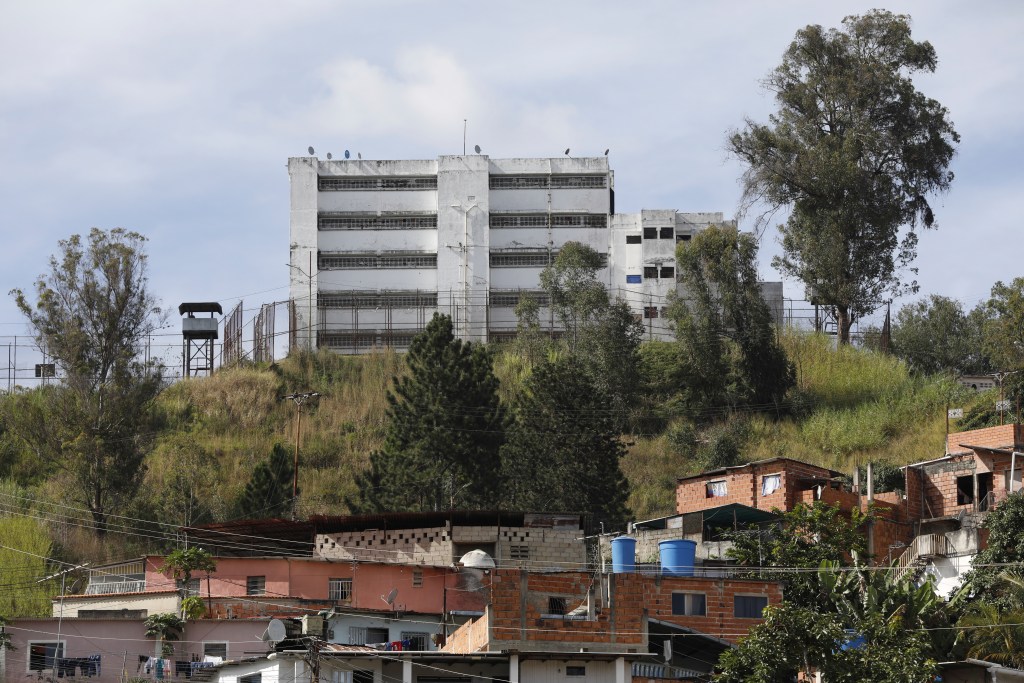
Mariano manages to leave Venezuela, first to Colombia. But he soon regrets it, and 15 days later, he returns to his mother’s house. However, the fear of ending up in Ramo Verde prison, a facility specifically for military personnel, convinces him to flee again, this time for good. That would be the last time he would ever see his mother in person.
“If I hadn’t gotten into trouble, I would’ve stayed to go hungry, to endure whatever happened in my country,” he says.
He survives however he can and works wherever he is given the opportunity, though he never stops thinking about Venezuela. He stays in touch with relatives and friends through social media, among them Yesenia, whom he met on Facebook. They chat day and night. Messages turn into calls. Calls turn into plans. And one day, without thinking too much, Mariano invites her to move in with him.
Yesenia hesitates, but accepts. She knows she has to escape for herself and for her children. She crosses borders to reach him, not knowing that years later, Mariano would do the same for her. She arrives pregnant. Like him, she is fleeing. Not from hunger or the political system, but from domestic violence. She carries the scars, she says her estranged husband inflicted, etched into her skin. Months later, Mariano pays for Yesenia’s eldest son to join them.
Now responsible for a family, Mariano moves to Peru. Then to Ecuador. They spend six years moving between Colombia and other South American countries. They follow in the footsteps of his sisters who also left Venezuela in search of a better life.
The Venezuelan exodus began gradually in 2014 but intensified after 2018, driven by the country’s economic, political and social collapse. According to the United Nations, it is the second largest and fastest human displacement in the world, after the war in Syria. Nearly 7.9 million people have left the country in search of better opportunities, according to the UN Refugee Agency.
Wherever he goes, Mariano works. He paints, builds, drives and cooks. He doesn’t shy away from anything. He never dreamed of the United States, much less México. But one of his cousins tells him about Canada, that there, or in the U.S., someone like him, working with his hands, could earn a good living
With no attachment to anything but Venezuela, and driven by the promise of better pay, he decides to walk north. “My plan was to work, save up a little money, and go back to Colombia to start my own business,” he says.
The Darién
Mariano begins his journey in 2022 with $70 and a broken phone in his pocket.
He crosses Colombia in freight trucks and other vehicles he sometimes boards without permission. He passes through several UN shelters where he is able to eat, wash up, and where they give him a blue backpack, which he fills with clothes, water and hygiene products.
When he reaches Necoclí, he pays $50 for a group of Colombian guerrillas to take him by boat to the Darién jungle, the stretch of land that connects Colombia with Panama. Naively, he believes that is the cost to cross the famous and deadly continental gap; but he soon realizes it only gets him to the entrance of that merciless labyrinth.
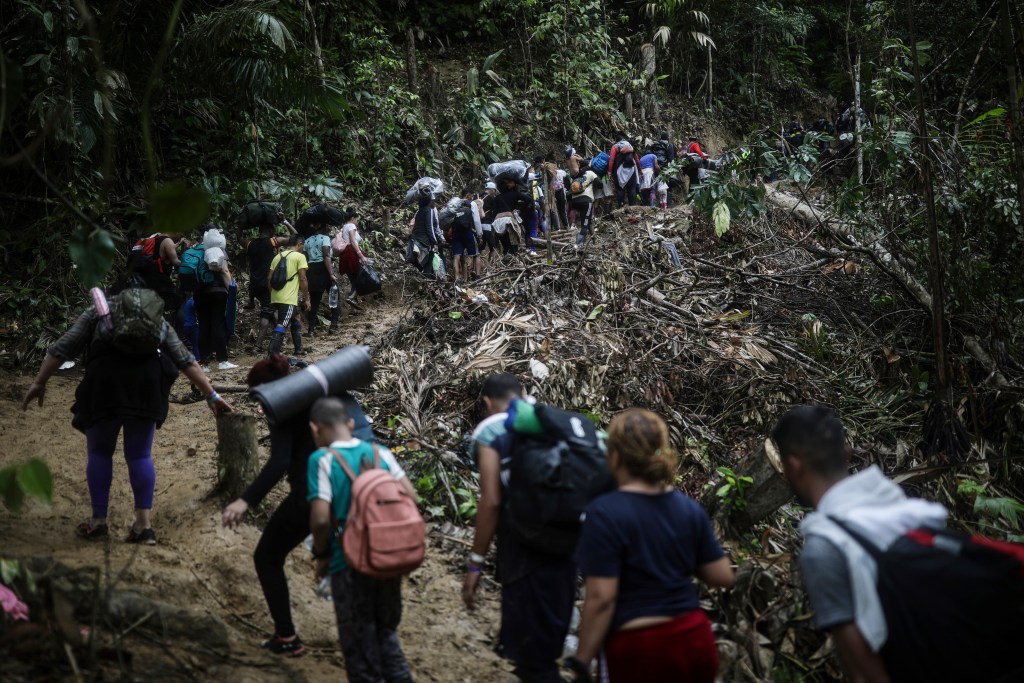
The Darién is one of the most dangerous migration routes in the world. Every year, thousands of people venture through its muddy trails, turbulent rivers and mountains that form a natural barrier between South and Central America. In 2024 alone, an estimated 174 migrants died trying to cross this jungle, according to the U.N.
Without money, help or another plan, Mariano approaches the man in charge of the camp he arrives at. He’s someone everyone seems to fear. Mariano approaches him respectfully. He explains he only has $20 left, that he paid everything he had for the boat, but he wants to continue.
Maybe it is his boldness, or maybe the way he speaks so bluntly, but the man looks him up and down, hesitates a few seconds, and tells him to stay put. Hours later, when the next group departs, he nods at Mariano. “Follow them,” he says.
From then on, Mariano survives by helping others. He crosses the Darién carrying fellow migrants’ backpacks in exchange for food, helping people climb in exchange for water, and carrying children who can’t cross the mud, a mud that covers the bodies of some migrants who don’t make it all the way.
Six days pass like this, until he reaches Bajo Chiquito, where Panamanian soldiers beat and extort him. They demand $4,000. Mariano remembers the cold barrel of a soldier’s rifle on his neck as they ordered him to empty his blue backpack, the one that had accompanied him from Colombia. “They thought I was Haitian and carrying money,” he says. “But I was traveling with nothing but God and the Virgin.”
Mariano tries to defend himself, which only enrages the soldiers. They throw him to the ground, point their weapons at him and demand money. The people he helped along the way, begin pleading for his release. In response, the soldier holding him down lets him go and warns: “If I see you on the road tomorrow, I’ll kill you.” Mariano picks up his backpack and returns to the trail.
Once he finally crosses the jungle, he calls Yesenia, and only then does he tell his mother of his plan to reach the United States.
He works in Panama, Costa Rica, and Nicaragua. He crosses Honduras without delay and reaches the Mexican border, specifically Tecún Umán, a town between Guatemala and Chiapas. He remembers that town clearly: bright neon signs and machete-wielding men who tried to rob him.
Once Mariano gets to Arriaga, Chiapas, his luck changes. He meets a Mexican man who not only gives him a place to stay but also offers him work laying tile. “A good friend,” he repeats several times. He saves money to travel to Mexico City, where he works in construction. Always the same formula: work, save money and keep moving as many miles forward as possible.
That’s how he makes it to Monterrey. There, he works a week selling candy, doing whatever he can. He saves up what he needs for the final leg: Piedras Negras, Coahuila. In less than two months, he reaches the U.S. border.
The leap north
The same day he arrives in Piedras Negras, he looks for the Río Grande. He doesn’t want to be detained by Mexican authorities. Weeks earlier, a fire at a migrant detention center in Ciudad Juárez had killed at least 40 people. Mariano is afraid of being sent to one of those centers, so without giving it much thought, he jumps into the water carrying nothing but the blue backpack he’s been hauling since Colombia.
Because of the fire, Francisco Garduño Yáñez — then head of México’s National Migration Institute, was criminally charged for his alleged responsibility for migrants’ safety at the Ciudad Juárez detention facility, including lack of drinking water, food, emergency exits and civil protection protocols.
Later, Garduño, who did not step down and was defended by the immigration institute’s’s own lawyers, was exonerated and remained in office under a new administration for several months.
The river’s current pushes Mariano, his arms go numb from the cold. But when he emerges from the water, he is already in Texas. He changes clothes and walks to the barbed wire fence. The final barrier he has to get past. Mariano empties his UN-issued backpack, and with his arms wrapped through it, uses it as a shield.
“I slid it under the barbed wire and lifted it so the women and children could get through,” he says.
Minutes later, he turns himself in to U.S. immigration authorities. He trusts that his military background will help him obtain political asylum. Instead, he says he spent 17 days detained in the hieleras, or “iceboxes.”
Migrants are not supposed to be held for more than 72 hours in these temporary processing centers, according to the U.S. Customs and Border Protection’s National Standards on Transport, Escort, Detention, and Search. These immigration facilities have been widely criticized for their inhumane conditions migrants face, including freezing temperatures, insufficient food, no beds, constant lighting and overcrowding.
Border Patrol did not respond to multiple requests for comment regarding Mariano’s claims.
Upon arrival, he’s ordered to strip, shower and hand over his belongings. There he loses the blue backpack that had accompanied him across seven countries and thousands of miles.
“That’s where they did my credible fear interview,” he recalls. He doesn’t cry. He doesn’t beg. He just tells the truth: that he had deserted the Navy in Venezuela to escape threats, and if he were sent back, they would hunt him down like a criminal.
However, because of his tattoos and place of birth, he is stigmatized and accused of belonging to the Tren de Aragua, a gang the Trump administration has since designated as a terrorist organization and that’s been under investigation for drug and human trafficking.
The accusations against Mariano are now part of today’s broader claims bythe U.S. government against some Venezuelan nationals, who they’ve accused of belonging to the Tren de Aragua criminal organization formed within the Tocorón prison in the Venezuelan state of Aragua. Some of these accusations leading to swift deportations were made without presenting more evidence than the tattoos on detainees or the hand signals they display in photographs.
A federal judge recently ruled that more than 100 Venezuelans sent to be imprisoned in El Salvador were wrongfully deported without due process, including to make their case for seeking asylum and challenging allegations of gang membership.
From the border, immigration officials transfer Mariano to the Port Isabel Detention Center near Los Fresnos, Texas. There, he spends another 25 days before being released in Brownsville. Within just minutes of his release, he does what he’s always done: asks for work. At a Mexican woman’s restaurant, in exchange for making a meal, she gives him bus tickets to Tucson.
In Tucson, he starts working. He rents an apartment and waits patiently for his family’s arrival — first his sisters, later Yesenia, then his uncles and nephews.
That’s how Mariano’s family story begins in Tucson. A story that is interrupted about two years later — just a few days before Valentine’s Day — when he is cleaning his kitchen and receives a phone call from his wife. A police car is following closely behind her.
Arizona Luminaria reporter John Washington contributed to this story.
He faced the Venezuelan Navy, survived the Darién Gap and U.S. detention. In Tucson, Mariano is forced out again. was first published on Arizona Luminaria and was republished with permission.
The story is part of Deportation Tracker, a project of the Border Center for Journalists and Bloggers, in partnership with Arizona Luminaria and La Silla Rota with the support of Global Exchange.
Editor’s Note: Arizona Luminaria and La Silla Rota repeatedly tried to reach out to Yesenia and Mariano after last communicating with them in late summer, 2025, but have not heard from them since.
