Skip to content
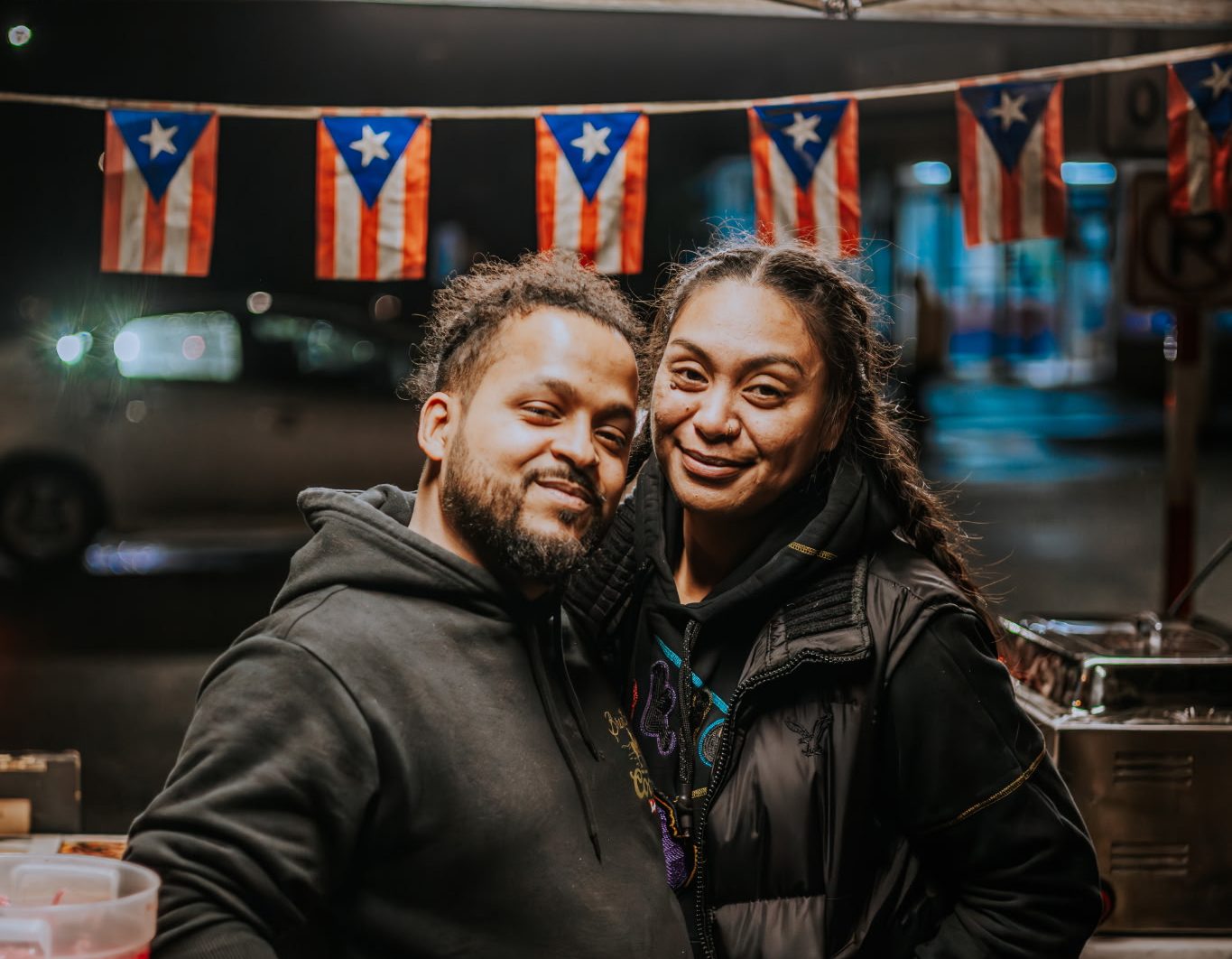
Late at night in Pioneer Square, Jesus Dumois and his wife Heather Dowai can be found outside Xtadium Lounge, serving up food from their pop-up tent, aka Chamoriken, a lunch and late night spot that brings Chamorro and Puerto Rican fusion to the people of Seattle.
The name Chamoriken is a combination of two words – Chamorro and Puerto Rican. The Chamorro are the indigenous people of the Saipan and Guam areas, and important to Dowai’s identity. Dumois is of Puerto Rican descent, so they combined the words as well as the food.
“We were originally called Taino Fusion,” Dumois said. “They are the indigenous Puerto Rican tribe. One night, my wife and I were talking and the name Chamoriken popped up and we were like ‘Hey, we actually like that.’ It’s an identity and it means a lot to us.”
According to Dumois, as Chamoriken continues to grow, the goal isn’t just about selling food. Each plate is connected to the couple’s identity and community. Dumois hopes people get more than a full belly — he wants them to feel connected to the cultures behind it.

“We’re doing our best to represent the Puerto Rican and Chamorro people,” Dumois said. “We keep our flags high so that when people come around they know it’s Puerto Rican or Chamorro food. We educate and give as much knowledge as we can so that when people eat, they get a little bit of history and culture.”
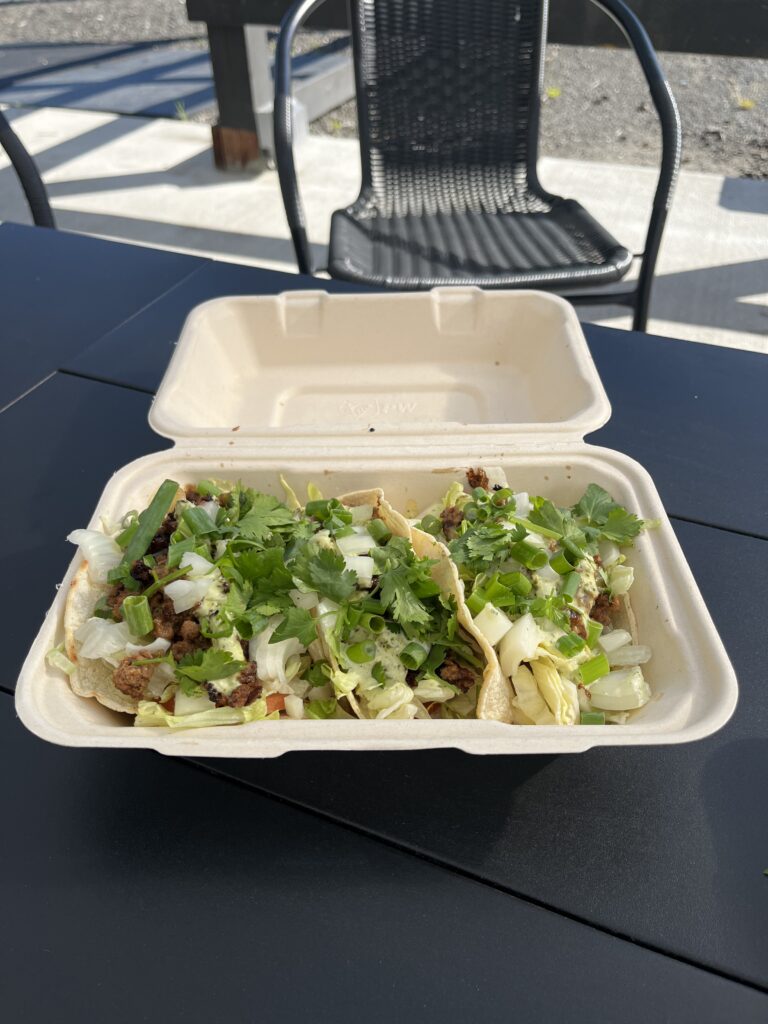
According to Dumois, the food they offer comes in a rotation, depending on the season. Just a few of their options include loaded fries that have sauces and seasonings typical of the two cultures, a chopped cheese sandwich and tacos. For Chamoriken, switching up the menu helps to foster community and keep things fresh, bringing customers back for new fusions and flavors.
As Hispanic and Latino culture are targeted under the current Trump administration, the need for celebration is as important as ever.
In the United States, 20% of the population is Hispanic or Latino, making it the second largest racial group in the US behind white, with Black rounding out the top three. In Washington state, about 15% of the population is Hispanic or Latino, which makes Washington the 15th most populous state in this regard, with Puerto Ricans making up less than 1% of Washington’s population.
According to Ileana Maria Rodriguez-Silva, an associate professor of Latin American and Caribbean history at the University of Washington, food and cultural fusion can reflect different histories of identity and migration.
“What it does is it presents those consumers with the question of why,” Rodriguez-Silva said. “If we start asking that question, ‘Why is this even a possibility?’ – then we can dig into those histories of power. These are histories that shape our state beyond having just bodies walking in the landscape.”
Dumois and Dowai started Chamoriken in March 2023. Dumois said he had a hard time finding the food he ate growing up, as well as the food he ate on the East Coast. He recalls having rice, beans, alcapurrias and plantains. He was born and raised in the Bronx, surrounded by his family and reminisce living next to his cousins and speaking only Spanish.
“My grandma is very old school,” Dumois said. “We would get up on Sundays and have to clean. You will hear Puerto Rican music in the background. She has this mortar, we call it a pilón, and it’s older than me.”
Dumois moved away from New York when he met his wife in 2014. They moved to Alaska, then relocated to Seattle with their two kids.
“Alaska was a culture shock,” Dumois said. “It’s all part of the learning experience. I worked chef jobs for as long as I could and then after about four years we moved to Washington.”
Starting his own brand has always been a goal, and he said he’s not done yet.
“We would love to have a store front for people to come sit down and enjoy the food,” Dumois said. “We managed a bar in Seattle with our food for a year, but we felt that with the current economy as well as maintaining employees it was a struggle. If we did have everything aligned, we would love to open a restaurant to serve our food.”
In the meantime, Dumois has been working with his wife to serve lunch and late night food to people around Washington.
“We have this passion for our food, for our culture,” Dumois said. “We’re going to keep representing who we are. We don’t need the whole world to know. That would be great, but for our local people, our community, we want them to know we’re here.”
Maxim Sanchez Kim is a fourth-year student at the University of Washington, where he is pursuing a degree in Journalism and Public Interest Communications. He has an interest in sports reporting and local communities.
Featured Stories
Featured Stories
Noticias Newswire
Cosmetique Aesthetics Relocates to New State-of-the-Art Facility in Culver City and Launches Enhanced Digital Experience

Rita Moreno Headlines Hispanic Heritage Month Conversation at Lehman College Presented by HITN MEDIA

Great American Media Invests in Wholesome, Family Streaming Entertainment for Latinos with Launch of Pure Flix Familia