 Skip to content
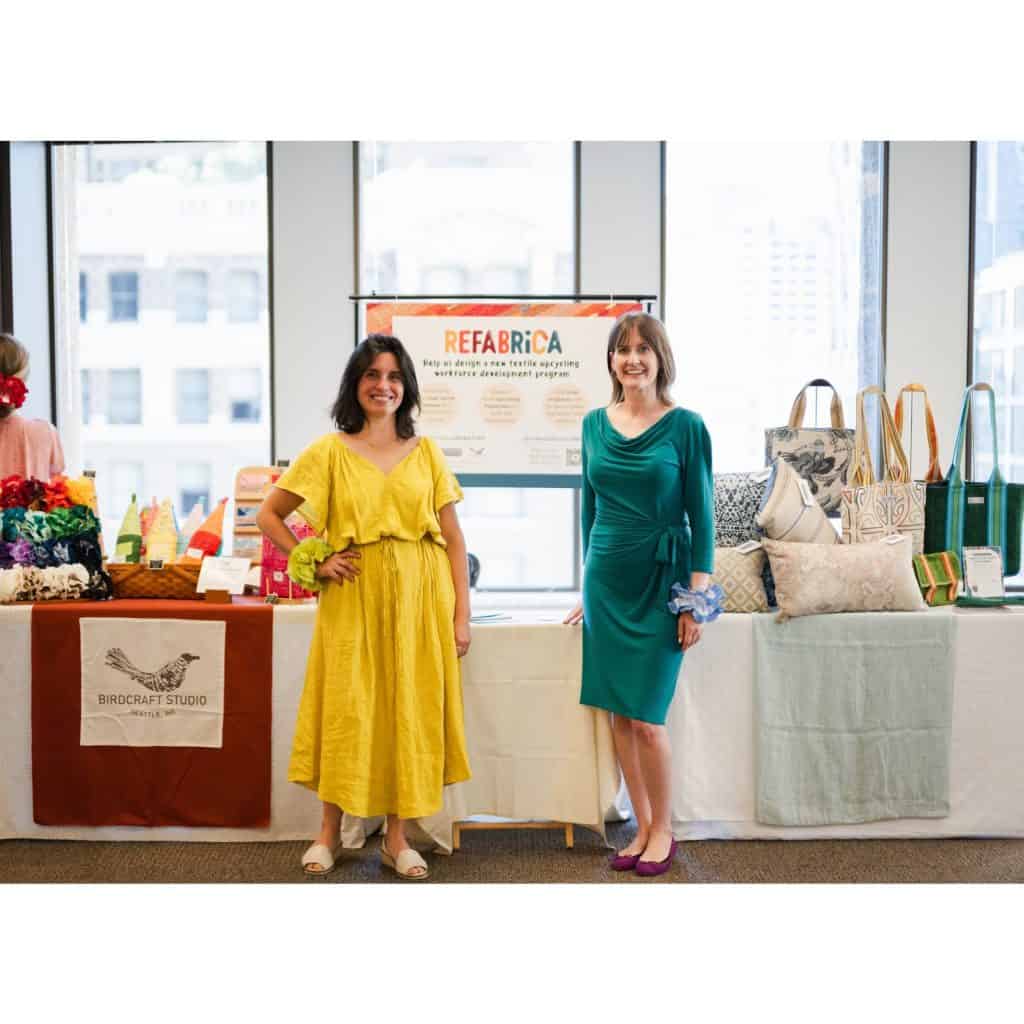
For Gabriela Faúndez and Lisa Hilbert, the idea behind ReFabrica began with a practical problem they both understood well.
As owners of small textile upcycling businesses, they knew that sewing was only one part of turning discarded fabric into a new product. Before any material can be reused, someone must sort it, identify its components, take it apart and prepare it for production.
That work is time-consuming, but it is essential to keeping textiles out of landfills and returning them to productive use.
“We realized that one of the hardest parts is not the sewing itself, but the labor-intensive work that happens before sewing,” said Faúndez, co-founder of ReFabrica. “Sorting, identifying, deconstructing and preparing materials so they can go back into use.”

That realization led Faúndez and Hilbert to ask why so little infrastructure existed around textile recovery and why there were so few professional pathways for workers interested in learning those skills.
Their answer was ReFabrica, an initiative that combines textile sustainability, workforce training and economic opportunity, with a focus on communities that have often been excluded from the environmental sector.
“We see textile circularity not only as an environmental solution, but also as part of social justice,” Faúndez said. “It creates meaningful economic opportunities and purpose-driven jobs in communities that have historically been excluded from the green economy.”
The initiative is helping Latina participants learn textile recovery skills while creating new pathways into Washington’s growing circular economy
Textile circularity refers to a system in which clothing, fabric and other materials are reused, repaired or transformed instead of being discarded. ReFabrica’s work focuses on the steps that make that reuse possible.
For the organization’s founders, building a more sustainable textile industry requires looking beyond the final destination of discarded materials.
“Circularity should not only be about where materials go,” Faúndez said. “It should also be about who gets to participate in the systems we build.”
That approach took shape through a partnership with Casa Latina and Mujeres Sin Fronteras, a group that supports immigrant women through education, leadership development and economic opportunities.
Through bilingual, hands-on training, participants learned how to identify reusable textile components, deconstruct materials and prepare them for higher-value reuse.
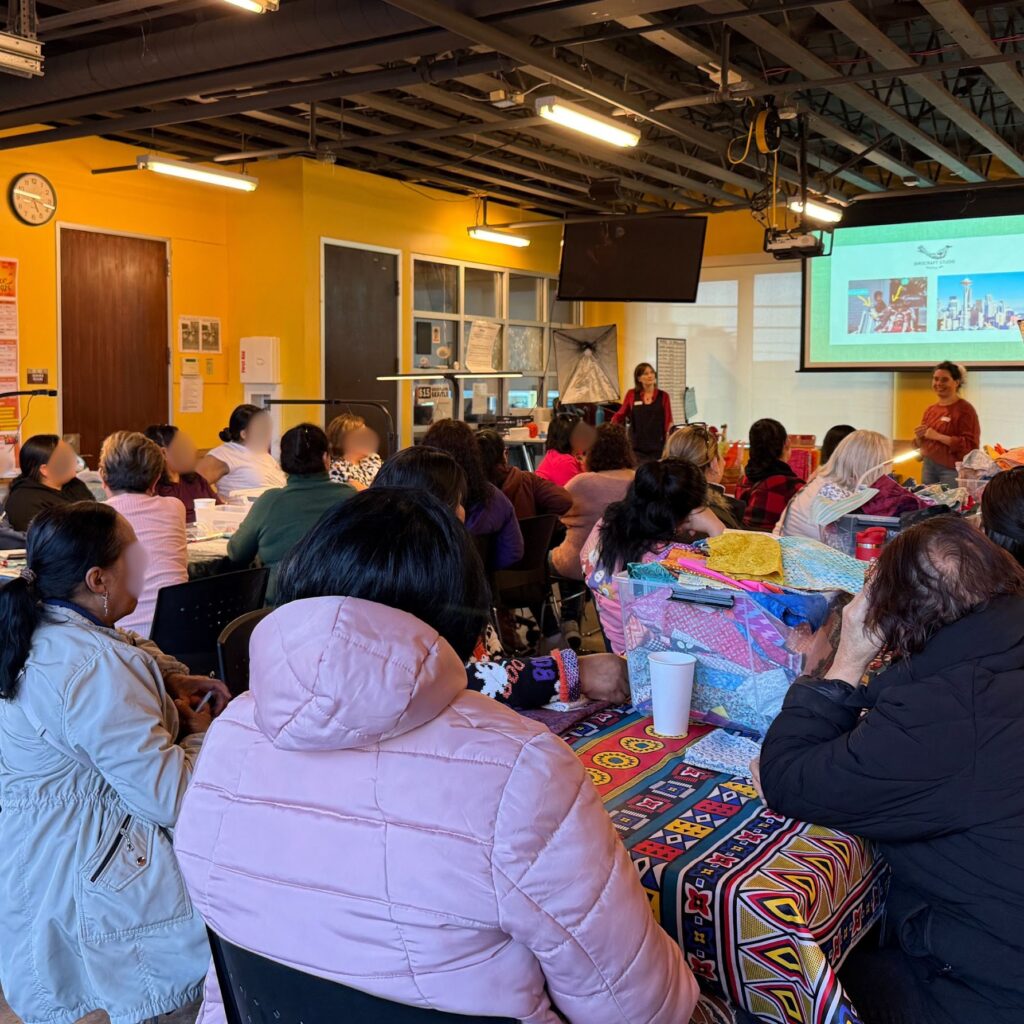
The materials prepared during the program could then be used by local upcycling businesses, reducing part of the labor required before production begins.
The partnership gave ReFabrica an opportunity to test whether textile recovery skills could be taught in a practical and accessible way.
“The partnership with Casa Latina and their group Mujeres Sin Fronteras helped us see what ReFabrica could look like in real life,” Faúndez said.
The results were not limited to technical training.
According to ReFabrica, participants also developed greater confidence and a stronger sense of belonging. Some began considering self-employment or other forms of paid work connected to textiles and sustainability.
“Many participants gained confidence, pride and a sense of belonging,” Faúndez said. “Several shared that they now feel more capable of exploring self-employment or future paid work.”
For immigrant women and other workers who may face language barriers or limited access to traditional employment networks, programs like ReFabrica can provide an entry point into an emerging industry.
“We are not only teaching skills,” Faúndez said. “We are helping create more meaningful pathways into the circular economy.”
ReFabrica’s founders hope the program can eventually contribute to a broader textile recovery system in Washington state.
Their long-term vision includes workforce development, material recovery, technical support and partnerships with businesses, governments and community organizations.
Faúndez said Washington still lacks much of the local infrastructure needed to recover textiles at a higher value. When that infrastructure is absent, reusable materials can be thrown away, exported or processed in ways that provide little benefit to local communities.
The founders believe the model could strengthen local production and create more dignified paid work
ReFabrica wants to create systems that keep more of those materials in circulation while supporting local workers and businesses.
“We want ReFabrica to keep growing as a model that combines workforce development, material recovery, technical advisory support and regional partnerships,” Faúndez said.
The initiative received support from Seattle Public Utilities and WM through a sustainability grant that helped the organization begin testing and strengthening its model.
That early support allowed ReFabrica to explore how a community-based textile recovery program could work in Seattle and how it might eventually expand.
The founders believe the model could strengthen local production, create more dignified paid work and give more communities an opportunity to participate in the transition toward a greener economy.
“Looking ahead, we hope ReFabrica can continue growing in Seattle, across Washington, and eventually serve as an example other communities can learn from and adapt,” Faúndez said.
Alex Segura is the managing editor for Latino News Network West; a journalist based in California. He covers politics, immigration, sports and Latino communities across the United States.
