Skip to content


Share This Story, Choose Your Platform!
Hartford, Connecticut, stands as a living testament to American democracy, ingenuity, and resilience. As the state’s capital, it’s home to cultural landmarks like the Mark Twain House & Museum, where Twain penned The Adventures of Tom Sawyer, embodying the spirit of self-governance and creative daring that defines the region.
Connecticut, like much of New England, remains a stronghold of the Democratic Party.
In the 2024 presidential election, Kamala Harris carried the state by a comfortable margin of 14.5 points—though her performance trailed Joe Biden’s 2020 showing. Meanwhile, Donald Trump garnered 41.9% of the vote, marking the strongest Republican turnout in Connecticut since 2004.
With more than 350,000 small businesses anchoring the state’s economy and employing nearly half its workforce, the stakes were high. The contrast in economic and regulatory visions between the candidates resonated deeply across sectors—from manufacturing and health care to floral wholesalers.

The Constitution State is a national leader in advanced manufacturing, particularly in aerospace and defense—a sector that has seen gains during the Trump administration.
Manufacturing companies in Connecticut employ more than 157-thousand people. Made in America excites Catherine Marx, District Director of the U.S. Small Business Administration’s Connecticut District Office: We’re excited about the manufacturing push. Manufacturing comes, especially in Connecticut, in so many sizes. We have a whole ecosystem of small businesses that supply those businesses (large companies).
Connecticut’s small business ecosystem is rich with contributors to global commerce—including floral wholesalers who import cut flowers and help sustain the international supply chain. Among these understated players are distributors who rely on steady shipments from Colombia. This country supplied approximately $1.6 billion worth of cut flowers and buds to the United States in 2024, accounting for nearly 60% of the U.S.’s total floral imports.
At the heart of this trade is Flores El Capiro, a leading exporter based in the eastern highlands of Antioquia, Colombia. From its floral farms in La Ceja, the company cultivates and ships millions of chrysanthemums each year, maintaining a year-round supply of fresh-cut blooms to wholesalers and retailers across the U.S.—including Connecticut.
This transnational rhythm, from high-altitude planting to refrigerated maritime transport, underscores the delicate choreography behind every bouquet that reaches American storefronts.
The floral industry faced a near-crisis this year when the Trump administration announced plans to impose a 25% tariff on Colombian imports—including cut flowers—as leverage in a diplomatic standoff over deportation flights. The move threatened to disrupt a booming season for U.S. wholesalers and retailers who rely heavily on Colombian blooms.
“I don’t see any benefits whatsoever from tariffs, when it comes to flowers,” said Guillermo Herrera, a floral industry consultant to small businesses in central Connecticut. “Our industry is based on an impulse purchase. Anything that affects an increase in the price of the product will affect consumption. Small companies like us don’t have the financial reserves to pay for all these tariffs ahead of time because customers will pay us 30, 40, 60 days from the day we deliver the product.”
Tensions eased only after Colombia agreed to resume accepting deportees, prompting the administration to shelve the tariff orders—for now. The episode underscored just how vulnerable global supply chains can be to geopolitical flashpoints, even in industries rooted in beauty and celebration.
Tariffs increase the cost of imported goods, forcing many small businesses in Connecticut to either absorb the losses or pass them on to consumers, thereby threatening their competitiveness and long-term viability.
The 50 is a four-year multimedia project in which the Fulcrum visits different communities across all 50 states to learn what motivated them to vote in the 2024 presidential election and see how the Donald Trump administration is meeting those concerns and hopes.
Featured Stories

Latino Growth Spreads Across the U.S., New Pew Data Shows

Couple inspire generational achievement through education
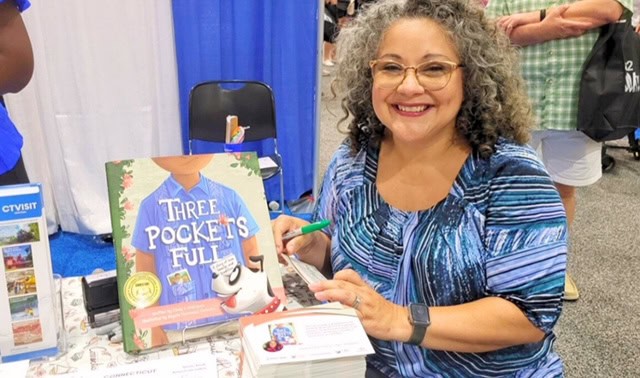
Children’s Author Cindy L. Rodriguez On Multidimensional Latinx Representation
Voting is a social determinant of health
Stay Connected
Noticias Newswire
Verizon Frontline Challenges Innovators to Build Future of Public Safety

inCruises extiende su racha ganadora de Premios Magellan con dos reconocimientos en 2026

Natalia Montaño, Founder of Aguamarina Schools, on The Cover of Ejecutiva Magazine