Skip to content

Share This Story, Choose Your Platform!
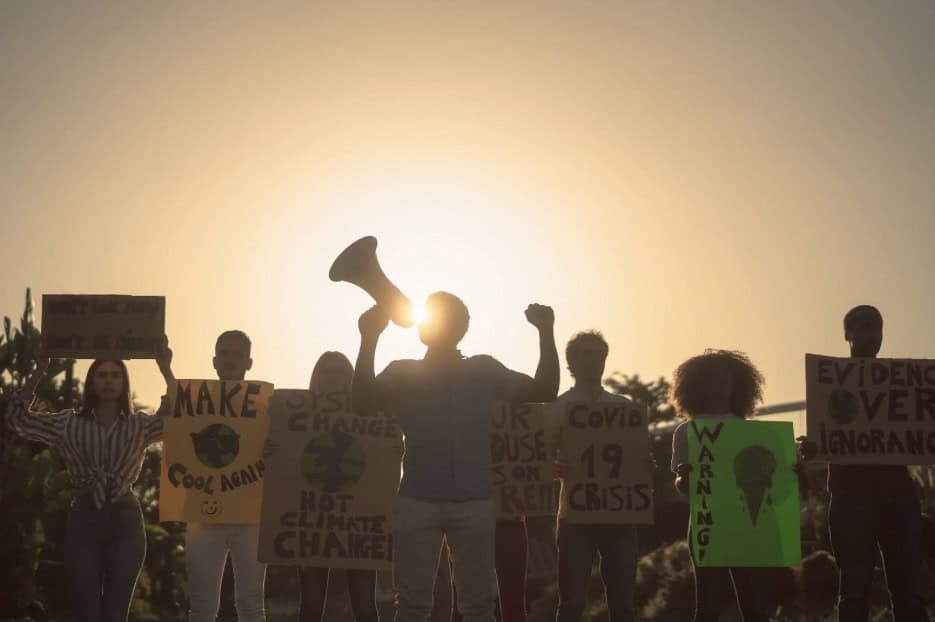
The images emerging from Los Angeles this week tell two very different stories. In one version, federal troops are maintaining law and order in response to dangerous disruptions in immigration enforcement. In another, peaceful protesters defending immigrant communities face an unprecedented deployment of military force against American citizens. Same events, same streets, entirely different narratives. And, as it often does, the one that dominates will determine everything from future policy to how history remembers this moment.
This isn’t a new phenomenon. Throughout American history, the story we tell about protests has mattered more than the protests themselves. And time and again, it’s political messaging, rather than objective truth, that determines which narrative takes hold.
Consider how political rhetoric transformed our understanding of 1960s civil rights demonstrations. Politicians like George Wallace didn’t argue against racial equality directly; instead, they reframed peaceful marches as threats to “law and order,” casting constitutional demands as dangerous disruptions by “outside agitators.” The same protesters walking silently across the Edmund Pettus Bridge were simultaneously heroic Americans in civil rights messaging and threats to community peace in segregationist political rhetoric. The messaging that dominated, particularly in national media, determined whether Americans saw courage or chaos.
The pattern repeats across decades. During the labor movements of the early 1900s, political leaders and business interests consistently used language about foreign influence and radical elements to delegitimize worker organizing. Strikes for basic safety protections became threats to American prosperity. The actual grievances of dangerous working conditions and poverty wages were overshadowed by messaging that made economic justice sound like a national betrayal.

Vietnam War protests followed the same playbook. Rather than engage with concerns about an unpopular war, political messaging introduced the “silent majority,” positioning protesters as a loud minority disrupting the wishes of real Americans. Anti-war demonstrations weren’t really about war policy, the dominant story suggested, but about disrespecting troops and undermining national unity.
Even Pride marches, now celebrated as pivotal moments in civil rights history, faced similar narrative manipulation. Politicians didn’t argue against LGBTQ+ equality directly; they reframed Pride as a threat to traditional values and public decency. The story became about the disruption of community standards rather than demands for basic human dignity. Parades celebrating identity and demanding equal treatment were cast as exhibitionist spectacles threatening American families.
The mechanism is remarkably consistent: political messaging shifts the frame entirely, making the story about something other than the protesters’ stated concerns. Civil rights become law and order. Economic justice becomes foreign radicalism. Anti-war sentiment becomes disrespectful to troops. LGBTQ+ equality becomes an attack on families. Immigration advocacy becomes undermining national security.
This reframing is strategic. Scholars have argued that stories are powerful political devices that dictate what the general populace considers good or evil. By controlling the dominant narrative, political leaders can respond to protests without ever addressing the underlying issues that drove people to the streets. When the story shifts from maintaining order to achieving justice, the policy response becomes the deployment of troops rather than examining grievances.
Of course, some will say that maintaining order is a legitimate government responsibility, and that protests can genuinely disrupt communities and create safety concerns. However, this overlooks a deeper pattern: throughout history, the “order” argument has been deployed selectively, almost always against movements seeking to expand rights rather than restrict them. The same politicians who invoke law and order against civil rights protests rarely apply that standard to other forms of public assembly that don’t challenge existing power structures.
What makes the Los Angeles situation particularly terrifying is how rapidly the dominant narrative formed. Within days of the protests beginning, the narrative had shifted from concerns about immigration enforcement to a debate over federal authority versus state overreach. The experiences of immigrant communities, which were the catalysts for the demonstrations, receded into the background beneath debates about constitutional law and military deployment.
History suggests we should be skeptical of whatever narrative dominates in the moment. The dangerous disruptions of one era often become the heroic stands of the next, once political messaging loses its grip and we can see events more clearly. Or—as is the case with Martin Luther King Jr.—a publicly vilified agitator becomes a national hero with a federal holiday.
The power to control the dominant narrative is the power to shape policy, influence public opinion, and shape historical memory. In Los Angeles, as in countless protests before, political messaging is working overtime to ensure we’re debating everything except what the protesters are actually saying. The question isn’t which story is more convenient for current political needs, but which one captures the actual reasons people felt compelled to take to the streets.
The stories we tell now will greatly impact our collective futures. Perhaps it’s time we started listening to the stories the protesters themselves are telling, rather than the ones being told about them.
Stephanie R. Toliver is an assistant professor of curriculum and instruction at the University of Illinois, Urbana-Champaign and a Public Voices Fellow with The OpEd Project.
Publisher’s Note: Do you have an idea for an Opinion-Editorial piece? We want to hear from you! Please send your ideas to Info@LatinoNewsNetwork.com for consideration.
SUGGESTION:
Featured Stories

Latino Growth Spreads Across the U.S., New Pew Data Shows

Couple inspire generational achievement through education
Children’s Author Cindy L. Rodriguez On Multidimensional Latinx Representation
Voting is a social determinant of health
Stay Connected
Noticias Newswire
El español Marc Paré Rico gana el Aloha Classic y refuerza su liderato en la lucha por el título mundial de windsurf en Hawái

B-fit Strengthens Its U.S. Presence and Brings Its Inositol Line to the Hispanic Market

Remittances Reach Well Beyond Major Cities as Older Users Send Money More Frequently