Skip to content
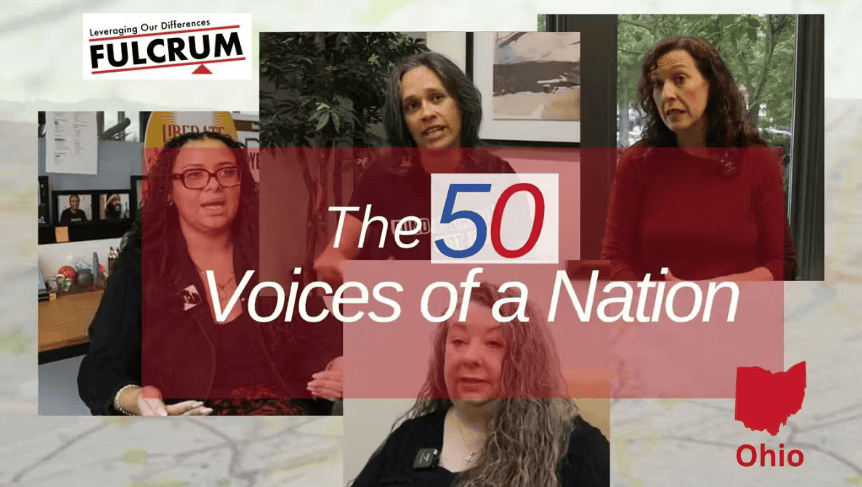
OHIO — The second Trump administration’s new federal healthcare directives and regulatory freezes have collided directly with Ohio’s voter‑approved reproductive protections, according to local healthcare providers and legal experts. Although Ohioans enshrined the right to reproductive freedom in the state constitution through Issue 1 in November 2023, federal policy shifts are bypassing those safeguards and straining the state’s healthcare infrastructure.
“I think Ohio is a perfect example of where in-state politics really come up at the crossroads of federal politics,” said Jordyn Close, Deputy Director at Ohio Women’s Alliance (OWA), a Black-women-led nonprofit organization that focuses on building community power and advancing Reproductive Justice across Ohio.
I spoke with Close and others for an episode of The Fulcrum’s award-winning series The 50: Voices of a Nation, on the fight over reproductive rights.

Following the fall of Roe v. Wade, Ohio’s six-week abortion ban briefly took effect, prompting advocates to successfully pass a constitutional amendment protecting reproductive freedom. Close says legal battles continue to delay full implementation of those protections.
“Three years later, we do not even have the fullness of the Reproductive Freedom Amendment implemented. While that was a major victory, there are still over 30 abortion bans and targeted regulations against providers that we will have to go through one by one in the courts to overturn. And so Ohio still has not realized reproductive freedom,” said Close. “I think that kind of dissonance between what our communities are saying, wanting, and making their voices very clearly heard at the ballot box and what our legislators and our courts continue to do is not in the best interest and is not in the will of our voters.”
Opponents, including Ohio Right to Life, argue the amendment does not eliminate Ohio’s ability to regulate abortion and say the state has a legitimate interest in protecting unborn life.
“I think we have a legitimate right as a society to say you shouldn’t be allowed to do that. Just like we say to lots of people in many situations, you’re not allowed to do that,” said Carrie Snyder, Executive Director at Ohio Right to Life, the state’s largest anti-abortion advocacy organization.
Snyder says the debate centers on whether unborn children should be recognized as having legal rights independent of their mothers. “We all agree that human beings should be autonomous—we should be able to make our own decisions, control our own bodies. But I think we all recognize that those rights all come with limits. … You always have rights to yourself, but your right stops when it is going to harm another person,” she said.
While opponents focus on the rights of the unborn and the state’s role in protecting them, abortion-rights advocates say the conversation doesn’t end with legal access. They argue that social stigma remains a powerful barrier, even in states like Ohio where abortion is protected by law.
Kellie Copeland, executive director of Abortion Forward, argues that stigma, fear of judgment, and anti-abortion rhetoric continue to keep many people silent about their pregnancy decisions, leaving deeply personal experiences hidden from public view. “I think a lot of times people are afraid of people judging them. They’re afraid to talk to people, friends, and family, because they don’t know what someone might say, what someone might think,” Copeland said. “And of course, that silence makes a person feel isolated. A lot of people don’t realize that there are people that they love, people very close to them, who’ve had abortions.”
Advocates say reducing that social taboo starts with changing the conversation. They argue that avoiding the word abortion and relying on broader terms like “choice” or “reproductive health” can unintentionally reinforce the perception that abortion is something to be hidden.
“We are telling people we don’t want to say the word abortion. And if we don’t want to say the word abortion, why?” asks Kristin Hady, who runs the clinic escort program at Toledo Women’s Center. “You are giving it stigma. We are doing that, but we want to be intentional about saying that word because we really do have to destigmatize it. Because people do often say, ‘Nobody is pro-abortion; we’re pro-choice.’ No, I am pro-abortion. I believe in abortion.”
As Ohio continues to navigate the tension between voter-approved protections, federal policy shifts, and deeply held moral convictions, the debate over reproductive rights remains as much about democracy and personal autonomy as it is about abortion itself.
The 50: Voices of a Nation is a four‑year multimedia initiative from The Fulcrum traveling to communities in every state to document the challenges and opportunities shaping civic life across the country. Through deeply reported, on‑the‑ground storytelling, the project examines how the Donald Trump administration is responding to those hopes and concerns — and elevates civic‑focused organizations working to inform, educate, and empower the public to take part in strengthening American democracy.
In Ohio, Federal Healthcare Policies Collide With State Constitutional Abortion Protections was first published on The Fulcrum and is republished with permission.
Hugo Balta is the executive editor of The Fulcrum and the publisher of the Latino News Network.
Featured Stories

Latino Growth Spreads Across the U.S., New Pew Data Shows

Couple inspire generational achievement through education

Children’s Author Cindy L. Rodriguez On Multidimensional Latinx Representation
Voting is a social determinant of health
Featured Stories
Noticias Newswire
reVolver Podcasts’ Erazno y La Chokolata and Código Vital Win Silver at The 2026 Signal Awards

Minivela Acquires Major Stake in Red Minds Films, Latin America's Viral Microdrama Powerhouse with 185 Million Monthly Views and 1,800 Vertical Shorts

reVolver Podcasts Brings Classic Radionovela La Colorina to Today’s Audio Audiences