Skip to content

Share This Story, Choose Your Platform!
Twenty-eight years ago, I was a high school student in Sunnyside, Washington, when I first learned how directly politics could shape the course of a life.
On November 3rd, 1998, the passage of I-200, which eliminated affirmative action in college admissions, made me wonder whether students like me– First Gen, Rural, Low Income, Chicano– would still have a fair chance to pursue higher education.
That moment did more than unsettle me; it pushed me to ask why decisions like this happen, who gets to make them, and what ordinary people can do in response. On November 4th 1998, I organized a walkout, and about 170 students walked out in protest of the passage of I-200.
It resulted in real action and change as suspensions were removed from Student Records. It was my first real lesson in civic engagement—and in the power of direct democracy. We as students even received correspondence from the then-Governor Gary Locke, the Democratic governor from 1997 to 2005. It let us know that he supported our peaceful protest.

I learned that democracy is not something that simply happens every election cycle. It is something people practice. We have a constitutional right to speak freely, to gather, protest, and educate the public when policies threaten opportunity for entire communities.
That early experience stayed with me, and in many ways, it would come full circle later in my life.
As primary elections continue now through the midterm elections in November, it is urgent to note why civic engagement matters—historically, in the present moment, and for the future.
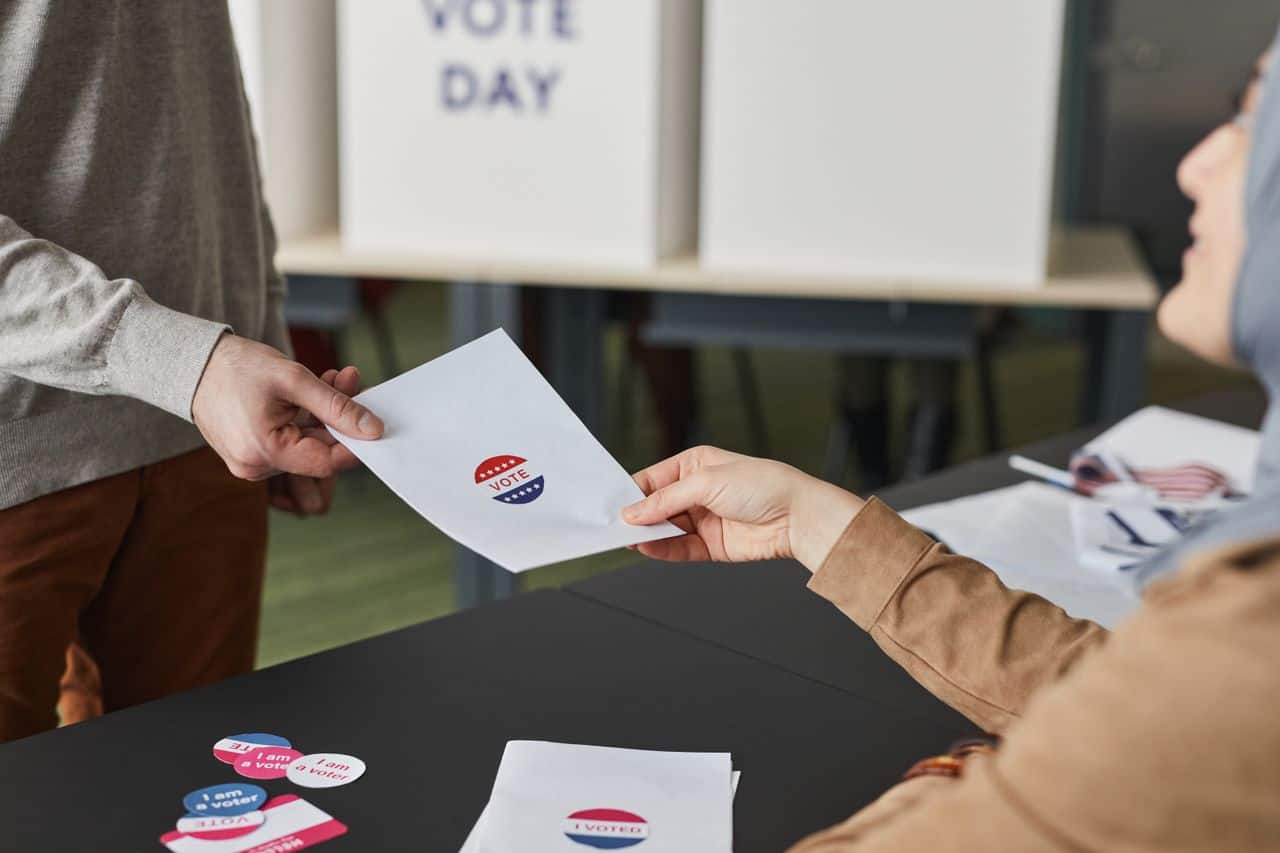
I attended Yakima Valley Community College to get my associate degree, and while there, I registered as a poll worker, one of the people responsible for helping voters cast their ballots and ensuring that every vote is counted.
The days were long and started early. You brought your own lunch, a good book, and a willingness to welcome people into the process. We followed thick instruction manuals, set up the polling place, and worked under the guidance of two judges—one Republican and one Democrat. Senior poll workers, many of whom knew the process inside and out, helped keep everything running smoothly.
I was fortunate to work days when I didn’t have class. I was usually the youngest person in the room. Much of the day involved waiting between the morning, lunch, and late-afternoon rushes. During the quiet stretches, I listened to conversations about food recipes, grandchildren, and community life.
At closing time, we counted the ballots and sent them to the county. If a dispute had ever come up, both judges would have worked together to resolve it. In my experience, disputes never happened. What I saw instead was a patient, careful, bipartisan process that gave me confidence in our elections and in the people who make them work.
Years later, while working as a community engagement coordinator in rural California around age 40, I had the opportunity to help young adults learn the same lesson: civic engagement is not reserved for politicians or experts; it belongs to everyone.
The program I worked on, Small Town Allies Against Nicotine Dependency (STAAND), focused on building a young adult coalition across rural counties that often lacked resources.
My role was to support sustainability, coordinate the coalition, and teach participants how to run meetings using parliamentary procedure, often known as Robert’s Rules of Order. We helped young people understand how public decisions are made, how to speak before decision-makers, and how to view elected officials as people responsible for addressing issues that affect the broader community.
The work also focused on commercial tobacco prevention. The young adults learned about the history of Big Tobacco and how commercial tobacco companies spend billions of dollars each year on advertising.
They studied how public relations pioneer Edward Bernays in the 1920s and 1930s helped shape the modern marketing playbook—what he famously called the “manufacturing of consent”—and how those strategies continue to influence communities today.
Much of this history can be found in the UCSF Tobacco Industry Documents, and once young people understood it, they became eager to educate their peers, families, and communities.
That program sunset about two years ago, but its impact did not. Many of the young adults who participated are now in graduate school. Some are on the path to becoming doctors. Their success is not an accident. It grew from the confidence, fellowship, and public purpose civic engagement can awaken when people are invited to take part.
It is not just about voting, though voting is essential. It is about learning how systems work, finding your voice, standing with others, and believing we can shape public life together.
At a time when Pew Research Center shows that more than 62% of Americans feel disconnected from democracy, it is urgent to remember that trust is built through participation. I learned that first as a student, then as a poll worker, and later through the young adults I had the privilege to serve.
Democracy becomes real when people are shown that they belong in it.
Jose Montoya is a senior director for the California Health Collaborative and a Blue Shield of California Foundation Public Voices Fellow through The OpEd Project.
Featured Stories

Latino Growth Spreads Across the U.S., New Pew Data Shows
Couple inspire generational achievement through education
Children’s Author Cindy L. Rodriguez On Multidimensional Latinx Representation
Voting is a social determinant of health
Stay Connected
Noticias Newswire
HITN MEDIA Honors Puerto Rican Trailblazers at Centro

360WE Music Launches ‘Sounds of the Multiverse Vol. 2,’ a Musical Project Connecting Five Multiverses Before the Big Bang and 25 Virtual DJs With Audiences in 163 Countries

Pure Flix Familia Brings Christmas Joy to Miami with Festive Holiday Lodge for Families at Christmas Wonderland Theme Park, Nov. 12 - Jan. 3