 Skip to content
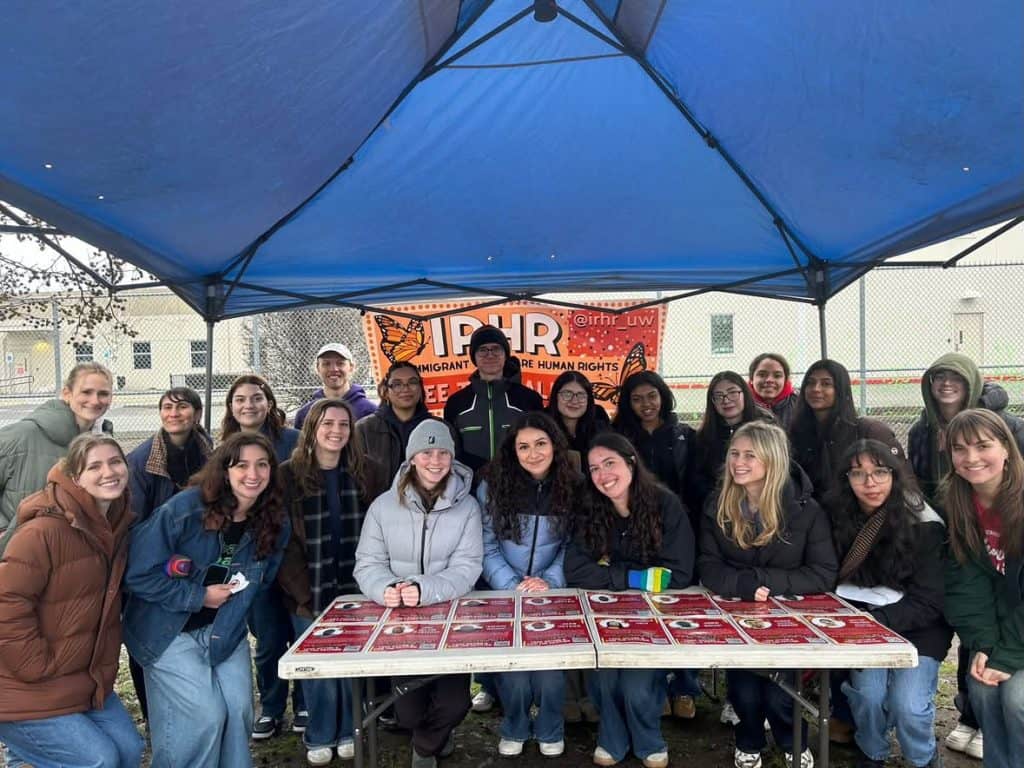
In the midst of a tumultuous time for immigrants and their families, Washington pro-immigration organizers are using their voices to amplify the struggles of those who are being silenced.
The Northwest ICE Processing Center in Tacoma is the 10th largest detention center in the nation. The building, constructed in 2004, has the capacity for 1,575 detainees. Often they are held there for weeks before they appear in court.
In opposition to the existence of the Northwest ICE Processing Center is La Resistencia, an immigrant rights organization that has fought for the abolishment of the center since 2014.
With them stands a newer student-led organization, Immigrant Rights are Human Rights, helping spread the word and supporting La Resistencia at the University of Washington.

To better understand where these passionate efforts stem from, we first must understand the conditions found in Western Washington’s immigrant detention center.
According to a report from the Washington State Standard, immigrants in the Northwest ICE Processing Center are held around 30% longer than national averages for immigrants in detention over the past 15 years.
Immigrants in the center often don’t earn their release, either. The Tacoma Immigration Court, located within the detention center itself, has an asylum grant rate of 9% over the past three years. The national average over that same timespan is 13%.
The center has received more than 3,000 complaints for its health standards, according to a recent Washington State Department of Health statement. Along with their extrenuous fight to stave off Washington health officials, the site has been tied to several lawsuits concerning hygiene policies and abusive treatment from staff.
For the past 12 years, La Resistencia has performed hundreds of acts of solidarity for those imprisoned in Tacoma’s detention center. Their hope? To remove a system they view as being counterproductive to American immigration
“La Resistencia is an abolition-based organization, so we don’t believe in prisons or any kind of cages for our community members,” said Josefina Mora-Cheung, the director of organizing for La Resistencia.
“But specifically with the immigration system, we know that it’s a very long process, it’s very expensive, and it’s very confusing. And so add to that the concept of detention, and it is meant, really, to break people’s spirit and to make them want to give up.”
The daughter of La Resistencia founder Maru Mora-Villalpando, Mora-Cheung has aided the organization since its inception, first as a volunteer grant writer before becoming a full-time staff member last September.
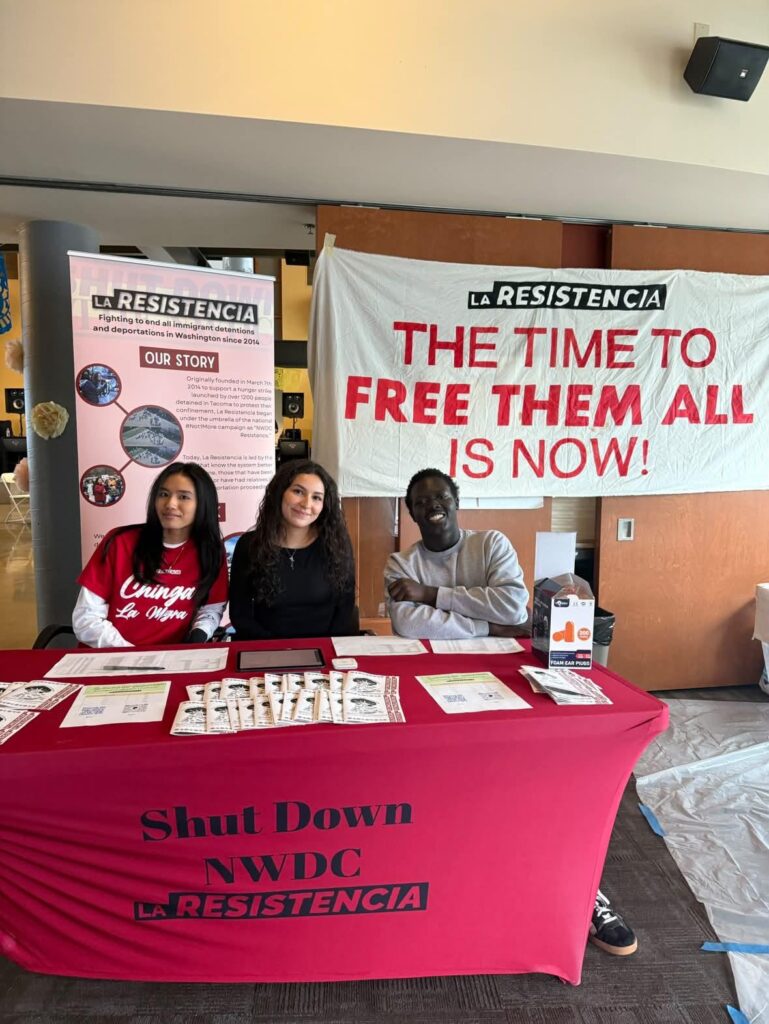
“I have a very unique perspective because I really grew up around these spaces and got to witness a very incredible leader, shape this organization and shape a movement that really pushed the narrative on what it means to support all immigrants,” Mora-Cheung said.
Growing up witnessing hunger strikes and direct protests, Mora-Cheung believed firmly in allowing those directly impacted to lead the conversation around immigrant rights. According to her, she realized the importance of her own work after experiencing her mother be placed in deportation proceedings in 2018.
“That really kind of launched my continued desire to want to support the organization in a more official capacity, so I supported with what I could, which was showing up to actions in person when I could, and also being a volunteer grant writer and trying to fund us,” Mora-Cheung said.
Many members, like Mora-Cheung, began as volunteers before being added on as official members of staff. According to the organization’s website, their team is led by “undocumented immigrants and people of color that have been oppressed by the immigration enforcement system.”
La Resistencia supports those in the detention center through publicizing their stories in a variety of ways. They host solidarity days outside of the detention centers, chanting and rallying so those inside can hear their calls and feel less alone. They track flights out of Boeing Field marked as deportation flights, checking to see who’s coming and leaving the facility. They advocate for the migrants outside of the detention center who deal with the exponential growth of required digital surveillance tools over the past year.
They also discuss individuals’ stories through their #FreeThemAll campaign found here on their Instagram, which features a drawing of the person and direct quotes from the detainee’s experiences. The organizers gather the information through phone calls; immigrants speak about a lack of hygiene supplies, lack of quality medical service or cold temperatures in the buildings.
“People report consistently inedible food, food that is really cold or is even frozen when it’s meant to be hot,” Mora-Cheung said. “Finding foreign objects or hair in the food. Over the holidays, we got a report of potential rat feces in the food.”
She said “The #FreeThemAlls were actually a request from people in detention who said, ‘I want to share my story, and I want people in the community from the public to support me with a community petition so I can use it how I want..
“It’s really become a way for us to put faces to people in detention, to share those varied experiences.”
Through QR codes or links attached to each #FreeThemAll social-media posts on La Resistencia’s accounts or flyers at one of their events, supporters can petition for them to be released from the detention center. The organization often looks for at least 100 signatures on each petition, which can then be used by immigration lawyers to advocate for their clients in court.
La Resistencia shares these profiles on their website and at in-person events, but they’re not alone in their advocacy work.
Immigrant Rights are Human Rights, a registered student organization at the University of Washington, has been dedicated to working with La Resistencia since the student group formed in 2025.
A handful of students, including current co-president Isabel Vergara Ramos, chose to volunteer with the organization for a Law, Societies and Justice class taught by Professor Angelina Godoy in winter quarter last year. They stayed on afterwards and reactivated a dormant club that used to work with La Resistencia and began posting in July 2025.
Vergara Ramos said the political climate has become dangerous. She feels “surrounded by this fear of ‘la migra’, and fear of people getting detained and loved ones getting detained.”
When she learned about La Resistencia, “I definitely wanted to do what I can to support them.”
The student branch members get advice from members of La Resistencia and attend their events whenever they can.. The RSO has hosted fundraisers to raise awareness about the detention centers and La Resistencia’s causes. Through bake sales, branded-merchandise sales or tabling for the #FreeThemAll campaign, Immigrant Rights are Human Rights, has encouraged UW students to generate donations to support the organization.
“I feel like a big accomplishment is being able to spread the words of people currently detained, because they are truly the leaders of this fight, and they are activists themselves,” Vergara Ramos said. “It’s really not speaking for them, it’s just making sure their words are heard, and a broader public is able to listen to what they have to say.”
The RSO leadership says their goals include hosting a solidarity day of their own over the summer on campus while also advocating for La Resistencia’s causes online and through tabling out in the Quad, an outdoor gathering spot on campus.
“This is a great opportunity for people to have an introduction,” co-president Sara Holguin said. “Some people don’t know much about what’s going on, or have no connection to immigrants, and want to have kind of a way to help the community, so having yearly solidarity days is our goal.”
The main mission behind their work is simple: don’t overshadow those detained, but amplify their voices.
“I feel like a big accomplishment is being able to spread the words of people currently detained, because they are truly the leaders of this fight. They are activists themselves, so it’s really not speaking for them, it’s just making sure their words are heard,” Vergara Ramos said.
Andrew Barrett is a University of Washington student and writer whose reporting focuses on community and social issues in Washington.
