Skip to content

Share This Story, Choose Your Platform!
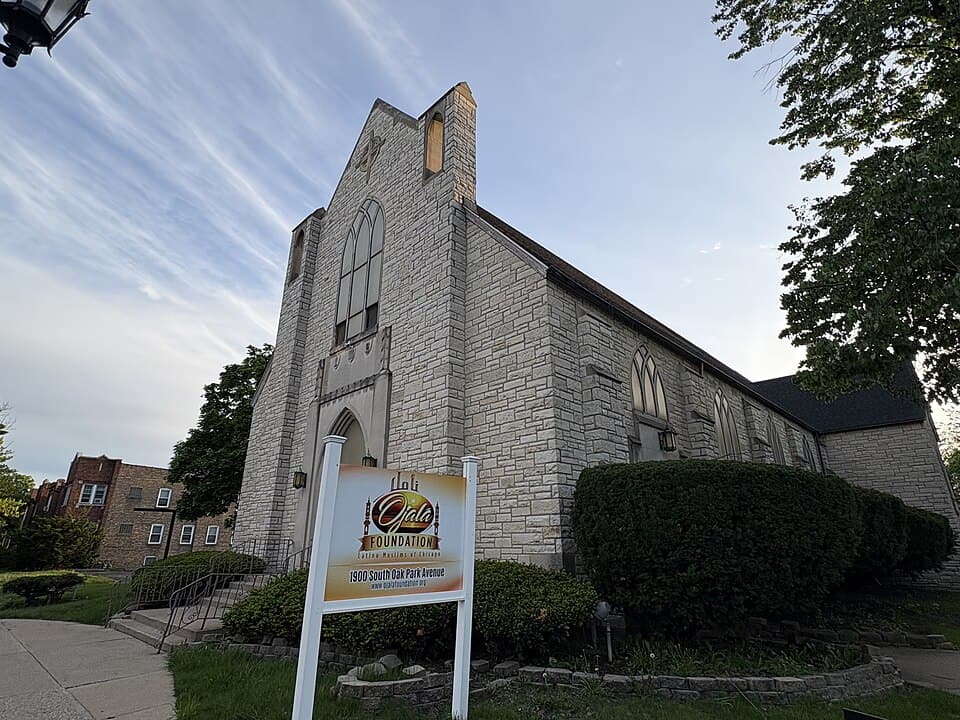
BERWYN, Ill. — In a quiet residential neighborhood just southwest of Chicago, a historic 1948 Gothic-style church has become a symbol of America’s shifting religious landscape. Formerly the First Reformed Church of Berwyn, the building is now home to the Ojalá Islamic Center, which opened in February as the Midwest’s first Latino-led mosque.
Operated by the Ojalá Foundation—whose name stems from the Spanish word ojalá (“God willing”), itself rooted in the Arabic Insha’Allah—the mosque offers prayers, Islamic classes, and community gatherings in Spanish, English, and Arabic. For years, Latino converts across the Chicago area navigated predominantly South Asian or Arab mosques, searching for a space that reflected their own cultural backgrounds.
Co-founded by Imam Christopher AbdulKareem Pavlicek and Karen Ríos, the center has drawn a diverse Latino Muslim community, uniting various heritages under one faith. Ríos described the center as “a mix of all the cultures, but it’s what Islam is,” adding, “Everybody, we’re brothers and sisters, and we work together towards eternity.”
This local movement mirrors a broader national trend. According to the Institute for Social Policy and Understanding (ISPU), 9% of U.S. Muslims are Latino, a sharp increase from 1% in 2009. The Pew Research Center estimates there are 250,000 or more Latino Muslims nationwide, with over half having converted from Catholicism. Member Kevin Contreras noted that finding a Spanish-speaking space offered him a deep sense of belonging and peace.

Though Latino Muslims still account for less than 1% of the broader U.S. Hispanic population—which remains largely Christian, with Pew data showing 42% identifying as Catholic and 21% to 24% as Protestant or Christian—North America’s overall Muslim population is projected to triple to 20 million by 2070. Reflecting on the adaptive use of the building, CAIR-Chicago Executive Director Ahmed Rehab remarked, “Muslims appreciate and even embrace the Catholic legacy of Chicago, which lives on. We’re contributing our own touch to the painting.”
The Ojalá Foundation plans to continue its growth with a new shelter in Chicago’s Pilsen neighborhood.
Featured Stories

Latino Growth Spreads Across the U.S., New Pew Data Shows
Couple inspire generational achievement through education
Children’s Author Cindy L. Rodriguez On Multidimensional Latinx Representation

Voting is a social determinant of health
Stay Connected
Noticias Newswire
Manny Rodriguez of Gilead Sciences to be Recognized as One of the Visionaries of 2027 in Miami
Carlos Ponce to Meet Fans at Christmas Wonderland Miami’s Pure Flix Familia Lodge on Black Friday, Nov. 27

Verizon Survey: Small Businesses Turn to Social Media & AI for Holidays