 Skip to content
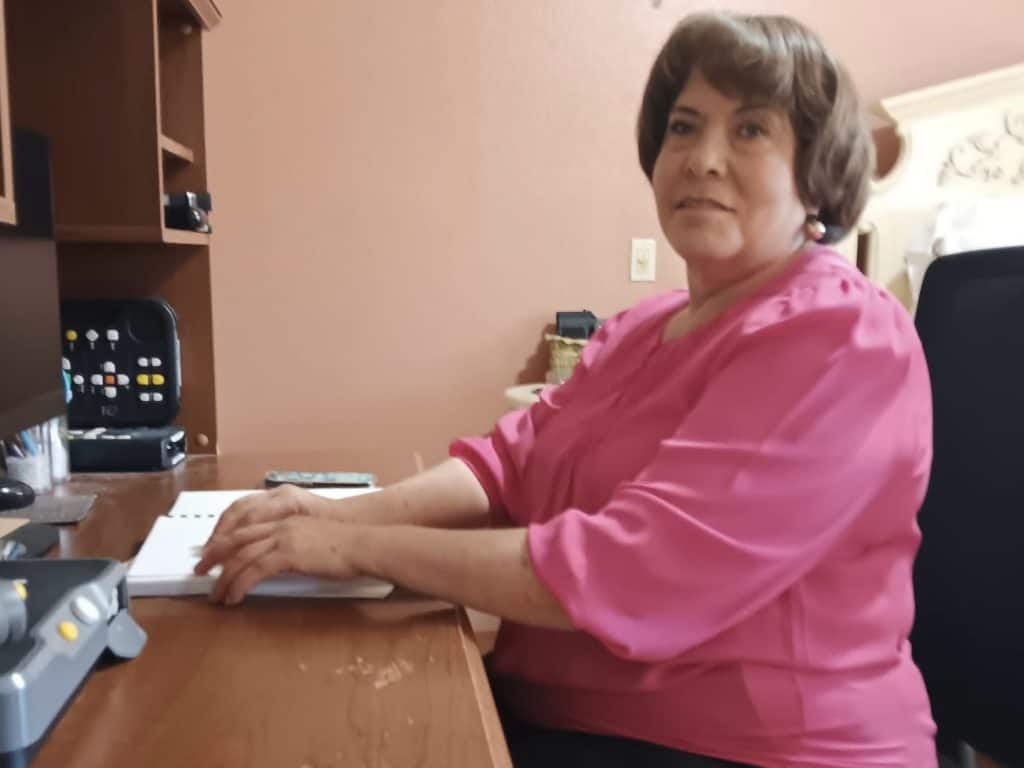
When Maria Vazquez, 62, and her students prepare chiles rellenos, a traditional Mexican dish, everyone has a role.
One student heads to the vegetable patch to gather peppers, tomatoes, onions and garlic. Another visits the corn mill to prepare fresh tortillas, while someone else collects firewood to heat the cooking stove.
Vazquez takes charge of the salsa, asking her students to pass her the vegetables before pretending to place them in a blender. When it’s time to mix the ingredients, she imitates the sound of the appliance.
But no one is standing in the same kitchen.

The participants are connected by telephone through Well Connected Español, a free virtual program offering classes and social activities for Spanish-speaking older adults. Each student in Vazquez’s class calls from home, describing their role in preparing a traditional meal from their native countries. Although nothing is physically being prepared, the conversation moves from one person to another as though they were gathered around the same table.
For Vazquez, who lost her eyesight completely in 2015, these gatherings offer more than an opportunity to exchange recipes. They have introduced her to a community of people who understand the challenges of living with vision loss, including the complicated relationship between receiving help and maintaining independence.
“The truth is, I think it has helped us a lot to know that we are not the only ones,” Vazquez said in Spanish.
“For example, it has helped me a lot to know that I’m not the only one who cannot see. There is a community of people like me who have vision problems, because we understand one another. We know what we need, how we need it and how we sometimes feel when our families, in wanting to protect us, don’t allow us to be independent.”
Vazquez, a Mexican woman living in California, was diagnosed with retinitis pigmentosa in 1992, a genetic eye disease that gradually damages the retina and can lead to severe vision loss. Although she could still see at the time, she knew her eyesight would continue to deteriorate.
By 2014, her eyesight had worsened enough that she lost her job. That same year, her mother died. In 2015, Vazquez lost her eyesight completely. She recalled struggling with depression and worrying that she would have to depend on other people for tasks she had previously managed herself.
Her husband and son continued working, often leaving her home alone from approximately 6 a.m. until 7 or 8 p.m. Vazquez occupied herself with household chores, but the long hours offered few opportunities to interact with people outside her family. She wanted to remain active, learn new things and contribute to her community, yet much of her daily routine had become confined to her home.
Even when surrounded by relatives, she recalled feeling isolated.
“Even though I have my family close to me most of the time, I feel like, even though we are in a family reunion, I am alone,” Vazquez said.
“Even though we are together, I feel like I am alone, because everyone is talking [among each other] and it feels like I am not here. Because I can’t see, I don’t know if they are talking to me.”
In 2021, a friend introduced Vazquez to Well Connected Español. The program offered activities she could attend from home, including braille instruction, and Vazquez decided to enroll. She was interested in meeting other people, but she was particularly determined to learn skills that would allow her to manage more of her daily life without assistance.
“When the doctor told me I had completely lost my vision, I was very, very worried because I thought, ‘Oh my God, now I will be dependent on others. Even if I want to dial a phone number, I will have to ask somebody to help me.’ I didn’t want to be like that. So learning braille helped me a lot. I can label things in my kitchen, organize my important papers and make a phone book,” said Vazquez.
As she progressed, Vazquez began applying what she learned around her home. She used braille to label food and other items in her kitchen, organize important documents and create a telephone directory.
Her interest in learning eventually led her to teaching. After beginning with English braille, she expanded her studies to Spanish braille, learning differences in punctuation and contractions between the two systems. Within months of enrolling, she became a co-facilitator of English- and Spanish-language braille classes.
For Vazquez, teaching braille became another way to encourage independence among people experiencing vision loss. She wanted others to learn how to identify household items, organize personal information and read without always having to depend on someone else.
Her involvement with Well Connected Español eventually extended beyond braille instruction, allowing her to share another part of her life with fellow participants: food and cultural traditions.
Today, she facilitates *Comidas y Tradiciones* (Food and Traditions), the virtual group in which participants describe the preparation of traditional dishes and exchange recipes and customs from their countries of origin. The class draws an average of 12 to 13 participants each week, she said.
Beyond the cooking discussions, Vazquez also participates in virtual travel activities, where members describe places they have visited and share their experiences with others.
“Even though I’m sitting here on the couch in my home, I feel like I’m traveling. As the person tells us about the trip they took, I feel like I’m experiencing it myself, like I traveled and visited those places,” said Vazquez in Spanish.
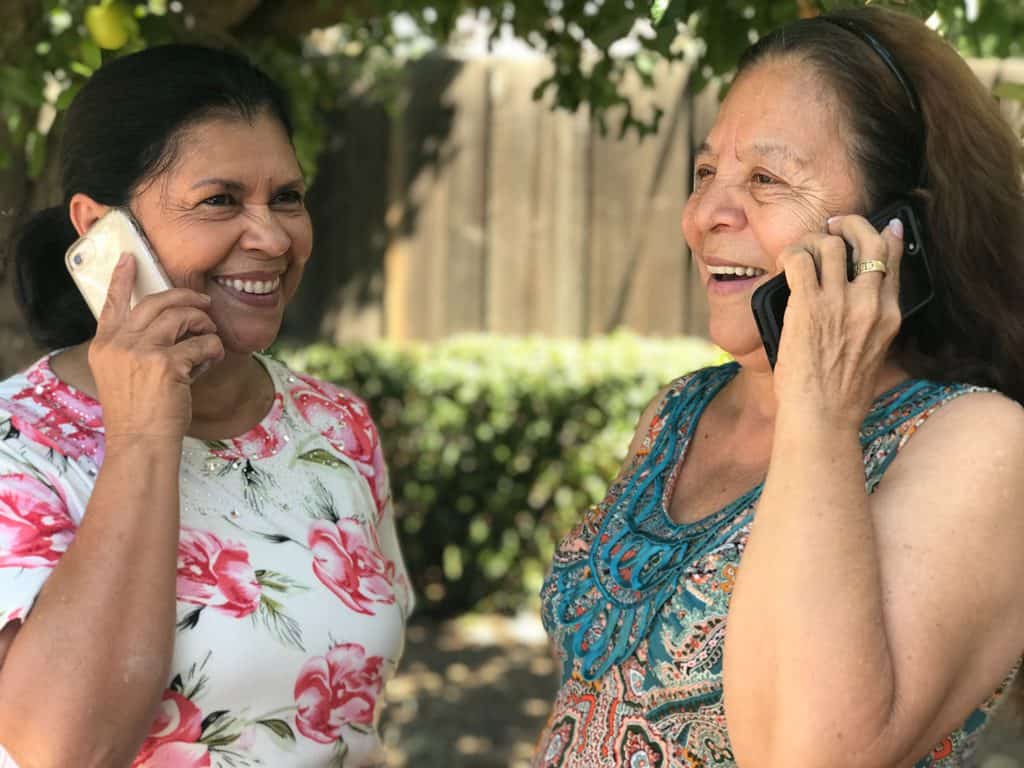
For Lizette Avalos Maciel, program manager of Well Connected Español, Vazquez’s transition from participant to facilitator reflects one of the program’s central goals: giving older adults opportunities not only to connect with others but also to share their knowledge and interests.
“We really want to make sure that we’re not saying that you have to enter and stay a participant,” said Avalos Maciel.
“They are more than welcome to share their passions and their talents as facilitators, and we will help them do that.”
The program’s origins date to about 2004, when Well Connected began as a telephone discussion group. In 2019, Well Connected Español launched to offer similar opportunities to Spanish-speaking older adults, later expanding its offerings to include braille instruction.
Although based in California, the program serves Spanish-speaking adults ages 60 and older throughout the United States. Participants can join activities by telephone or computer, allowing those who have difficulty traveling or accessing in-person programs to take part from home. The program is free, with no income requirements, and participants do not need to have vision loss or another disability to enroll.
For participants with vision loss, braille instruction can help address practical challenges, while offering classes in Spanish can make those resources more accessible.
“So we had this participant that had mentioned… they learned how to use their braille writer to be able to cut the amount of what a bill was, for example, money. So they could actually go out and spend and feel comfortable and safe doing so. So, those things are those are things that people are safety barriers with regardless of language. Then you add that additional barrier of accessing resources because they’re modelingual Spanish speakers. It was just so important for us to have an option,” said Avalos Maciel.
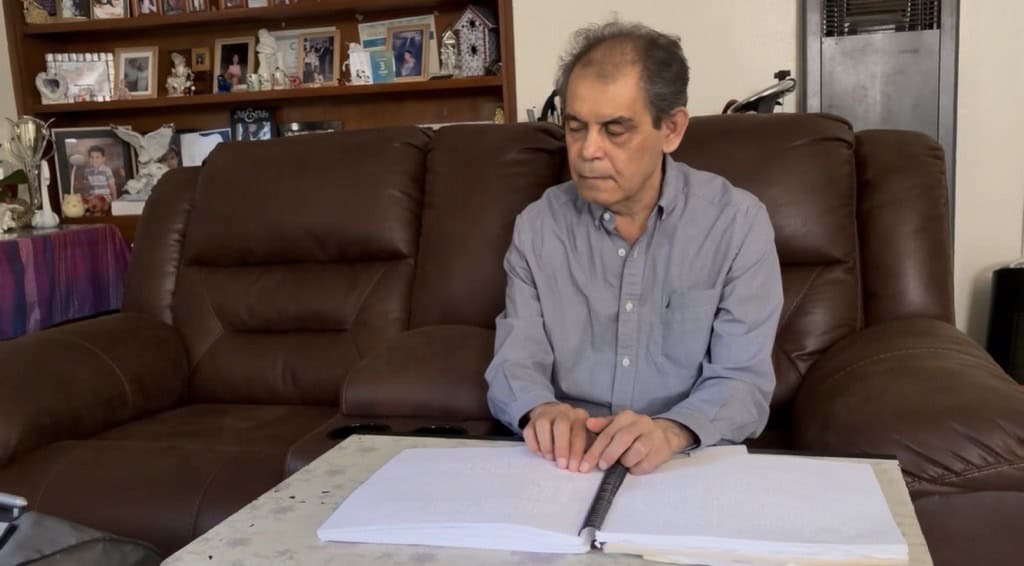
The broader program offers activities throughout the year, including health and wellness discussions, technology lessons, music, travel presentations, spiritual gatherings and opportunities to learn about different countries. Participants receive a Spanish-language catalog of activities and can choose which groups to attend.
Avalos Maciel said the Spanish-language program is not simply a translation of its English-language counterpart. Although both offer similar types of activities, the subjects and discussions can reflect the traditions and interests of their participants, including Vazquez’s *Comidas y Tradiciones* class.
“It’s not just important to be able to offer a program that is in your own language, but to be able to bring those cultural experiences and traditions into that space, that’s very important,” Avalos Maciel said.
“And I think that’s very important for Maria and a lot of our facilitators and a lot of our participants, to be able to feel safe and especially to feel seen in these groups, and I think food does that a lot. Whether you’re remembering a memory or, you know, you’re talking about a recipe that your mom used to make…”
In a message following her interview, Vazquez said she hoped her experience would encourage others who feel isolated at home or believe a disability has limited what they can accomplish to seek opportunities to connect with others.
“The Well Connected Español program has helped me tremendously because I have learned so much in different areas. It has also helped me psychologically, making me feel like I am part of society and helping me feel independent,” Vazquez said.
“It has helped me so much in my life. It has helped me feel happy and content. I spend my entire day feeling like I am surrounded by all my classmates and friends, some of whom I have met over the phone and others in person. To me, we are a family,” Vazquez said.
Cover Photo: Maria Vazquez in her home, practicing braille. / Maria Vazquez, Sept. 2026
Photo 1 & 2: Courtesy, Well Connected Español
