Skip to content

Share This Story, Choose Your Platform!
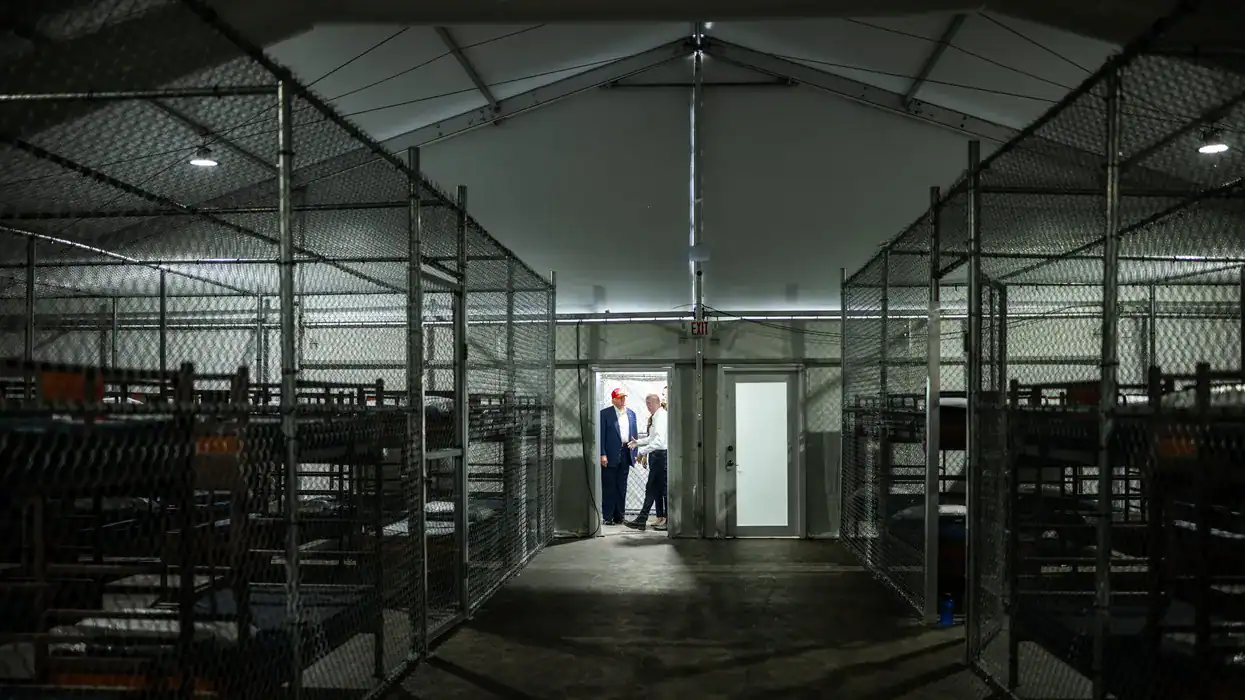
TALLAHASSEE, Fla. — Hundreds of immigrants detained at Florida’s controversial Alligator Alcatraz facility have mysteriously vanished from the ICE database, leaving lawyers and families unable to locate them.
Advocacy groups and the ACLU describe the site as a legal “black hole,” citing systemic failures in detainee tracking, restricted access to counsel, and pressure to accept deportation. Built rapidly on a former Everglades airstrip and endorsed by President Trump, the facility has faced lawsuits over environmental damage, human rights violations, and concerns regarding due process.
Despite a court order to dismantle the camp, detainees were quietly transferred—some to other troubled centers, others deported without notice—raising alarms about transparency, accountability, and civil liberties.
Alligator Alcatraz has emerged as a grotesque symbol of immigration policy weaponized for political gain. With over 250 detainees held for civil immigration violations—many without criminal charges—this site is not a correctional facility. It is a spectacle of cruelty.

Representative Debbie Wasserman Schultz (D-Fla.) called it “appalling” and “outrageous,” demanding its immediate closure. Environmental groups, such as VoteWater, have condemned its ecological recklessness. And investigative journalists have exposed the hollow justifications behind its existence. But Alligator Alcatraz is not an anomaly—it is a continuation.
Throughout U.S. history, immigrant detention has often served as a political theater of punishment, scapegoating, and racialized control.
🔹 Ellis Island’s darker twin: Angel Island (1910–1940) While Ellis Island welcomed European immigrants, Angel Island in San Francisco Bay became a carceral gatekeeper for Asian migrants. Chinese immigrants, in particular, were subjected to invasive interrogations and prolonged detentions under the Chinese Exclusion Act. As historian Erika Lee writes, “Angel Island was not a port of entry—it was a prison.”
🔹 Japanese American internment (1942–1946) During World War II, over 120,000 Japanese Americans—two-thirds of them U.S. citizens—were forcibly relocated to internment camps. The War Relocation Authority justified these actions as national security, but they were rooted in racial prejudice and wartime hysteria. As Fred Korematsu later said, “I was just an ordinary American kid… and they put me in a camp.”
🔹 Post-9/11 detentions of Muslim immigrants In the aftermath of 9/11, hundreds of Muslim men were detained without charges under “material witness” statutes or immigration violations. The Department of Justice’s own Inspector General later found that many were held in harsh conditions with no evidence linking them to terrorism. It was guilt by association, not due process.
🔹 Family separation and child detention (2018–2020) The “zero tolerance” policy led to thousands of children being separated from their parents at the border. Detention centers like Homestead in Florida and Tornillo in Texas became symbols of bureaucratic cruelty. Pediatricians and child welfare experts warned of lifelong trauma. “This is government-sanctioned child abuse,” said Dr. Colleen Kraft, then-president of the American Academy of Pediatrics.
What Right Looks Like
If Alligator Alcatraz is a monument to what’s wrong, then what does right look like?
🔹 Immediate Closure and Accountability Elected officials must demand the facility’s closure—not relocation, not rebranding. Congressional oversight should investigate its construction, funding, and legal basis. Those responsible for circumventing environmental and human rights protections must be held accountable.
🔹 Demilitarize Immigration Enforcement Civil immigration violations should not be treated as criminal offenses. Restore community-based alternatives to detention, such as case management programs, which have proven to be more humane and cost-effective.
🔹 Invest in Legal Access and Due Process Guarantee every detainee access to legal counsel, interpreters, and fair hearings. Expand funding for immigration courts and public defenders. Justice delayed in the Everglades is justice denied.
🔹 Honor Environmental Stewardship No detention facility should ever be built in protected wetlands or ecologically sensitive zones. Florida’s Everglades are a national treasure, not a dumping ground for political theater.
🔹 Reframe Immigration as Contribution, Not Threat Elected officials must stop using immigrants as scapegoats. Instead, they should amplify stories of labor, resilience, and community-building. As historian Mae Ngai reminds us, “Immigration is not a problem to be solved—it is a reality to be understood.”
Alligator Alcatraz is the latest chapter in this legacy—a facility built not for safety, but for spectacle. Secretary Kristi Noem’s defense that detainees are held “to the highest levels of what the federal government requires” rings hollow when the very premise of their detention is legally and morally suspect.
This is not about border security. It is about political optics. It is about punishing the vulnerable to score points with a base that equates cruelty with strength.
Alligator Alcatraz must be shut down. But more than that, we must shut down the logic that built it—the logic of fear, exclusion, and cruelty. In its place, we must build policy rooted in dignity, truth, and repair.
Cover Photo: Interior of Alligator Alcatraz (Credit Wikimedia)
Featured Stories

Latino Growth Spreads Across the U.S., New Pew Data Shows

Couple inspire generational achievement through education

Children’s Author Cindy L. Rodriguez On Multidimensional Latinx Representation

Voting is a social determinant of health
Stay Connected
Noticias Newswire
Verizon Frontline Challenges Innovators to Build Future of Public Safety

inCruises extiende su racha ganadora de Premios Magellan con dos reconocimientos en 2026

Natalia Montaño, Founder of Aguamarina Schools, on The Cover of Ejecutiva Magazine