Skip to content

Share This Story, Choose Your Platform!
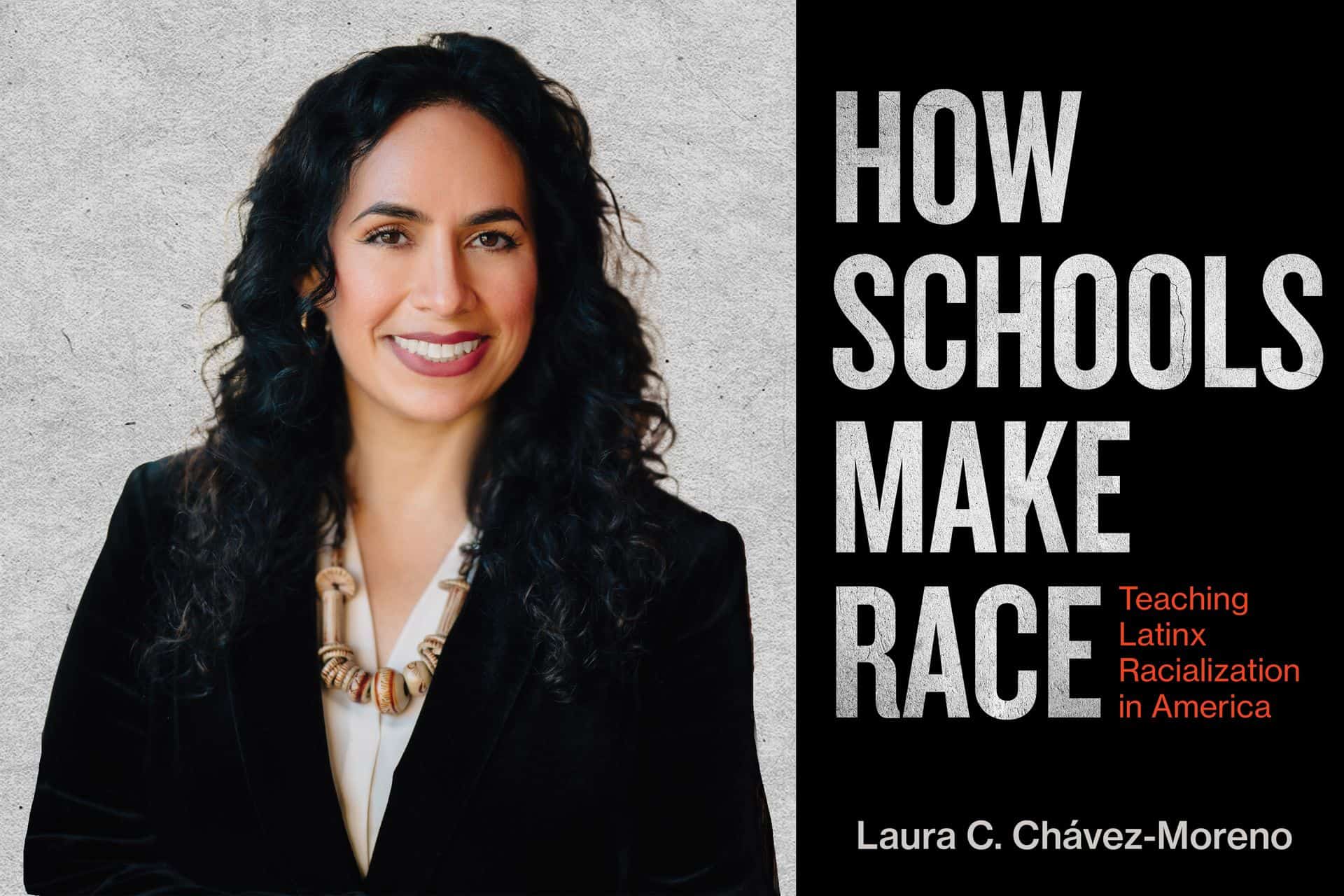
During a graduation ceremony in 2017, Laura C. Chávez-Moreno was “struck” when an Amlie High School student gave a speech highlighting their classes’ diversity as their strength. Yet none of the students who stepped up to the podium were Latinx, and only one was Black.
Nor was there any mention of the high school’s dual language program despite having a 21% Latinx/Hispanic population, the author and assistant professor at the University of California Los Angeles (UCLA) said.
In her debut book, “How Schools Make Race,” Chávez-Moreno dissects how Oakville Urban School District’s bilingual program enforces a racial project based on hierarchies and shapes student’s ideas about Latinidad.
Her research found that schools “more often than not” imposed ideas about race “implicitly,” she said.

For instance, schools encouraged students to attain the Seal of Biliteracy, an award given to high school graduates who demonstrate proficiency in multiple languages.
“Race is about giving material advantages to folks,” Chávez-Moreno explained. “So for example, giving a seal that’s viewed as a legitimate way for people to say you’re bilingual, like in a marketplace that wants bilingual folks in order to either hire them for specific jobs, or give them more money, like a raise … “It is something material in students’ lives.”
Another way teachers implicitly imparted lessons about race was through lessons, though Chávez-Moreno acknowledged these are “practices that schools engage in all the time” and aren’t exclusive to the bilingual program she studied.
For example, Ms. Schloss, an ethnic studies teacher at Amlie High School who Chávez-Moreno frequently observed, hosted a “Language and Identity” panel where various staff members shared their experiences navigating the world.
“Although the questions were about identity, most of the answers turned to racial issues,” Chávez-Moreno wrote. “Members of the panel shared experiences of being excluded from a group and being stereotyped by others because of physical characteristics.”
Other lessons about race were done more explicitly, such as through a panel dedicated to addressing anti-blackness, like the one dual-language and social studies teacher Ms. Lucas put together.
“Through the panel she organized, she challenged the anti-Black stereotype of a static Black identity that paints people who identify as Black as not being native Spanish speakers,” Chávez-Moreno wrote.
Meanwhile, one of the ways Latinidad in schools is shaped is through the exclusion of Native American and Latin American indigenous ancestry.
In the book, Chávez-Moreno recalls Ms. West, a dual language teacher who expressed her desire to broaden her students’ knowledge by teaching them about how Native Americans view fire, but wasn’t able to.
“Ms. West’s regret suggested she was conscious of the curriculum’s explicit exclusion but lacked the structural support—for example, time to find materials and develop activities—to challenge mainstream schooling that implicitly lifts some knowledge over others,” Chávez-Moreno wrote.
Some of the dual language programs also often framed Latinx people as an immigrant group, thus contributing to the invisibility of Indigenous Latinx students.
“Even though the program had many immigrant students, it did not help them engage deeply with their own displacement and settlement,” Chávez-Moreno wrote.
Even when indigenous cultures were studied in class, she found that some students felt the lessons were “redundant.”
“We’ve been learning about the Aztecs and Incas since sixth grade,” a 10th grader told Chávez-Moreno. “Not that—it doesn’t bore me. It’s just, ‘Oh, class, we’re going to learn about this.” And it’s again, ‘Oh. Going through what I already know.’”
Chávez-Moreno writes that the way schools disconnect people from their Indigeneity and perpetuate ideas about race is part of three projects: colonialism, imperialism, and racism.
“Simply put, these three projects attempt to break people’s healthy relations with the natural and human world,” Chávez-Moreno wrote. “In restricting how people relate to the land and to others, they also restrain who people can be and how they can act in a future world.”
Chávez-Moreno suggests educators must be “ambitious teaching about the ambivalence of race,” to combat structural racism.
Featured Stories

Latino Growth Spreads Across the U.S., New Pew Data Shows

Couple inspire generational achievement through education
Children’s Author Cindy L. Rodriguez On Multidimensional Latinx Representation

Voting is a social determinant of health
Stay Connected
Noticias Newswire
Verizon Survey: Small Businesses Turn to Social Media & AI for Holidays

RIVIERA transforma terrenos abandonados en Bayamón en calidad de vida y $147.2 millones en patrimonio para sus familias

Real-World Weight Journeys: Exploring Health Experiences to Improve Care